
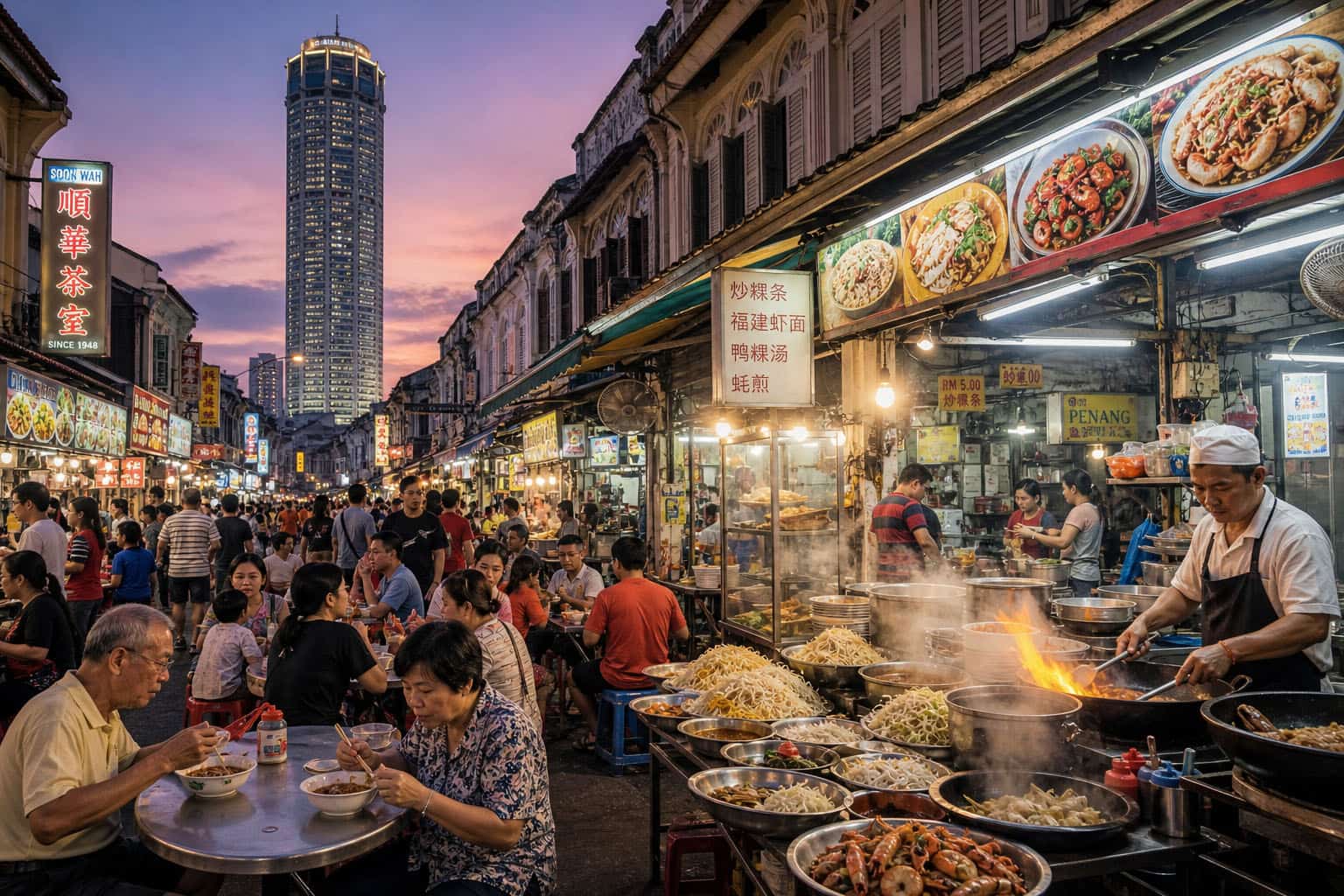
Ask any Malaysian where to eat and chances are, someone will say Penang. It doesn't matter if you're in KL, JB, or Kuching. The answer is almost always Penang. But here's the thing most people don't realise when they're queuing up for char koay teow at some legendary hawker stall in George Town: the food culture they're experiencing didn't start last decade, or even last century. It goes back over 500 years.
Yes. Five hundred years.
It All Started With the Traders
Long before Penang became the food obsession it is today, the island was already a busy crossroads for traders from across the world. From as early as the 9th century, Muslim merchants visited from India and the Middle East, bringing their food, language, and religion along with their wares. The Portuguese and the Dutch joined soon after.
By the time the British arrived in 1786, Penang was already a melting pot of cultures living side by side, each bringing their own ingredients, cooking techniques, and food traditions to the table. Literally.
A history of contact and intermarriage on the island since the 15th century resulted in a culinary style known as Baba-Nyonya, or Peranakan cooking, implying a blend of Chinese, Malay, Thai, Indonesian, Indian, and European influences and cooking methods. This wasn't fusion food as a trend. This was fusion food as a way of life, born out of centuries of communities cooking together, trading ingredients, and adapting recipes to local tastes.
That's the foundation of what you're eating when you sit down at a Penang hawker stall today.
The Hawker Culture That Built an Identity
In Penang, food isn't just about eating. It's part of everyday life. The island's food culture is deeply woven into its social fabric. You'll hear locals greet each other with "Sudah makan?" which literally translates to "Have you eaten yet?" It's the Penang version of asking someone how they're doing. Being fed means you're okay. That's how central food is to the identity of this place.
The hawker stall format itself is a product of that long history. Generations of immigrant communities set up roadside stalls, kopitiam corners, and mobile pushcarts, selling recipes passed down from their grandparents' grandparents. The street food is available in local coffee shops, roadside stalls, mobile pushcarts, and hawker centres, with many hawkers operating for short hours, often selling out within a short timeframe. That sell-out culture? It's not a marketing trick. It's the result of recipes so dialled-in and portions so carefully managed that there's genuinely never enough to go around.
George Town: Where the Food Lives
The city of George Town has gained a reputation as Malaysia's gastronomical capital for its distinct culinary scene, and in 2008, it was designated a UNESCO World Heritage Site recognised for its unique multicultural architectural and cultural townscape. The food is inseparable from that heritage story. Every dish tells you something about who came here, who stayed, and what they left behind.
Take Nasi Kandar, for example. This dish started with Indian Muslim traders who would carry rice and curries on a pole called a “kandar” on their shoulders. Today, it's a much-loved part of Penang's food scene. Or Char Koay Teow, which BBC named Malaysia's most famous street food. It started as a simple, cheap meal for labourers and dockworkers and is now the dish people fly into Penang specifically to eat.
Then there's Penang Assam Laksa, which put Malaysia on the global food map when it was named one of the world's 50 most delicious foods by CNN. A spicy, sour, tamarind-based fish noodle soup that you won't find replicated properly anywhere else in the world.
The World Noticed
The global food community has been paying attention to Penang for a while now. Lonely Planet named Penang the world's number one food destination in 2011. CNN Travel ranked it one of the top ten street food cities in Asia in 2013, and Lonely Planet voted it the top culinary destination again in 2014. These aren't small accolades. These are the kind of recognitions that put a city on the bucket list of serious food travellers worldwide.
And the secret, if you can call it that, is precisely its age. Penang's food scene is extraordinary not because someone sat down and designed it, but because it evolved organically over five centuries of cultural exchange. Regional ingredients such as lemongrass, coconut milk, turmeric, pandan leaves, fresh chilli and different sambals provide a heady, fragrant base for many traditional dishes. These are ingredients that arrived with traders from different corners of the world and eventually became so local that most Malaysians can't imagine cooking without them.
Go Before It Changes
Here's the part nobody likes to talk about. Many of the hawkers from the post-World War II era are retiring after working up to 60 years in the business. Some of these stalls have been serving the same recipe for three generations. When those hawkers retire and their children choose different careers, those recipes sometimes disappear with them.
Penang's food culture is living heritage. It's not behind glass in a museum. It's on a plastic stool, under a starry night, served on a plate that's been washed a hundred times today. And it's been that way for over five hundred years.
So the next time someone asks you where to eat, you know what to say.
Sources: Wikipedia — Penang Cuisine | UNESCO — George Town World Heritage | Wikipedia — George Town, Penang | Sustainable Travel International | Focus on Travel News
Share hidden facts about Malaysia and stand a chance to win prizes worth up to RM4,300! Find out how to join here. T&Cs apply.
Kamarul Azwan (k.azwan@gmail.com) is a content creator under the Newswav Creator programme, where you get to express yourself, be a citizen journalist, and at the same time monetize your content & reach millions of users on Newswav. Log in to creator.newswav.com and become a Newswav Creator now!
The User Content (as defined on Newswav Terms of Use) above including the views expressed and media (pictures, videos, citations etc) were submitted & posted by the author. Newswav is solely an aggregation platform that hosts the User Content. If you have any questions about the content, copyright or other issues of the work, please contact creator@newswav.com.