
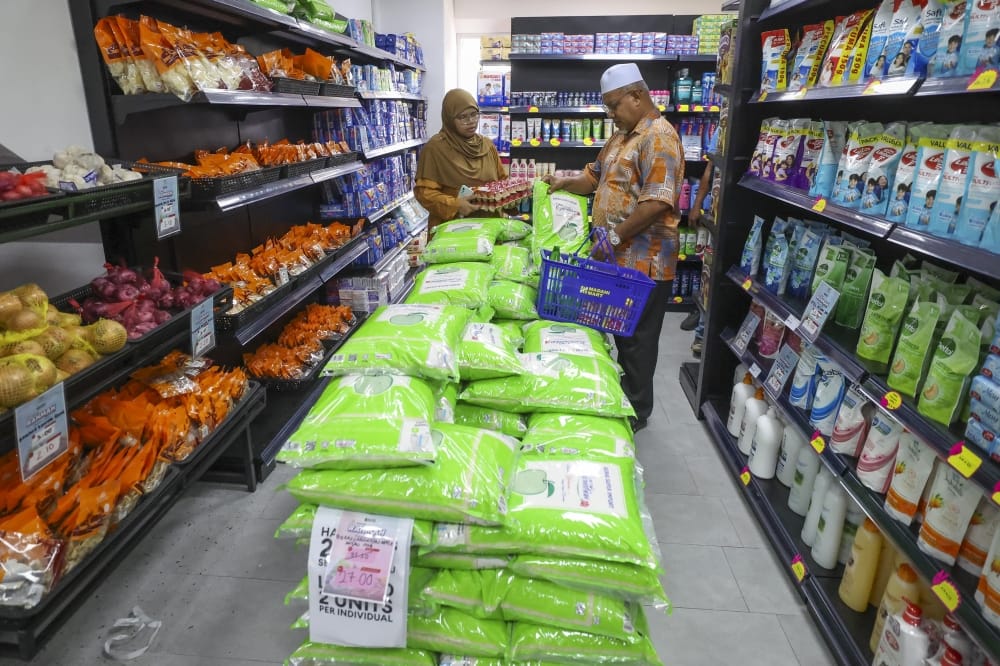
The morning sun rises over the bustling streets of Kampung Baru, but inside a modest second-floor flat, the atmosphere is heavy. Kak Aminah, a 42-year-old mother of three, meticulously packs a single container of fried rice for her children to share at school. There is no chicken today only eggs, sliced thin to stretch across three portions. A few years ago, this would have been an anomaly. Today, it is a survival strategy.
For Aminah and millions of working-class Malaysians, the macro-economic triumphs splashed across evening news bulletins feel like dispatches from a completely different planet. While official data sheets boast of stabilizing indicators, the daily ritual of grocery shopping has morphed into a high-stakes exercise in financial triage. This stark juxtaposition forms the emotional core of Malaysia’s current socio-political discourse.
The phrase "Kerajaan MADANI dianggap ‘gagal’ jika rakyat masih ‘ikat perut’" (The MADANI Government is deemed a 'failure' if the people are still tightening their belts) is no longer just a partisan talking point; it has evolved into a profound sociological critique. It posits that economic governance cannot be measured solely by national productivity metrics or international investment influxes. Instead, the true gauge of a government’s legitimacy lies in the tangible, everyday financial comfort of its citizenry. If the kitchen fire goes cold, the grand architectural pillars of state policy lose their structural meaning.
The Metrics of Majesty Versus the Realities of the Market
On paper, the economic trajectory of the nation paints a picture of steady, institutional recovery. Analytical deep-dives into state finance reveal that Malaysia’s gross domestic product (GDP) has maintained an upward momentum, positioning the country at an admirable 36th place globally with a valuation of USD 422 billion, according to the official Ministry of Finance Economic Outlook Report.
Furthermore, the nation’s international business appeal has seen a remarkable resurgence. The country leaped 11 places to rank 23rd in the IMD World Competitiveness Ranking, a feat driven heavily by strategic investments in cutting-edge industries like semiconductors and artificial intelligence.
Yet, as any structural sociologist will argue, macroeconomic data acts as an aggregate ceiling that frequently masks a crumbling floor. While high-impact industrial plans project long-term wealth creation, they do little to alleviate immediate domestic anxieties. The fundamental breakdown occurs within the local supply chain and wage structures. When the cost of basic consumer goods escalates faster than the sluggish upward crawl of the median wage, a domestic deficit emerges.
For the average Malaysian consumer, a soaring stock market index cannot be traded for a bag of local white rice, nor can global competitiveness rankings pay for the compounding cost of school bus fees. This divergence fosters deep-seated institutional distrust, transforming structural economic adjustments into immediate personal hardships.
The Subsidy Paradox and Targeted Financial Friction
In its quest to restore fiscal discipline and steer the nation away from debilitating debt, the administration has championed a shift from blanket subsidies to highly targeted financial assistance. The fiscal deficit, which stood at a worrying 5% of GDP, has successfully narrowed to a projected 3.8%, as highlighted by the Ministry of Finance Fiscal Analysis. This consolidation, while necessary to appease international ratings agencies and manage state liabilities, introduces friction into the daily lives of the middle and lower income brackets.
The implementation of targeted rationalization frameworks, such as the BUDI MADANI program, seeks to ensure that state aid directly reaches the most vulnerable segments of society. Prime Minister Anwar Ibrahim defended these fiscal maneuvers by stating that public policies must remain highly prudent, admitting openly that due to severe national financial constraints, the state simply cannot assist every single individual. While the administration continues to protect the baseline price of RON95 fuel to buffer the masses, the broader policy adjustments have inadvertently triggered a psychological and financial ripple effect throughout the market.
From an institutional standpoint, the targeted approach is logical; it stops the wealthy from disproportionately benefiting from public funds. However, the cultural reality of the Malaysian market is highly interconnected. When middle-tier logistics, informal traders, and independent distributors face increased operational costs due to subsidy adjustments, those expenses are immediately transferred down the line.
The resulting market friction manifests as a slow, unyielding inflation of consumer prices. The B40 and lower-M40 households find themselves caught in a structural vice, where the direct cash aid they receive is swiftly consumed by the elevated cost of hot meals at the local warung.
Cultural Safeguards and the Politics of the Kitchen Table
In Malaysia, food possesses a profound cultural significance that extends far beyond basic nutrition. It is the definitive marker of social harmony, hospitality, and communal well-being. Consequently, a threat to food security or a forced degradation of dietary habits is felt as an existential crisis. The colloquial phrase "ikat perut" is heavy with historical trauma, evoking images of wartime scarcity or systemic poverty that a modern, progressive Malaysia was supposed to have outgrown.
Recognizing the immense political danger of a disillusioned populace, the government has launched aggressive grassroots interventions. The Ministry of Domestic Trade and Cost of Living heavily expanded the Jualan Rahmah MADANI program, scaling up operations to hit an ambitious target of 30,000 localized events nationwide, as documented by reports on the Government's Cost of Living Initiatives. These pop-up markets offer essential items like chicken, eggs, and cooking oil at rates up to 30% lower than the standard market average.
While these localized exercises offer genuine, albeit fleeting, financial relief to thousands of families, independent economic analysts argue that such interventions function largely as a policy band-aid rather than a permanent cure. A pop-up market cannot fix a broken domestic agricultural ecosystem, nor can it dismantle monopolistic cartels that dictate import prices.
When citizens must actively seek out state-sponsored discounts just to afford standard groceries, it signals a deeper structural vulnerability. It suggests that the free market, left to its own devices under current regulatory frameworks, is failing to provide a sustainable living wage relative to the true cost of survival.
The Progressive Wage Dilemma and the Compensation Gap
To truly understand why the belt-tightening phenomenon persists despite glowing economic indicators, one must look at the long-standing imbalance in Malaysia’s corporate income distribution. For decades, the country’s growth has been fueled by relatively low labor costs, a model that is increasingly unsustainable in an era of globalized inflation.
The MADANI framework explicitly addresses this by setting a target to raise the labor income share known formally as the Compensation of Employees (CE) to 45% of the nation's total economic output. However, the latest public disclosures indicate that the employee compensation share sits at just 33.6%, failing to meet the target, as detailed in the Ekonomi MADANI KPI Report.
This disparity highlights a stark structural reality: even when corporations experience substantial profitability and foreign capital flows into high-tech corridors, the financial gains remain heavily concentrated at the top of the organizational pyramid. Initiatives like the Progressive Wage Policy represent an institutional acknowledgment that statutory minimum wages are insufficient.
Yet, the adoption of progressive wage models among small and medium enterprises (SMEs) which form the backbone of Malaysian employment remains slow due to thin profit margins and rising compliance costs. Until a structural mechanism successfully binds corporate productivity directly to household purchasing power, the working class will continue to experience a stagnation of real wealth, leaving them acutely exposed to the slightest fluctuations in global food prices.
Bridging the Grassroots Divide
The ultimate political hazard for the current administration lies in a widening narrative disconnect. A government that communicates primarily through macroeconomic metrics risk alienating a population that communicates through the vocabulary of the grocery bill. When policy announcements focus heavily on structural deficit reductions and sovereign credit ratings, they can inadvertently sound tone-deaf to a family deciding which bill to delay paying this month.
To reverse the growing public perception of institutional failure, the state must transition its focus from purely defensive cost-mitigation strategies to offensive, structural reforms. This means shifting attention toward the comprehensive deregulation of domestic food production, investing heavily in smart agricultural technology to minimize reliance on expensive foreign imports, and enforcing aggressive anti-profiteering measures across the supply chain.
Simultaneously, the transition to a high-value economy must prioritize the creation of localized, mid-to-high-tier employment opportunities outside major urban centers, ensuring that rural and semi-urban communities can fully participate in the digital and technological boom. Economic governance must be humanized; policies should be evaluated not merely by how much capital they save the state, but by how much financial security they bring to the Malaysian family home.
What do you think? I’d love to hear your opinion in the comments section.
Sovereignty is a promise made to the citizens that their labor will guarantee a life of basic dignity, safety, and comfort. When a society is forced to collectively tighten its belt, the glossy veneer of national progress begins to chip away, exposing deep structural fault lines. A country cannot truly claim to be thriving if its economic architecture requires its most vulnerable citizens to sacrifice their daily welfare to maintain fiscal balance sheets. The true yardstick of the MADANI philosophy cannot be found in the glass towers of financial districts or the sterile halls of international conventions. It must be found on the dinner tables of regular citizens, in the ease with which a father pays for his daughter’s medical needs, and in the quiet confidence of a mother shopping for groceries without fear of financial ruin.
The administration stands at a historic crossroads, facing a vital choice between technical economic management and empathetic social leadership. Striking a balance between necessary fiscal consolidation and the immediate preservation of human dignity is arguably the most complex challenge of modern governance. If the state relies too heavily on cold, aggregate statistics while ignoring the clear signs of domestic distress on the ground, it risks losing the trust of the very people it was formed to protect. True progress is measured in human terms: the eradication of financial anxiety, the return of household stability, and the restoration of absolute confidence in the future of the nation. The ultimate survival of this governance narrative depends entirely on whether it can transform its grand economic theories into real, everyday relief for the people.
AM World (tameer.work88@gmail.com) is a content creator under the Newswav Creator programme, where you get to express yourself, be a citizen journalist, and at the same time monetize your content & reach millions of users on Newswav. Log in to creator.newswav.com and become a Newswav Creator now!
The User Content (as defined on Newswav Terms of Use) above including the views expressed and media (pictures, videos, citations etc) were submitted & posted by the author. Newswav is solely an aggregation platform that hosts the User Content. If you have any questions about the content, copyright or other issues of the work, please contact creator@newswav.com.