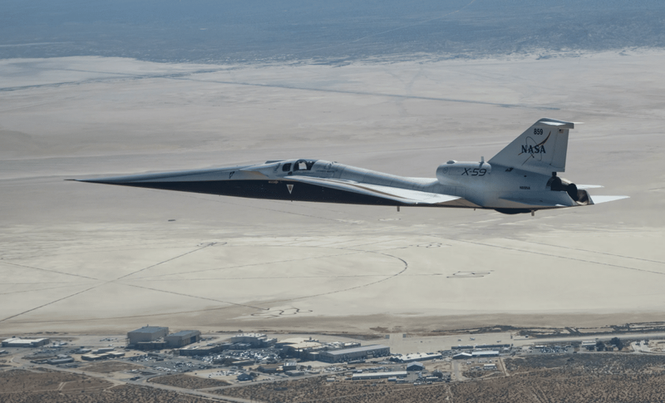
NASA’s experimental X-59 aircraft is pushing the boundaries of supersonic flight, as engineers conduct a series of innovative test flights designed to evaluate its performance under every possible condition. While the X-59 is built to fly faster than sound, recent tests are focusing on slower, lower-altitude maneuvers, ensuring the aircraft is fully prepared for its upcoming mission. These flights are part of NASA’s ongoing efforts to transform the future of commercial supersonic travel.
Testing Beyond Speed And Altitude
The X-59has already achieved initial flights at high altitudes and near-supersonic velocities, opening the door for a broader exploration of its operating envelope. Engineers are now deliberately flying the aircraft at lower altitudes and reduced speeds, evaluating its behavior in conditions that mirror real-world operations rather than extreme test scenarios. This approach allows the team to measure structural loads, flutter performance, and handling qualities in a comprehensive manner.
“Our priority was to get as high and fast as we could to allow the team to investigate the higher-risk portion of the envelope, then to work through the lower-altitude and lower-speed region while the team worked through the findings,” said Cathy Bahm, Low Boom Flight Demonstrator project manager at NASA’s Armstrong Flight Research Center.
This strategy ensures that every phase of flight, from takeoff to supersonic cruise, is rigorously evaluated for safety and precision.
Fine-Tuning Aircraft Responses
NASA engineers are conducting specialized tests that include flying as low as500 feet above the runway, with both the landing gear retracted and extended. These low-altitude trials are crucial for air data system assessments, providing detailed insights into how the X-59 reacts under varying aerodynamic forces. In some cases, previously flown tests are repeated with strain gauges, sensors that monitor the distribution of stress across the airframe.
These measurements help engineers understand subtle effects on the aircraft, from the way it handles minor speed fluctuations to how its wings and fuselage respond to repeated stress.
Preparing For Future Supersonic Operations
The data collected during these slower and lower flights will support the X-59’s next phase of testing, which will include full supersonic runs over populated areas. The ultimate goal is to produce a low-boom aircraft capable of supersonic travel without the disruptive sonic boom traditionally associated with speeds beyond Mach 1.
These comprehensive trials not only advance NASA’s research into quieter supersonic technology but also pave the way for the potential return of commercial supersonic travel over land. By analyzing performance across every combination of speed, altitude, and configuration, NASA ensures that the X-59 can meet both operational and regulatory requirements while maintaining safety and efficiency.
Enjoyed this article? Subscribe to our free newsletter for engaging stories, exclusive content, and the latest news.