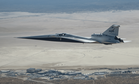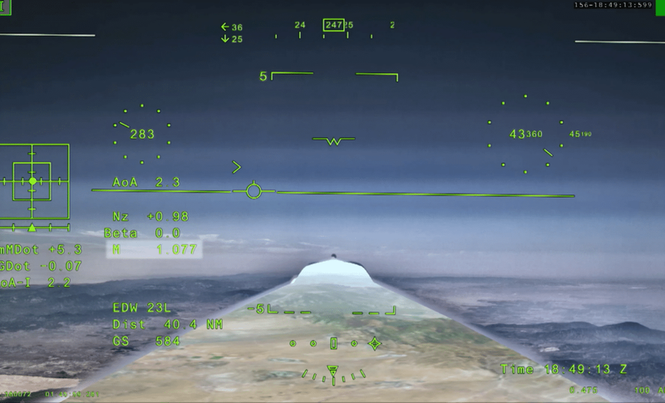
NASA’s experimental X-59 aircraft has officially flown faster than the speed of sound, marking a pivotal milestone in the pursuit of quiet supersonic travel. On June 5, 2026, the X-59 soared above Edwards Air Force Base in California, reaching Mach 1.1, proving that supersonic speeds and minimal sonic disruption can coexist, a breakthrough that could redefine the future of air travel.
A Flight That Could Change Supersonic Travel
The X-59’s inaugural supersonic flight lasted 81 minutes, starting at 11:08 a.m. PDT, with NASA test pilot Jim “Clue” Less at the controls. The aircraft climbed to an altitude of 43,400 feet while gradually accelerating beyond the sound barrier, demonstrating controlled supersonic flight with stable handling across both subsonic and supersonic regimes.
Designed as part of NASA’s Quesst mission, the X-59 aims to eliminate the disruptive sonic boom that has historically prevented supersonic passenger aircraft from flying over land. Instead, the plane produces a gentle “quiet thump,” allowing researchers to study public perception of supersonic noise and gather crucial data for future regulatory standards. The mission is laying the groundwork for a future where commercial jets could cross the country at supersonic speeds without disturbing communities below.

Progress and Ambitions for Mach 1.4
NASA Administrator Jared Isaacman emphasized the rapid development and testing progress of the X-59: “X-59 is getting ready for its quiet supersonic debut. Since the aircraft’s first flight on Oct. 28, 2025, the team has made tremendous progress, flying 16 times in the last 90 days and getting into a steady test rhythm. In the coming days, we expect to take the next step and push to Mach 1.4. I’m grateful to the NASA team and Lockheed Martin Skunk Works for their help getting us to this point, and I hope this is the first of many collaborations as we rebuild NASA’s X-plane portfolio.”
The next planned flight will push the aircraft to Mach 1.4 at approximately 55,000 feet, simulating realistic cruising conditions for eventual overland supersonic travel. A chase plane will monitor the X-59, allowing engineers to fine-tune performance metrics and validate noise measurements critical to demonstrating the aircraft’s quiet supersonic capability.
Celebrating American Innovation in Aerospace
Michael Kratsios, Assistant to the President for Science and Technology and Director of the Office of Science and Technology Policy, reflected on the broader significance of the X-59 program:
“The X-59’s first supersonic flight is a testament to America’s enduring leadership in science, engineering, and aerospace innovation. This achievement comes as the Trump Administration continues work to unleash supersonic flight and enable American ingenuity.”
This milestone highlights the United States’ ongoing commitment to pushing technological boundaries in aviation. By combining advanced aerodynamics, noise-reducing design, and rigorous testing protocols, the X-59 represents a new era in which supersonic travel can become commercially viable without compromising public acceptance or safety standards.
Quiet Supersonic Technology and the Future of Air Travel
The X-59 is central to theQuesst mission, which seeks to provide design tools and validated technologies for future quiet supersonic airliners. These advancements will help commercial operators achieve faster travel times without generating disruptive sonic booms over populated areas.
NASA’s approach includes extensive flight testing, envelope expansion, and sound profile verification. Each step generates data that can be shared with U.S. and international regulators to establish science-based noise standards. The long-term vision is a world where supersonic commercial flights routinely cross countries at unprecedented speeds, transforming how people experience air travel.