
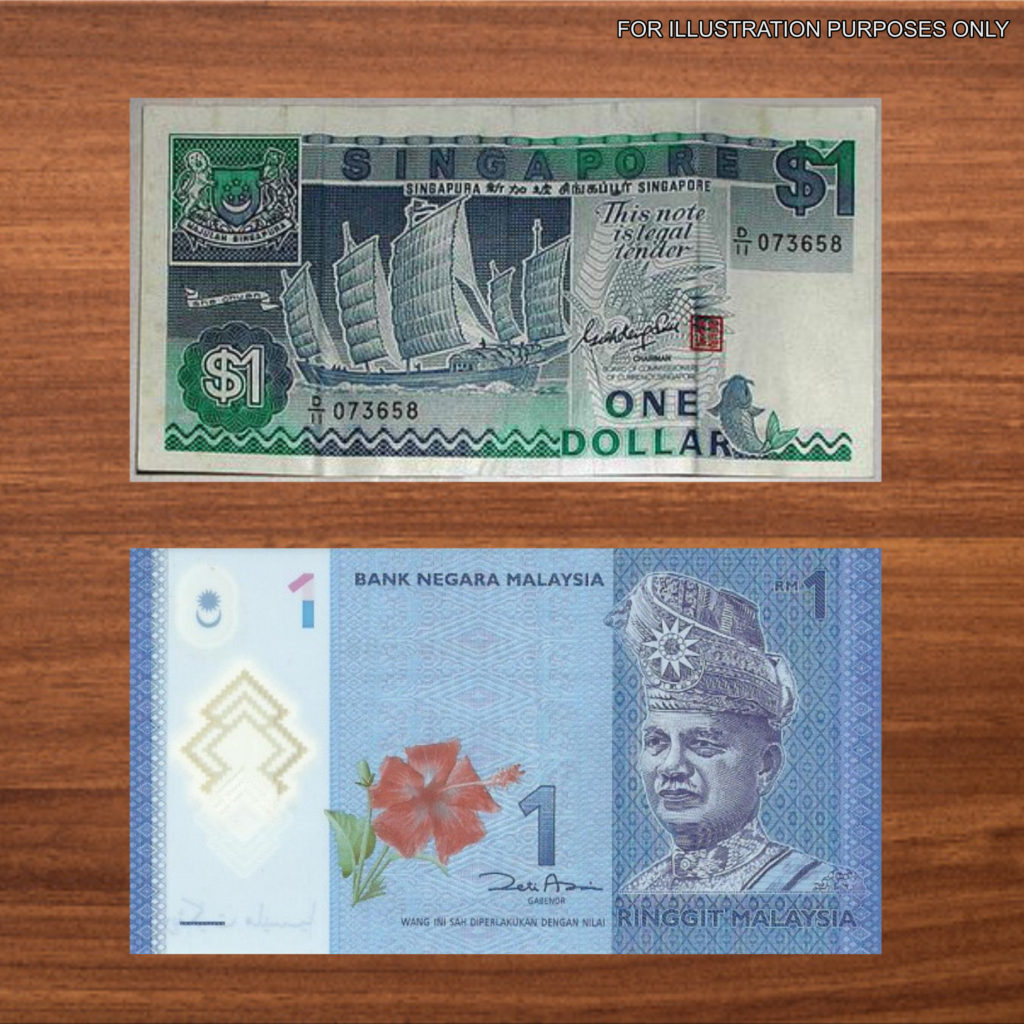
If someone asked you what’s the best-performing currency in Southeast Asia, the answer would be pretty straightforward. It’s got to be the Singapore Dollar (SGD), right?
Despite being one of the smallest nations in the world and officially the smallest in Southeast Asia, Singapore has by far the strongest economic prowess in the region. Moreover, its currency is not even far behind its namesake in the United States, which is an incredible feat!
In fact, the tiny island state south of the Causeway continuously ranks near the top of the world rankings by GDP per capita. Over the past two decades or so, the strength of SGD has always been the envy of Malaysians and a peek at the currency exchange rate pretty much shows the world why.
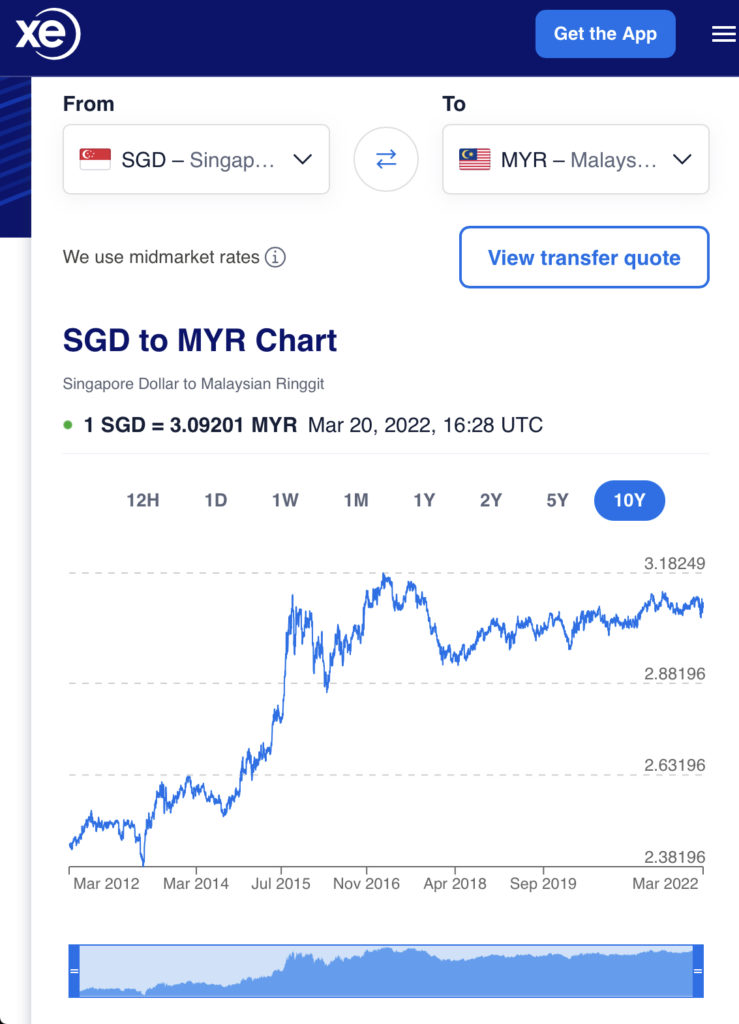
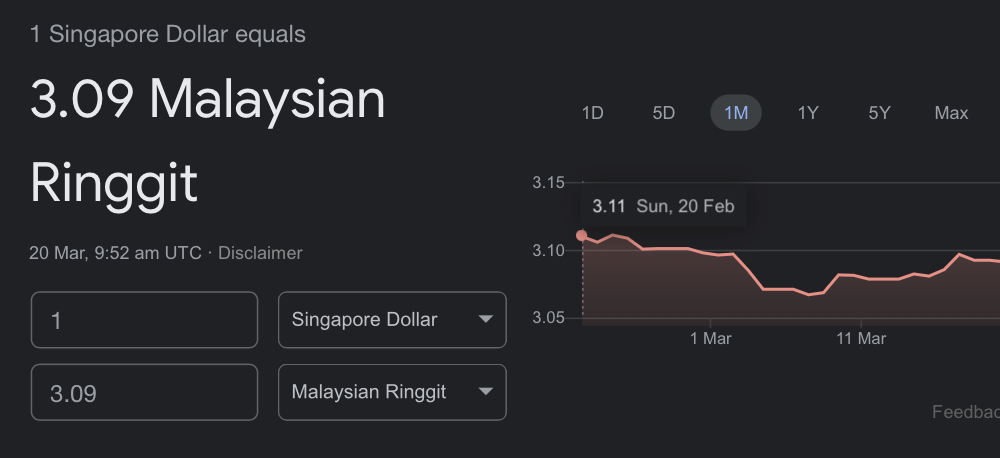
Over the past ten years, the Ringgit Malaysia (RM)’s best performance against SGD was in 2013 when SGD1 was equal to RM2.38 and it’s been an embarrassing showing for Malaysians ever since. In just two years after 2013, RM became increasingly devalued against SGD that the latter had tripled the worth of RM in 2015. Furthermore, throughout the subsequent seven years, SGD1 has always been worth around RM3 on average, with the exchange rate being SGD1=RM3.09 as of 20 March 2022.
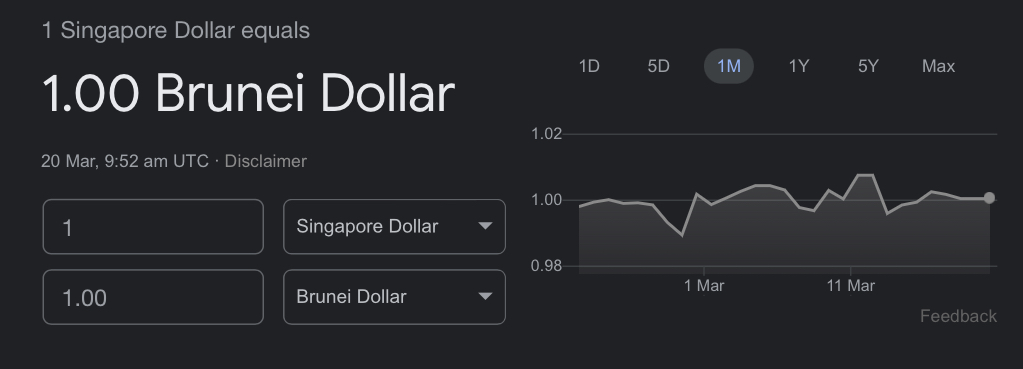
However, what if I told you that there is a national currency in Southeast Asia that rivals SGD? It’s even called ‘Ringgit’ too, though officially, it’s referred to as the Dollar. I am of course talking about the Brunei Dollar, which has had the same value as SGD since 1967!
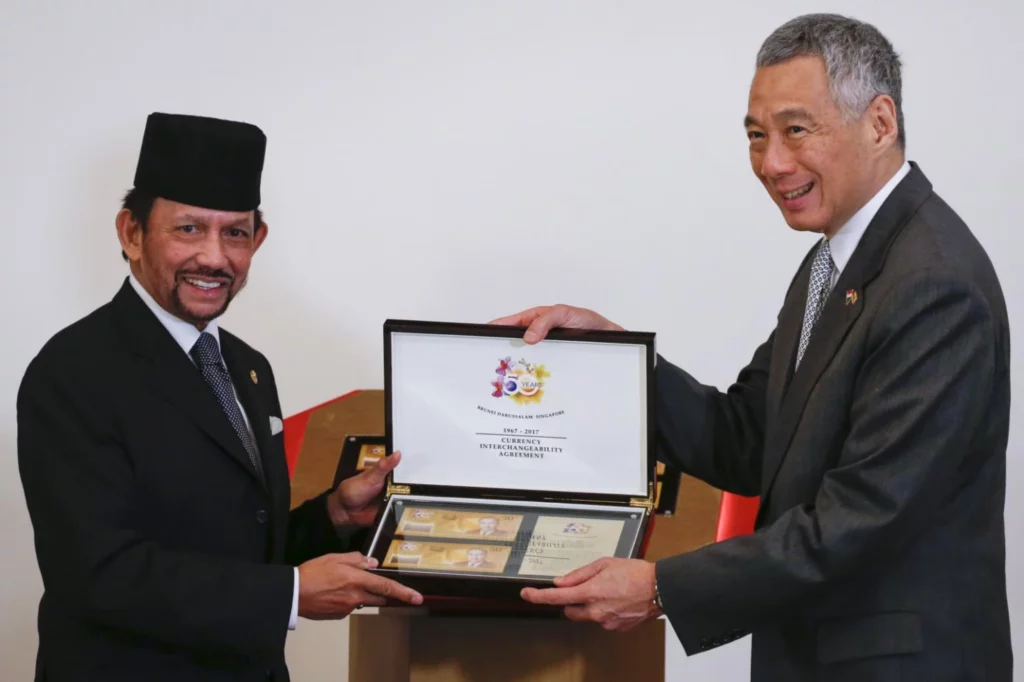
This is because both nations have an agreement in place that makes their currencies interchangeable with each other. Called the Currency Interchangeability Agreement (CIA) 1967, the agreement even made both currencies ‘customary tender’ with each other, meaning that Bruneians can use their Brunei Dollars to purchase items in Singapore without converting to SGD and vice versa.
If you haven’t heard of this agreement before, then here’s a shocker for you:
Malaysia was actually part of CIA 1967 too!
That’s right! If Malaysia were still part of the agreement, SGD will always remain the same value as RM1 up to this day. Alas, this is not the case as the Malaysian Federal Government decided to terminate the agreement way back in 1973 due to several reasons.
Here’s everything you need to know:
1. Currency Interchangeability Agreement (CIA) 1967
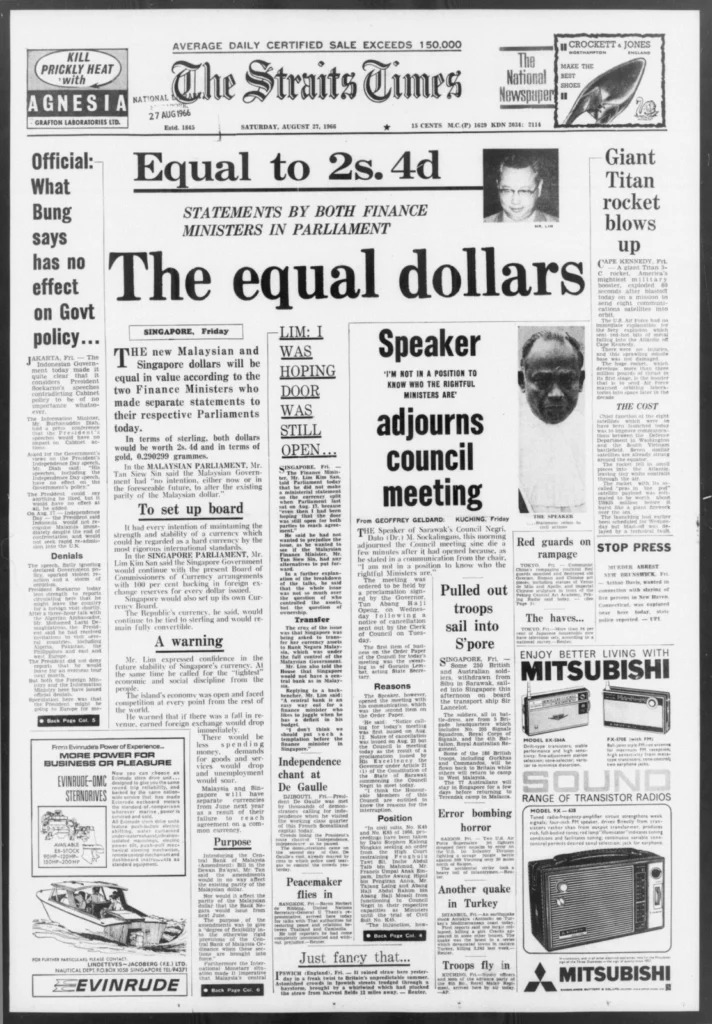
According to the Monetary Authority of Singapore (MAS) which elaborated on the agreement in detail here, CIA 1967 was signed in the year, well, 1967 on 12 June between these three countries which issued their own currencies after their respective independence:
- Malaysia with the Malaysian Dollar
- Singapore with the Singapore Dollar
- Brunei with the Brunei Dollar
Furthermore, this agreement has its roots in the historical Straits Dollarisation to Malayan Currency Area from 1897 to 1967 introduced by the British Empire. Besides that, the agreement is also partly due to the establishment of the Board of Commissioners of Currency for the Straits Settlements (comprising Singapore, Penang and Malacca) in 1897.
Immediately prior to 1967, both Singapore and Malaysia used the Malaya Dollar (the former was still part of Malaysia at the time). Meanwhile, Brunei was using the British Borneo Dollar as its currency.
CIA 1967 was signed when all three countries changed their currencies from their previous iterations and decided that an Interchangeability Agreement would be in all three nations’ best interest. Essentially, the agreement stipulated that:
- All three countries must accept each other’s currencies
- All three countries must exchange them at par, without charge, into its own currency
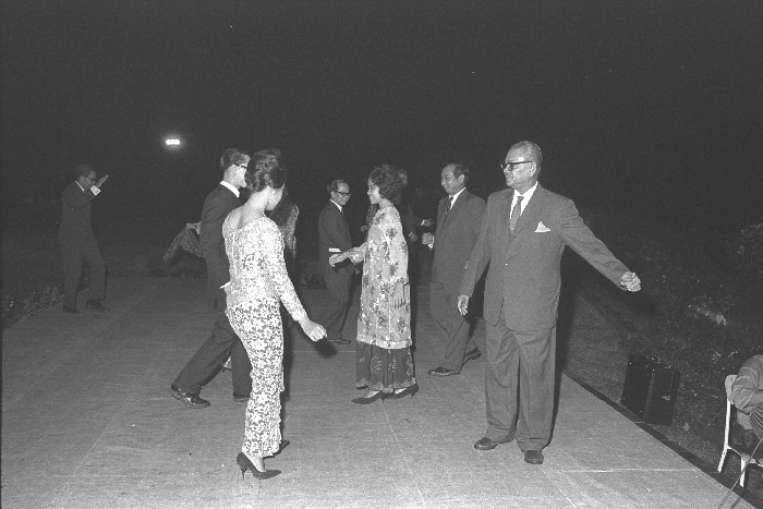
With the agreement in place, all three currencies would not be legal tender when circulating in the other participating countries but would be customary tender instead. Furthermore, the currency would be repatriated to the issuing country periodically.
That’s why until today, Singaporeans can use SGD in Brunei without converting and vice versa as mentioned earlier. Moreover, both Brunei and Singapore are committed to continuing the agreement indefinitely, despite significant economic and diplomatic policy changes by both countries respectively.
2. Understanding Malaysia’s decision to terminate the agreement
So, why did Malaysia pull out of the agreement? I will be writing a more in-depth analysis in the future regarding this decision by the Federal Government led by Tun Abdul Razak in 1973, but broadly speaking, CIA 1967 was terminated simply because it didn’t benefit our country back then.
According to MAS, the termination by Malaysia was partly made due to several international events that shook the global economy as well as the international monetary system during the 1970s. One of them was when US President Richard Nixon closed the gold window and devalued the US Dollar against gold in August 1971. This change badly affected Malaysia’s monetary system along with many others as suddenly, all currencies automatically revaluated against the US Dollar.
The situation became more complex in 1973 and post-Vietnam War when the Bretton Woods system of fixed exchange rates broke down. All the major currencies then decided to float against the US Dollar.
While these events were happening overseas, the Malaysian Government decided it was best to focus on domestic development, especially with the implementation of the New Economic Policy (NEP) in 1971. Hence, having two ‘inferior’ countries as Singapore and Brunei arguably were at the time pegging your currency’s value just doesn’t bode well with our nation’s leaders at the time.
With all of these circumstances in mind, the Malaysian Cabinet’s decided to terminate the agreement with Singapore on 8 May 1973.
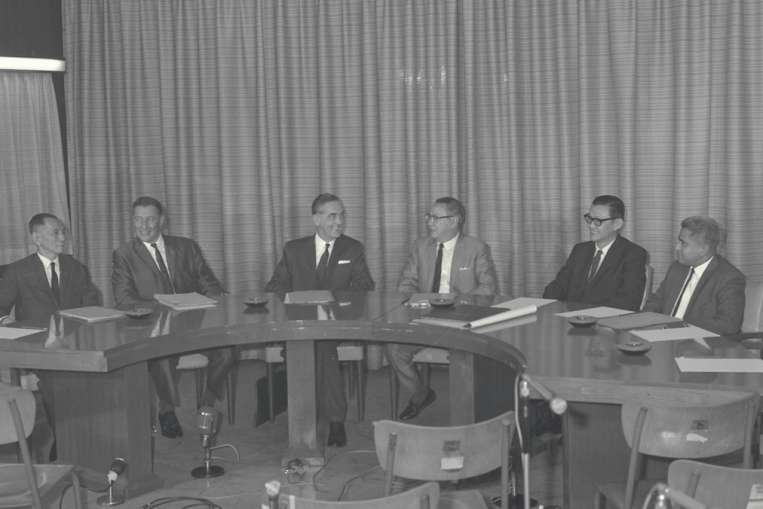
Two weeks later, Malaysia also terminated the Interchangeability Agreement with Brunei. And the rest, as they say, is history.
Fast forward to 2022, a lot of things have changed and Singapore has now established itself as an economic powerhouse in Asia, let alone Southeast Asia. With Singapore’s agreement still in place with Brunei, the latter can proudly say that they too have the strongest currency in the region.
Looking back, despite the termination of CIA 1967 looking like a sound decision by Malaysia at the time, you just can’t help but wonder: What would’ve happened should the agreement is still being implemented by our country today?
Jamie is a content writer under Headliner by Newswav, a programme where content creators get to tell their unique stories through articles and at the same time monetize their content within the Newswav app.
Register at headliner.newswav.com to become one of our content writers now!
Newswav is solely an aggregation platform and hosts the content. The views expressed and content above including media (pictures, videos, etc) were provided by the author. If you have any questions about the content, copyright or other issues of the work, please contact Newswav.