
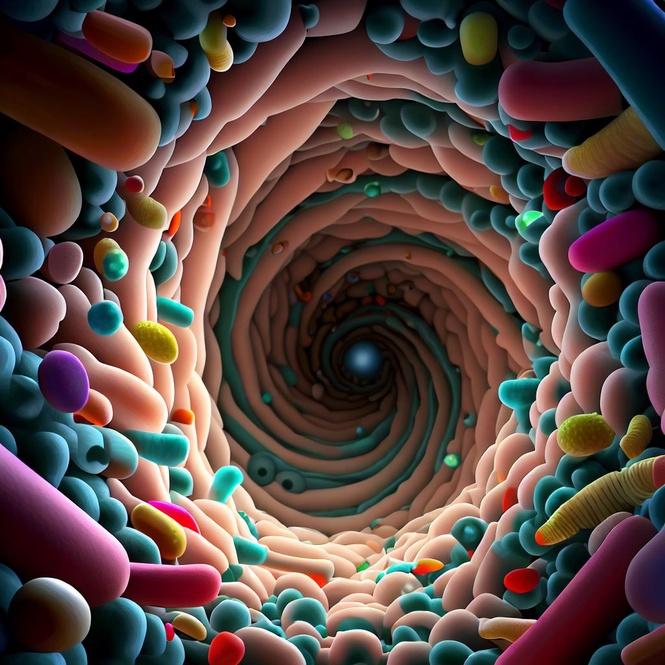
Your gut microbiome is a complex and diverse community of microorganisms that live in your digestive tract. It consists of trillions of bacteria, fungi, viruses and other microbes that help you digest food, produce vitamins, regulate your immune system, protect you from infections and influence your mood and behaviour.
Your gut microbiome is like a second brain that communicates with your body and affects many aspects of your health.
1. The number and diversity of microbes in your gut depend on many factors, such as:
- (a) Your diet: The food you eat affects the composition and function of your gut microbiome. A diverse diet rich in fiber, fruits, vegetables, fermented foods and probiotics can support a healthy and balanced gut microbiome. A diet high in processed foods, sugar, fat and animal products can reduce the diversity and quality of your gut microbiome.
- (b) Your lifestyle: Factors such as stress, sleep, exercise, smoking, alcohol and medication can also influence your gut microbiome. For example, stress increase inflammation and deteriote the balance of the microbiome. Exercise can enhance the diversity and function of your gut microbes and improve your immune system.
2. How does the gut microbiome impact your health?
The impact depends on the balance and type of bacteria in our gut which in turn depends on our lifestyle.
The composition of the microbiome is not fixed but rather a dynamic and diverse ecosystem that changes over time.
Some of the bacteria in the gut are beneficial to us. However there are some bacteria present in our gut that are not beneficial to us or even harmful to us. These harmful bacteria should not be in our gut but they enter our gut through our wrong lifestyle.
Here are the aspects of our health that are affected by the microbiome in our gut.
The names of the bacteria in the examples are given at the bottom of the article (listed as [1], [2] etc.) to make this article easier to read.
a. Digestion: Your gut microbes help you break down food, absorb nutrients, produce enzymes and synthesize vitamins. Some of the beneficial bacteria in your gut digest the healthy sugars in breast milk and dairy products [1].
Some of the harmful bacteria in your gut cause diarrhea and ulcers [2].
b. Immunity: Your gut microbes interact with your immune system and modulate its response to pathogens and allergens. Some of the beneficial bacteria in your gut produce anti-inflammatory substances and protect your gut barrier, preventing leaky gut syndrome [3].
Some of the harmful bacteria in your gut trigger inflammation and infection [4].
c. Metabolism: Your gut microbes influence your metabolism and affect your weight, blood sugar, cholesterol and appetite1. Some of the beneficial bacteria in your gut ferment dietary fiber into short-chain fatty acids (SCFAs) that provide energy for your cells and regulate your blood sugar [5].
Some of the harmful bacteria in your gut extract more calories from food and increase fat storage leading to higher BMI and higher risk of obesity [6].
d. Mood: Your gut microbes communicate with your brain via the vagus nerve. The microbiome stimulates the vagus nerves by producing neurotransmitters (dopamine and serotonin).
For those who are interested, my article on dopamine can be found here and my article on serotonin can be found here.
The vagus nerve is the main nerve of the parasympathetic nervous system. The parasympathetic nervous system is one of the two divisions of the autonomic nervous system which regulates involuntary body functions such as digestion, heart rate and respiration. The parasympathetic nervous system is responsible for the “rest and digest” functions, which conserve and restore energy.
Therefore stimulating the vagus nerve through the production of neurotransmitters (dopamine and serotonin) by bacteria in the microbiome will give us a "state of rest", that is, relaxes us.
Some of the beneficial bacteria in your gut that produce serotonin and dopamine which improve your mood are listed in [7] below this article.
Some of the harmful bacteria in your gut produce toxins that induce anxiety and depression [8].
e. Produces short-chain fatty acids (SCFA) :
SCFAs are molecules that are produced by some bacteria in the microbiome from dietary fibre in the colon [9]. Refer to (c).
Short-chain fatty acids
(i) provide energy for the cells in the gut (ii) regulate the blood sugar level.
(iii) make the gut lining less porous, which prevents chemicals produced by microbes from reaching the brain where they can modify mood and cause anxiety.
(iv) reduce inflammation and modulate the immune system prevent diseases like inflammatory bowel disease.
(v) stimulate the vagus nerve, which connects the gut and the brain and improves appetite and our mood ( refer to d)
3. How can you improve your gut microbiome?
Improving our gut microbiome means improve the composition and balance of the gut microbiome - more of the beneficial bacteria and less or even none of the harmful bacteria.
There are many ways to improve your gut microbiome, such as:
- (a) Eat a diverse range of foods: This can lead to a diverse microbiome, which is an indicator of good gut health. In particular, eat more fiber, fruits, vegetables, fermented foods and probiotics (eg. kimchi, yogurt, kefir, kombucha, sauerkraut) that can nourish your beneficial gut microbes and inhibit the growth of harmful ones.
- (b) Limit your intake of processed foods, sugar, fat and animal products: These can reduce the diversity and quality of your gut microbiome and increase the risk of obesity, diabetes, heart disease and inflammation.
- (c) Manage your stress levels: Stress can alter the balance of your gut microbes and increase inflammation. Try to practice relaxation techniques, such as meditation, yoga, breathing exercises and mindfulness.
- (d) Get enough sleep: Sleep can affect the metabolism of the gut microbiome. Aim for at least seven hours of quality sleep per night and avoid caffeine, alcohol and blue light before bedtime.
- (e) Exercise regularly: Exercise can enhance the diversity and function of your gut microbes and improve your immune system. Aim for at least 150 minutes of moderate-intensity physical activity per week and vary your exercise routine.
- (f) Avoid smoking, alcohol and unnecessary medication: These can damage your gut lining and disrupt your gut microbiome. Quit smoking, limit your alcohol intake to no more than one drink per day for women and two drinks per day for men, and consult your doctor before taking any medication, especially antibiotics.
Your gut microbiome is a fascinating and important part of your health. By taking care of it, you can improve not only your digestion, but also your immunity, metabolism, mood and overall well-being.
List of bacteria mentioned in Section 2 (How does the gut microbiome impact your health?) :
[1] Bifidobacteria and Lactobacilli
[2] Clostridium difficile and Helicobacter pylori
[3] Faecalibacterium prausnitzii and Akkermansia muciniphila
[4] Escherichia coli and Salmonella typhimurium
[5] Bacteroidetes and Prevotella,
[6] Firmicutes and Methanobrevibacter smithii
[7] Lactobacillus rhamnosus and Bifidobacterium longum.
[8] Campylobacter jejuni and Citrobacter rodentium
[9] Faecalibacterium prausnitzii and Ruminococcus spp.
Kevin Wong is a content creator under the Newswav Creator programme, where you get to express yourself, be a citizen journalist, and at the same time monetize your content & reach millions of users on Newswav. Log in to creator.newswav.com and become a Newswav Creator now!
The User Content (as defined on Newswav Terms of Use) above including the views expressed and media (pictures, videos, citations etc) were submitted & posted by the author. Newswav is solely an aggregation platform that hosts the User Content. If you have any questions about the content, copyright or other issues of the work, please contact Newswav.
