

1. Introducing abdominal breathing
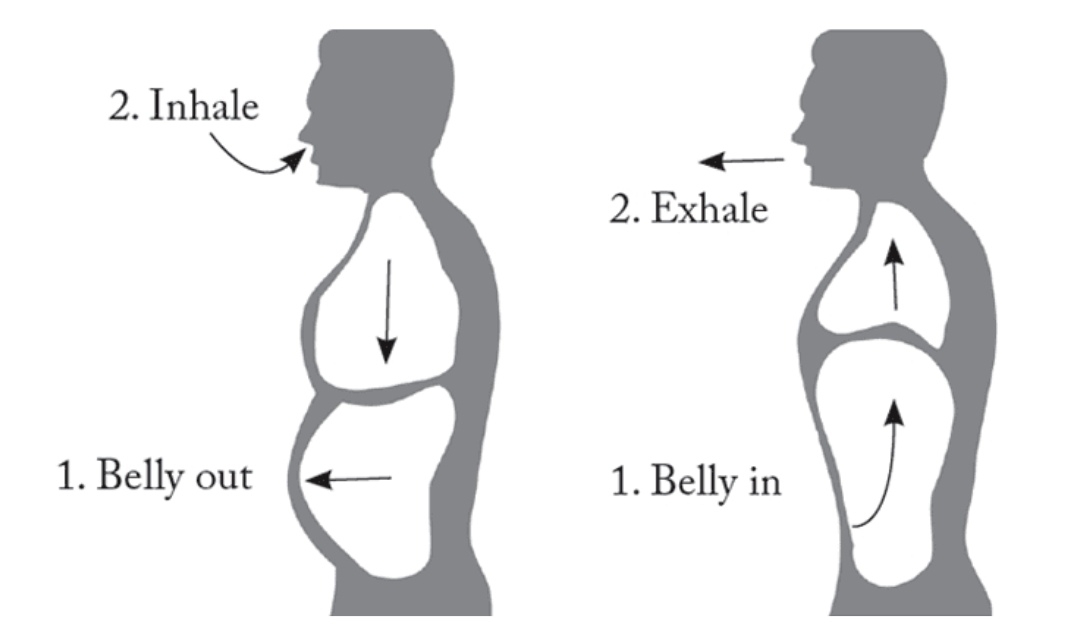
Abdominal breathing, also known as diaphragmatic breathing, is a technique that involves breathing deeply and slowly from the abdomen involving the diaphragm rather than the chest.
2. Inhalation and exhalation mechanisms
(a) Two types of muscles are involved :
(i) muscles between the ribs
(ii) the diaphragm (dome-shaped at relaxed state, at the base of the lungs
(b) (i) Inhalation :
- diaphragm contracts (tightens) and moves downward.
- certain muscles between the ribs contract.
- The rib cage (bony structure that surrounds and protects the chest cavity)
moves outward and upward.
- this creates more space in your chest cavity reducing the pressure in it and causing the lungs to expand.
- air moves into the lungs.
(ii) Exhalation
- diaphragm relaxes and becomes some-shaped again.
- certain other muscles between the ribs contract.
- The rib cage moves inwards and downwards.
- this creates less space in your chest cavity increasing the pressure in it and causing the elastic tissues of the lungs to recoil.
- air is expelled from the lungs
3. Abdominal breathing is natural
Have you ever observed the breathing rhythm of a newborn who is fast asleep?
If you have, you will notice that as the baby inhales, its belly rises like a balloon, and when it exhales, the tummy flattens, with very little lung activity.
4. The neuroscience behind thoracic breathing (shallow chest breathing) and abdominal breathing
(Refer to Part 1 for an explanation of sympathetic and parasympathetic nervous systems)
The neuroscience behind thoracic breathing (shallow chest breathing) and abdominal breathing lies in the way these different types of breathing patterns impact the body’s nervous system.
(a) When we engage in thoracic breathing - we activate the sympathetic nervous system, which is responsible for the body’s “fight or flight” response.
- This can lead to feelings of stress, anxiety, and tension.
- Thoracic breathing can also lead to shallow breathing, which can cause a decrease in blood oxygen levels and collapse of the air sacs (alveoli) in the lungs (see Part 1)
(b) When we engage in abdominal breathing,
- we activate the parasympathetic nervous system, which is responsible for the body’s “rest and digest” response.
- This can lead to feelings of relaxation, calmness, and reduced tension in the body.
- Abdominal breathing can also increase blood oxygen levels, improve heart rate and decrease the production of stress hormones.
- Studies have shown that practicing abdominal breathing can lead to changes in brain activity, including increased activity in the prefrontal cortex, which is responsible for higher-order cognitive processes such as decision-making and problem-solving.
- Abdominal breathing has also been shown to reduce activity in the amygdala, a part of the brain that is associated with fear and emotional processing.
5. Advantages of abdominal breathing
Based on the neuroscience above,
here are some of the advantages of abdominal breathing:
(a) Reduces stress and anxiety: Abdominal breathing can help lower the levels of cortisol, a hormone associated with stress, and increase the levels of endorphins, which are natural painkillers and mood elevators.
(b) Improves lung function: Abdominal breathing helps to increase the amount of oxygen that enters your lungs and improves the efficiency of your breathing.
This will cause a reduction of heart rate - again controlling the body (abdominal breathing) to control the mind (causing it to reduce heart rate)
(c) Lowers blood pressure: Abdominal breathing can help to lower your blood pressure by reducing the amount of work your heart has to do to pump blood throughout your body.
(d) Improves digestion: Abdominal breathing can help to stimulate parasympathetic nervous system (the rest and digest system) and therefore the hence digestion is improved.
(e) Enhances sleep quality: Abdominal breathing can help to reduce stress and anxiety, which can lead to better sleep quality.
(f) Clarity of the mind for decision-making and problem-solving.
6. Are we still practising abdominal breathing?
Observe your own breathing pattern. To do so, put one hand on your abdomen or belly and the other on your chest and watch your breathing pattern.
You might be surprised to see that your belly goes in as you inhale and comes out as you exhale. If that happen, you are not practising abdominal or diaphragmatic breathing!
All of us are born with the knowledge of how to fully engage the diaphragm to take deep, refreshing breaths.
As we get older, however, we get out of the habit. Everything from the stresses of everyday life to the practice of "sucking in" the stomach for a trimmer waistline! (to look good! ) encourages us to gradually shift to shallower, less healthy "chest breathing" that can cause shallow breathing.
(Read Part 1 of this series on the harmful effects of shallow breathing)
7. How to carry out abdominal breathing?
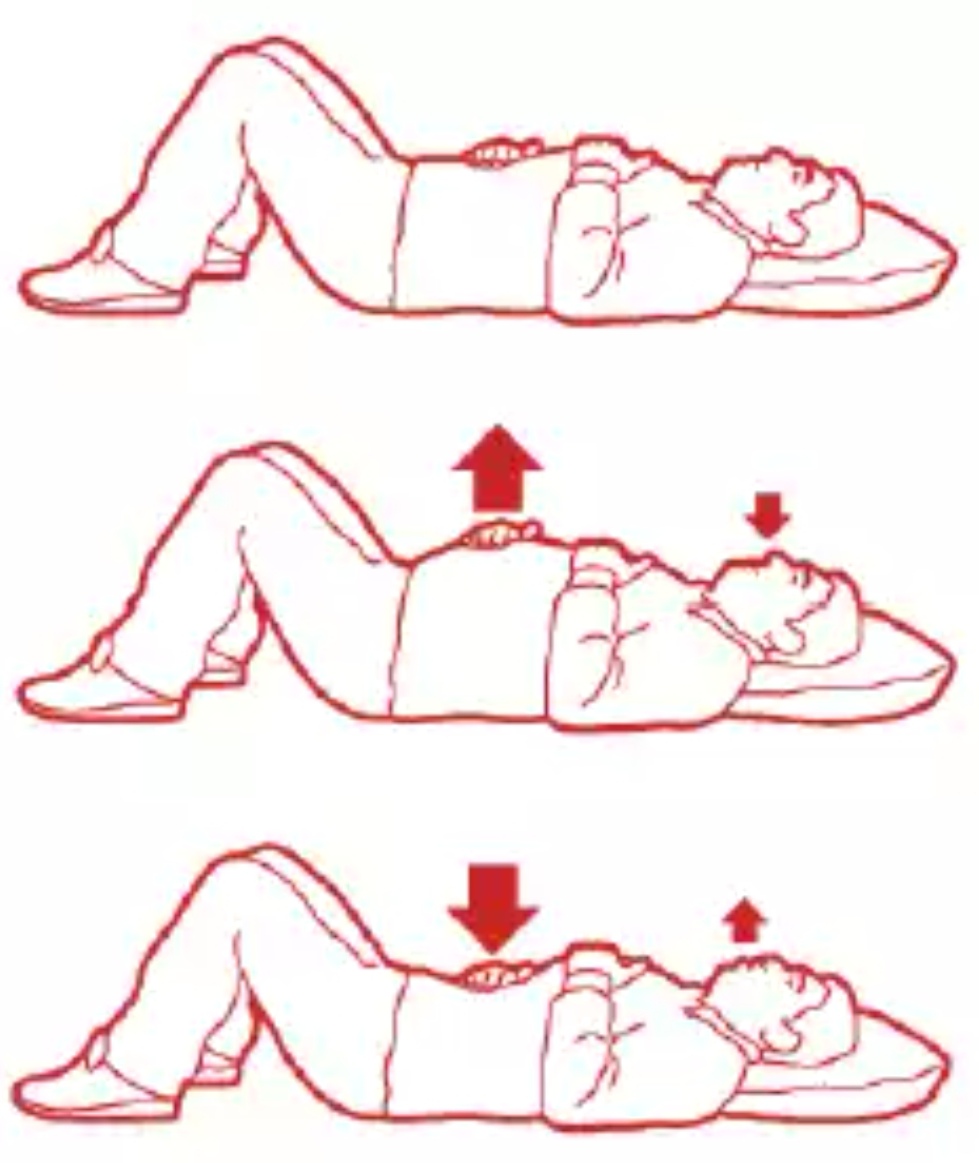
To practice abdominal breathing, you can follow these steps:
(a) Sit or lie down in a comfortable position.
(b) Place one hand on your chest and the other on your belly.
(c) Inhale slowly and deeply through your nose, feeling your belly rise as you breathe in.
(d) Exhale slowly through your mouth, feeling your belly fall as you breathe out.
(e) Repeat for several minutes, focusing on your breath and relaxing your body.
In Part 3 of this series, we will look at 3 more breathing techniques.
Kevin Wong is a content creator under the Newswav Creator programme, where you get to express yourself, be a citizen journalist, and at the same time monetize your content & reach millions of users on Newswav. Log in to creator.newswav.com and become a Newswav Creator now!
The User Content (as defined on Newswav Terms of Use) above including the views expressed and media (pictures, videos, citations etc) were submitted & posted by the author. Newswav is solely an aggregation platform that hosts the User Content. If you have any questions about the content, copyright or other issues of the work, please contact Newswav.