
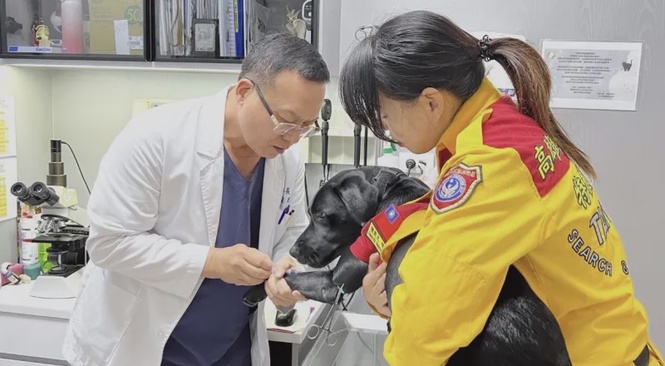
When a stray dog with two or three untreated illnesses and no medical history walks into Feng Zong-hong's clinic, he tells his staff the same thing every time: this animal is the teacher.
Feng has spent more than four decades practicing veterinary medicine in Kaohsiung, where he now heads Hongli Animal Hospital and chairs the Kaohsiung Veterinary Medical Association. His practice has grown from a single clinic into a team of 20 to 30 veterinarians offering round-the-clock emergency care, diagnostic imaging, oncology, rehabilitation and long-term care for aging pets. Ask him what that growth is really about, though, and he doesn't talk about scale. He talks about learning, and about how many lives get properly cared for.
Three Vet Uncles Sparked A Calling
Feng's path into veterinary medicine started early. All three of his uncles were veterinarians, some running ranches and others running animal hospitals, and watching them treat animals as a child, he decided in high school that he would become a vet himself.
He graduated from what was then Pingtung Junior College of Agriculture's veterinary program in 1985 and passed his licensing exam. At the time, Taiwan's veterinary training still centered on livestock, cattle, pigs and chickens, with little instruction in treating household pets. It was only after he entered clinical practice, he said, that he realized the license was just a starting point.
Building Skills That School Never Taught Him
To close that gap, Feng spent his early years chasing every course and mentor he could find, in diagnostics, internal medicine, surgery, orthopedics, ultrasound and radiography. Altogether he spent more than NT$1.5 million on continuing education, a large sum for a veterinarian just starting out.
"Wherever there was a course, I went. Whenever a senior colleague had a skill I lacked, I went and learned from him," he said. When he encountered a procedure he didn't know how to perform, he sometimes brought the case directly to a more experienced colleague, let them take the fee, and simply watched. Once he had learned the technique, he brought it back to his own clinic.
Strays Became His Toughest Teachers
In 1994, Feng opened his first clinic, Hong Ren Animal Hospital. A visitor once gave him a couplet whose closing line he has carried for decades: "Never say the lives of dogs and cats are lesser. They too pass through the six realms of reincarnation."
Around that time, an animal welfare group asked him to help treat stray animals, and he agreed. The caseload grew quickly, soon overwhelming the roughly ten beds his clinic had for inpatient care, and the shortage of space pushed him to plan something larger. In 2004, he opened Hongli Animal Hospital, more than 300 ping (about 9,900 square feet) at the time, which has since expanded into 24-hour critical care, referral treatment, imaging, oncology, rehabilitation and senior pet care.
"I always tell our veterinarians: these strays are our teachers," Feng said. Strays often arrive carrying two or three untreated conditions at once, with no medical history to guide a diagnosis, which makes them harder cases than the average family pet. "They arrive already sick, and that's what teaches us how to diagnose. If you can treat a stray well, you can treat any family dog or cat well."
That belief is also why Feng later poured his time into training the next generation of veterinarians, founding clinical veterinary societies and organizing seminars and hands-on courses. Taking the helm of the Kaohsiung Veterinary Medical Association added a broader responsibility: improving the profession's working conditions and communication between government, veterinarians and pet owners. "One veterinarian can change the fate of one animal," he said. "A good medical team can protect many more lives."
From Treating Illness To Lifelong Health Management
Over more than 40 years, Feng has watched the role of pets in Taiwan change. Dogs once guarded homes and cats caught mice; today, both are widely treated as family members, referred to affectionately in Chinese as "maoxiaohai," or fur kids.
As that role shifted, so did owners' expectations of veterinary care, moving away from visits only when an animal fell ill and toward vaccination, parasite prevention, nutrition, weight management, behavior, rehabilitation, chronic disease management and elder care. "The future isn't just about treating disease," Feng said. "Veterinarians need to become health managers." Good care, in his view, should start before a problem appears, helping owners build the right habits early.
Aging Pets Need Quality Of Life
Seven or eight years ago, well ahead of today's growing interest in "senior pet" care, Feng began building out long-term care services for aging animals. His reasoning was simple: as veterinary medicine and nutrition have extended cats' and dogs' lifespans, much as they have for people, demand for elder care was bound to follow. Heart disease, joint degeneration, endocrine disorders, tumors and cognitive decline are now common in older dogs and cats, and many of those conditions can be managed but not cured.
"The most important thing is maintaining its quality of life," Feng said. Through regular checkups, early detection and adjustments to nutrition, environment, rehabilitation and chronic disease management, he said, the goal isn't simply adding years to a pet's life, but making sure those extra years are worth living. Owners often assume that an older pet eating less, sleeping more or moving slower is simply "getting old." Feng cautions that aging itself is not a disease, and that not every physical or behavioral change should be written off as age alone; regular exams and daily observation are what catch problems before they worsen.
To the young veterinarians now entering a fast-growing field, Feng's advice has little to do with market opportunity. He wants them to hold onto responsibility, empathy, continual learning and respect for life, treating every patient that walks through the door as they would their own family. "I think I'm a pretty practical person," he said. "Whatever I set out to do, I try to see it through."
Over four decades, what Feng has really built may not be a bigger business, but a growing number of lives properly cared for, and a growing number of veterinarians willing to help protect them. Taiwan's pets have gone from watchdogs and mousers to fur kids; in Feng's telling, its veterinarians are shifting from disease-treaters to lifelong health guardians. What shouldn't change, he says, is respect for life, commitment to the profession, and a willingness to keep learning, and doing a little more.
Social Media Links & Editor Tag - Penny