_1652931074_9592.jpg)
Southeast Asia is the primary location of Chinese car manufacturers overseas car assembly plants. In case you did not know this, in 2025, the region accounted for more than half of China’s overseas dual ICE-EV manufacturing footprint, with Thailand and Indonesia being respectively home to more than 30% and 20% of the total.
However, production has yet to ramp up where in 2025, the average Chinese capacity utilisation for battery electric car production was estimated around 20% in Thailand and below 15% in Indonesia.
Utilisation is expected to rise in 2026 as regional trade policy shifts to favour local assembly over imports. The recent rise in Chinese exports of knockdown vehicle kits (semi-knocked down [SKD] and completely knocked down units [CKD]) is also likely to drive up utilisation.
So ….Who is Leading the Charge?
A few major players from the top 10 are driving the bulk of these numbers:
Chery Group: Serving as one of China’s most dominant export forces, Chery exported roughly 70% of its total vehicle sales in the first half of 2026 alone (amounting to over 943,800 units).
BYD: The EV powerhouse raised its individual full-year export target to 1.5 million vehicles for 2026, driven by massive adoption of its hybrid and pure electric models in Europe, Brazil, and Southeast Asia.
SAIC Motor & Changan: SAIC continues to hold immense scale globally (especially through its MG brand), reporting 735,000 vehicles sold overseas in just the first half of the year, while Changan surpassed 400,000 international deliveries in the same period.
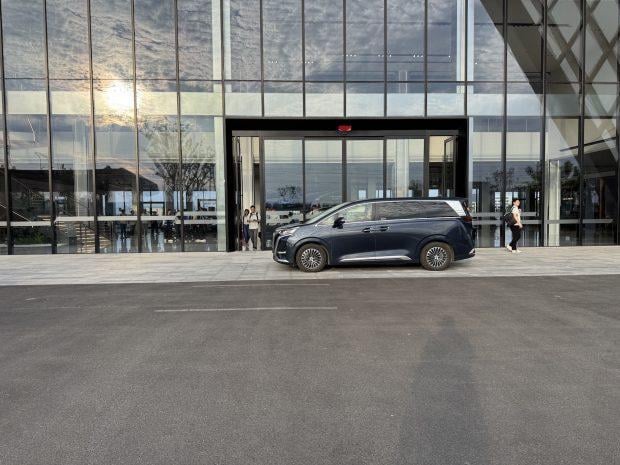
In 2025, around half of Great Wall Motor’s and SAIC’s car exports were knockdown vehicle kits meant for final assembly in importing markets. These exports allow Chinese EV makers to mitigate tariffs that are otherwise paid in full on completely built-up units (CBU), while ramping up overseas output wherever the local EV supply chain is not yet sufficiently developed for full-assembly manufacturing, as illustrated by BYD’s plant in Brazil, SAIC-GM-Wuling in Indonesia, or Great Wall Motor, SAIC and Wuling in Malaysia.
However, some countries are tightening policies to curb this trend. In 2026, Brazil accelerated the schedule of reinstating import tariffs on SKD and CKD kits to match those applied to CBUs, effectively encouraging EV makers to shift towards higher local content manufacturing.
Incumbent automakers like Japan’s Toyota and Korea’s Hyundai own the largest dual ICE-EV manufacturing capacity in Southeast Asia, totalling 1.2 million cars. However, only a handful of their assembly lines are producing electric models; in 2025, they produced fewer than 2500 electric cars across these plants.
However, rising output from Chinese OEMs is set to intensify competition, and to challenge the EV production ramp-up of incumbents operating in Southeast Asia.
The post 10 Largest Chinese OEMs Announced Combined Overseas Sales Of 7M In 2026 first appeared on DSF.my.