
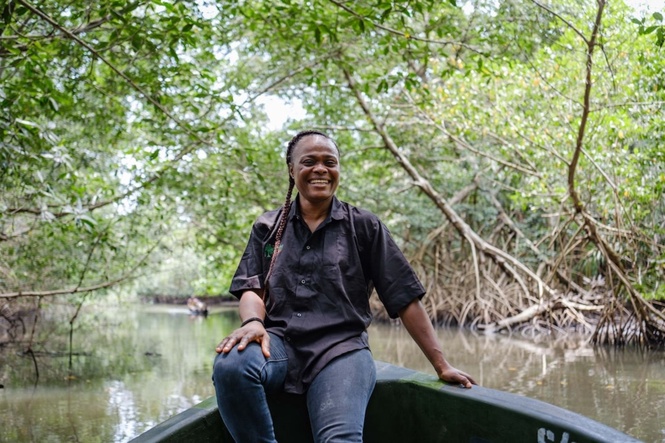
When Rachel Ikemeh began her work in conservation 21 years ago, she was entering territory that few women and few Nigerians had ventured into before. Today, she has become an example for the very communities she has spent decades working alongside.
She recalls one moment in particular. A member of her team had asked a young boy from the community what he wanted to be when he grew up. He answered by pointing at Ikemeh.
“That still brings me to tears,” she says.
It is a small moment that reflects the scale of what Ikemeh has set out to achieve. Her work has helped transform the way communities in Nigeria’s Niger Delta engage with conservation while giving some of the region’s most threatened species a chance to survive. She has now been named one of five Laureates of the 2026 Rolex Awards, receiving support to take her approach into new communities and ecosystems.
Along Nigeria’s southern coastline, the Niger Delta is a vast network of mangroves, forests, swamps, and waterways, forming part of the Guinean Forests of West Africa, an internationally recognised biodiversity hotspot. It contains the world’s third-largest mangrove forest and Africa’s second-largest swamp forest ecosystem, supporting thousands of plant and animal species while helping control floods, replenish groundwater, and mitigate climate change.
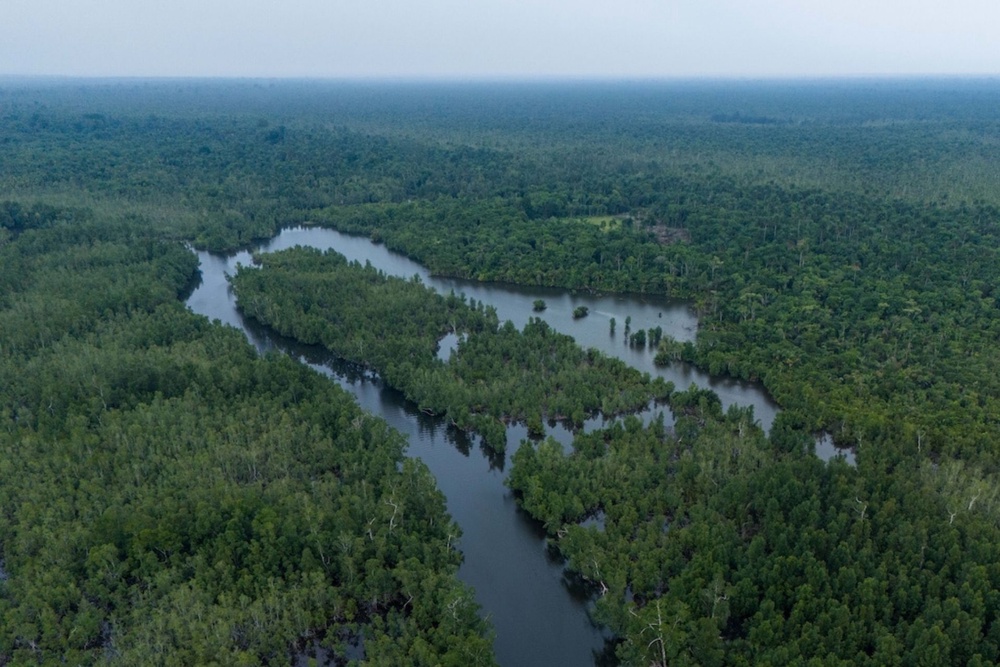
It is also one of the world’s most degraded environments. As the centre of Nigeria’s oil industry, the delta has suffered thousands of oil spills, damaging its waterways and wildlife. The pollution of the waterways has forced local fishing communities to take up logging, placing further pressure on the Niger Delta’s habitats.
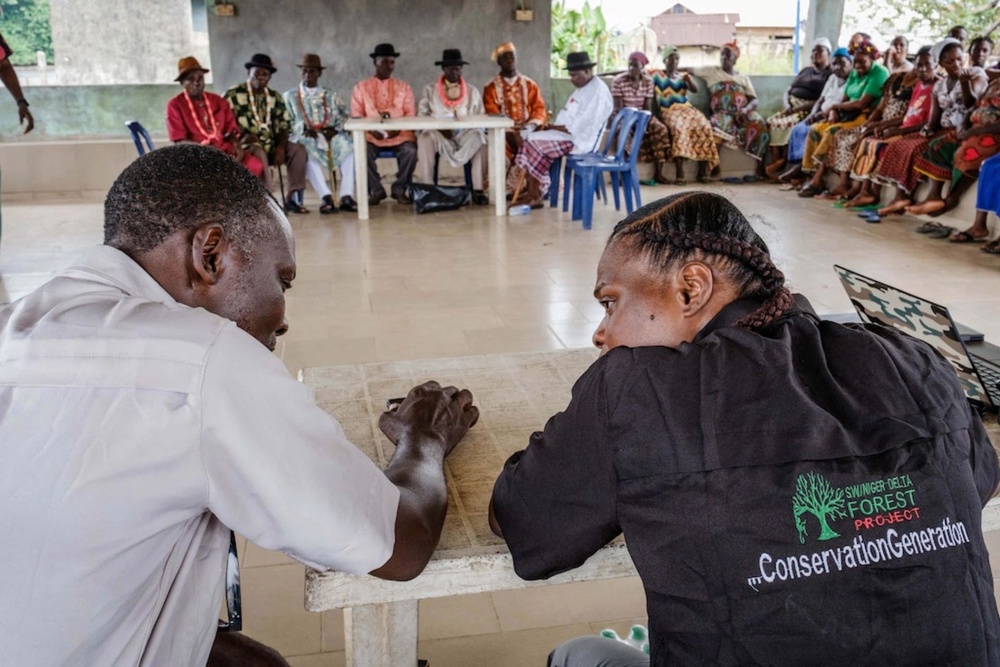
It was within this increasingly fragile landscape that Ikemeh, founder of the South-West/Niger Delta Forest Project (SWNDFP), developed her community-led approach to conservation. After years of advocacy and negotiation, she helped establish a more than 1,000-hectare conservation area in 2021, managed and protected by the local Apoi community.
The results have been significant. The forest now protects at least 13 threatened species, including the critically endangered Niger Delta red colobus monkey, an elusive species Ikemeh has helped bring back from the brink of extinction. Grey parrots, West African dwarf crocodiles, white-bellied pangolins, red-capped mangabeys, and sitatunga are among the other species benefiting from the programme.
Fishery resources have also recovered within the mangrove habitat, while the Apoi community has gained employment, education, infrastructure, and alternative livelihood opportunities. Conservation has consequently become part of the community’s future, rather than a separate environmental concern.
The Apoi project has since grown into a wider model. SWNDFP now manages four conservation areas covering more than 10,000 hectares, with at least 2,500 local livelihoods improved and over 18,000 people have engaged in conservation education.
The next phase will take that model further.

With support from Rolex, Ikemeh plans to establish four new community conservation areas, alongside a training hub and mobile education programme covering conservation planning, habitat management, project development, and sustainable livelihoods.
One of the new projects will also take her into a new area of conservation. In Foropa, on the Niger Delta coast, she plans to establish a locally managed marine area that will become the region’s first marine protected area.
The aim is to give coastal communities the tools to protect their marine environment while maintaining the resources on which their livelihoods depend. It is a natural extension of Ikemeh’s work, which places local knowledge and participation at the centre of long-term conservation.
Her recognition comes in the 50th anniversary year of the Rolex Awards. Originally launched in 1976 to commemorate half a century since the introduction of the Rolex Oyster, the first waterproof wristwatch, the programme has evolved from a celebration of human achievement into a platform for people working to understand and protect the planet. It now forms part of Rolex’s Perpetual Planet Initiative, launched in 2019.
The Perpetual Planet Initiative brings together Rolex’s partnerships across oceans, landscapes, and science, health, and technology. Its network now includes more than 30 partners and 165 Rolex Awards Laureates, supporting projects focused on the future of the natural world. For Ikemeh, the significance of the award ultimately goes beyond hectares protected or species saved. It can be measured in the people who now see conservation as a possible future.
This story first appeared on the GRAZIA Malaysia November 2026 print issue.
READ MORE
Crowning Glory: Rolex Pushes Materials and Watchmaking Forward in 2026
Rolex Marks Dr Sylvia Earle’s 90th Year by Honouring Her Six Decades of Ocean Guardianship
How Rolex Perpetual Planet Initiative Pushes The Limits of Human Knowledge
The post 2026 Rolex Awards Laureate Rachel Ikemeh Is Redefining Conservation in Nigeria’s Niger Delta appeared first on Grazia Malaysia.