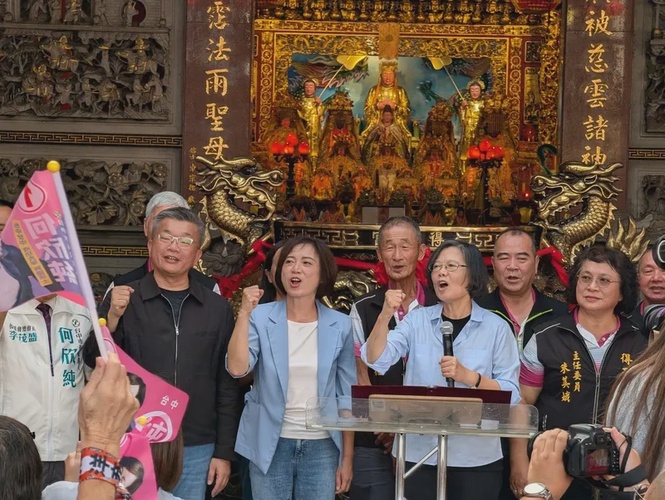
Taiwan's ruling Democratic Progressive Party (DPP) is counting on former President Tsai Ing-wen to help it take Taichung, the country's second-largest city and its most closely watched swing city, from the opposition Kuomintang (KMT) in the 2026 Taiwan local elections on November 28.
Tsai, who serves as honorary chair of DPP candidate Ho Hsin-chun's campaign, has been stumping across Taichung since mid-October. People inside the party told Storm Media they see her as the strongest asset they have for reaching the young and centrist voters Ho needs to overturn the KMT's eight-year hold on the city.
Taichung is an open seat. KMT Mayor Lu Shiow-yen is stepping down after two terms, and the KMT has nominated Deputy Legislative Speaker Chiang Chi-chen, also known as Johnny Chiang, to succeed her. For the DPP, which lost ground in Taichung in the 2024 legislative elections, the race is framed internally as a fight to win back lost territory and lay a foundation for the 2028 presidential and legislative elections.
Polls Give Conflicting Readings Of The Taichung Race
DPP insiders say Ho has cut a deficit of more than 20 percentage points to under 10 points, and that the race is approaching single digits. Public polls are split. Of five polls released between early October and November 3, four put Chiang ahead, Focus Taiwan reported.
A Fo Guang University poll commissioned by the KMT caucus on the Taichung City Council and released on November 2 had Chiang leading 38.3% to 28.1%, Storm Media reported. A poll released by the Xinmin Cross-Strait Research Association on November 3 was the first of the campaign to put Ho ahead, by 41.1% to 30.4%, though 39.7% of respondents in that survey expected Chiang to win and only 25.4% expected Ho to, Taiwan News reported.
Tsai Carried Taichung With Over 55% Twice
Why Tsai and not President Lai Ching-te, who chairs the DPP and needs Taichung votes for his own reelection bid in 2028? The answer, party figures say, lies in Tsai's record in the city. She won about 793,000 votes, or 55.00%, in Taichung in the 2016 presidential election, and raised that to about 967,000 votes, or 56.95%, when she was reelected in 2020.
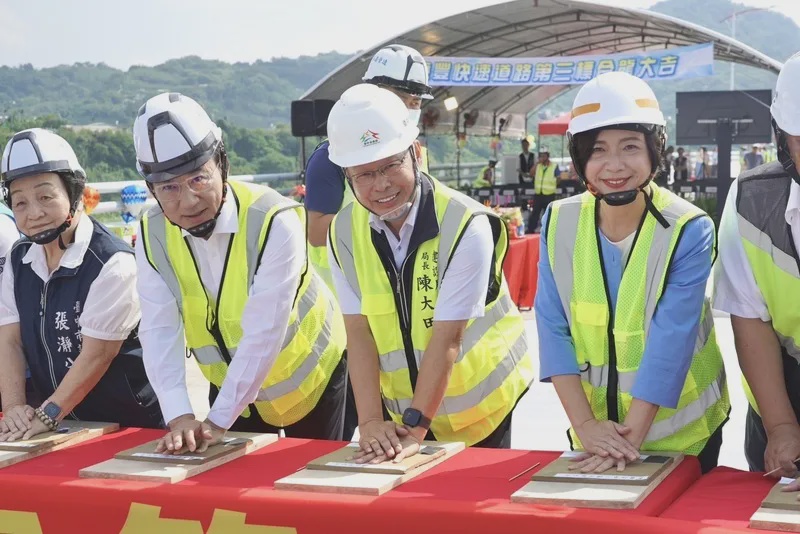
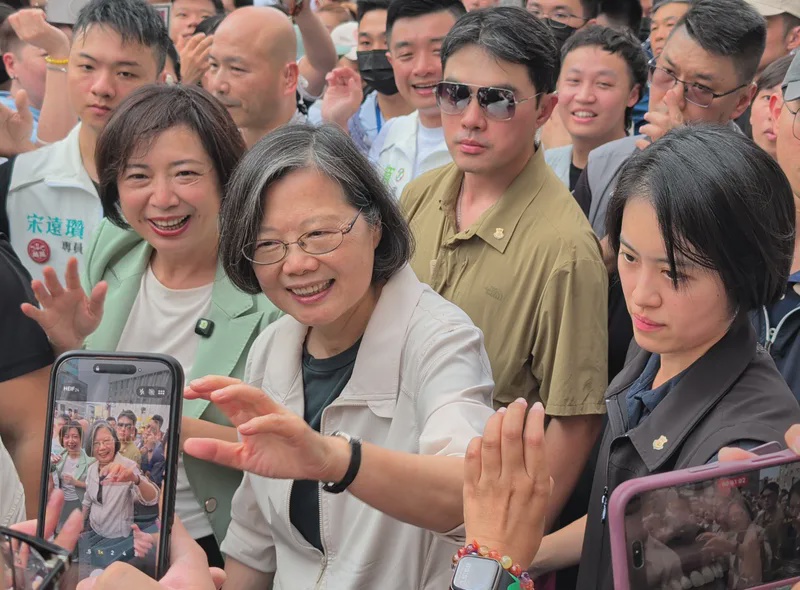
Since mid-October, Tsai has visited temples in Taichung's old city districts, toured the busy shopping area near Taichung First Senior High School, where young crowds swarmed her, and appeared with Ho at a string of local events. Her visits have warmed up what had been a fairly low-key local campaign and energized the DPP's grassroots operation.
At Detian Temple in Tanzi District on November 5, a supporter shouted that Tsai was a "lighter" who sets crowds alight. Tsai joked back about fire safety and urged supporters to help canvass votes, then made a promise: if Ho wins, "call me and I'll come."
DPP Sees Tsai As Its Bridge To Centrist Voters
A Taichung DPP figure said Tsai has kept a level of popularity since leaving office that reaches beyond the party's base, making her persuasive with centrist and young voters. In Taichung, the person said, she serves two purposes: steadying the party by smoothing over factional rivalries, and lending her credibility to Ho so that goodwill turns into votes.
For Lai, who doubles as DPP chairman, Tsai's push in Taichung also helps secure a beachhead for the party ahead of the 2028 presidential and legislative elections, the person said.
The local party is also more united than in past races, a DPP aide said. After the DPP's failed mass recall campaign against KMT lawmakers in 2025, and after legislator Tsai Chi-chang stepped aside early from the mayoral race in Ho's favor, the party's factions closed ranks. Tsai Chi-chang now serves as Ho's campaign manager and Straits Exchange Foundation Chairman Su Jia-chyuan as chief supervisor, with senior figures meeting weekly to oversee the campaign.
Fu Kun-chi Question Hangs Over Chiang's Campaign
DPP strategists also see an opening on the KMT side. Mayor Lu recently agreed to chair the reelection campaign of Taipei Mayor Chiang Wan-an, prompting the DPP to question whether she is fully committed to Taichung.
A second issue is in the national legislature. If Chiang wins in Taichung, he will vacate the post of deputy legislative speaker. The DPP has noticed growing talk over whether Fu Kun-chi, the KMT's legislative caucus whip, would take the job, and believes the question is shifting sentiment in Taichung.
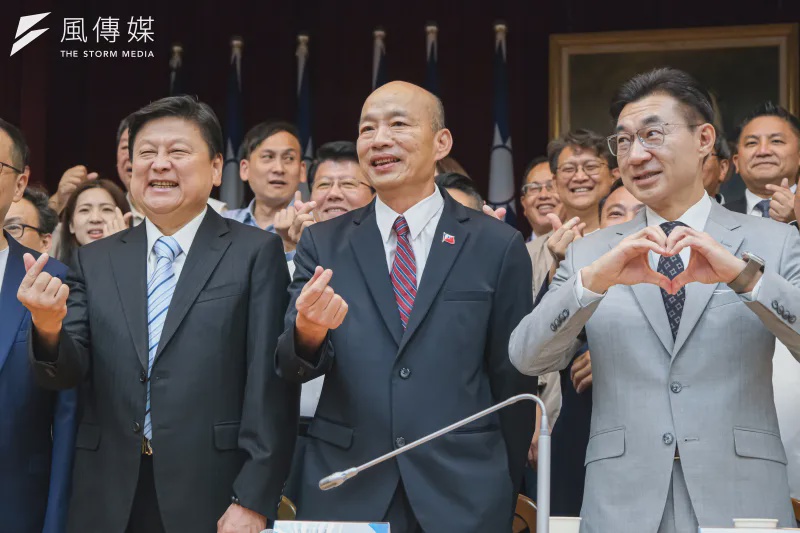
A DPP campaign worker in Taichung argued that what the party calls the "Fu Kun-chi system" in the legislature gives centrist voters and DPP supporters who dislike Fu, or who are tired of the Lu administration, a strong reason to turn out. Some voters now link Chiang to that system, the worker said, which could weaken the case for centrist and light-blue voters who had wanted to "teach the DPP a lesson" and lead some of them to stay home.
Puma Shen And Tsai Target Young Voters Coming Home
To exploit those weaknesses, the DPP is pairing Tsai with a push to get young people who study or work outside Taichung to travel home to vote.
Puma Shen, the DPP's candidate in the high-profile Taipei mayoral race, is scheduled to return to Taichung on November 20 for a joint rally with Ho in Wuri District and a motorcade, though the plan could change depending on how the Taipei race develops. A local DPP figure said Shen's momentum is spilling over into central Taiwan, and the party hopes that combination, along with Tsai, will produce a wave of young voters returning home that can swing Taichung for Ho in the final days of the 2026 Taiwan local elections.
2026 Taiwan Local Elections: Full Coverage
From the Taipei mayoral race between Chiang Wan-an and Puma Shen to New Taipei, Taichung and beyond, Storm Media tracks every report on the races and the polls and updates the page regularly.
► See all our 2026 Taiwan local elections coverage
You've read it. Now join the conversation — follow us on X, Facebook and IG. Editor: Penny Wang