
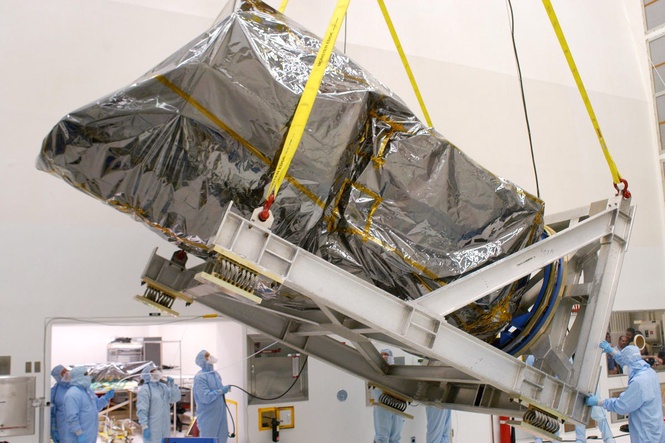
- NASA’s 1.5-ton Swift Observatory is expected to reenter Earth's atmosphere on or around Friday after 22 years in orbit, following accelerated orbital decay driven by intense solar activity.
- A commercial emergency rescue attempt by Katalyst Space failed in September when its robotic spacecraft suffered technical issues, forcing ground controllers to power down Swift in late October.
- While most of the telescope will burn up upon reentry, dense tungsten components and mirror elements could survive and land in the ocean or within a broad zone covering parts of Africa, Australia, Asia, and the Americas.
- Launched in November 2004, Swift specialized in detecting cosmic phenomena, successfully logging over 2,000 gamma-ray bursts and 1,400 exploding stars while alerting primary observatories like Hubble and Webb to conduct deeper studies.
- Astronomers and mission leaders are now working on strategies to fill the operational void left by Swift's impending destruction while seeking to apply the mission's successes to future space projects.
IN FULL