.jpg)
By Mihar Dias January 2025
He is 67 years old now, paralysed from the waist down, confined to a wheelchair that has shrunk his world to the width of a doorway and the length of a kitchen table. His fingers have curled into claw-like shapes, uncooperative yet stubbornly alive, still insisting on movement, on purpose.
Once, those hands drafted advertising ideas, pitched campaigns, shaped words that sold dreams. Once, he walked forests as a volunteer with the Malaysian Nature Society, defending trees that could not speak for themselves.
Today, he helps his wife slice onions.
Not metaphorically. Literally.
This is what life has become while waiting for a diagnosis that may—or may not—arrive in time.
Doctors have identified his condition as demyelinating neuropathy, a debilitating disease of the nerves. What they do not yet know is which medication might slow it, stop it, or even reverse it.
For that answer, his blood sample must be sent to the United States for specialised testing. And that, of course, costs money.
So he and his wife do what they can.
They are hoping to tap into a government subsidy scheme in January 2026, not to rest, not to retreat, but to work—through Ramadan—to raise enough money to send that blood sample across the Pacific.
Ramadan, for many, is a month of reflection and restraint. For them, it is also a month of survival economics.
Together, they prepare acar limau—a sharp, fragrant pickle that Malaysians know well and crave more during fasting month.
The arithmetic is precise, almost poetic in its simplicity:
Bawang merah, bawang putih, halia: 2kg each
Cooking oil: 2kg
Fish curry powder: 2kg
Dates: 4kg
Kaffir limes: 2kg
Pickled fruits: 4kg
Total cost: RM250.
From this, they can produce 320 bottles.
Each bottle sells for RM10.
This is not greed. This is dignity. This is turning RM250 into sustenance for an entire month. This is the mathematics of hope.
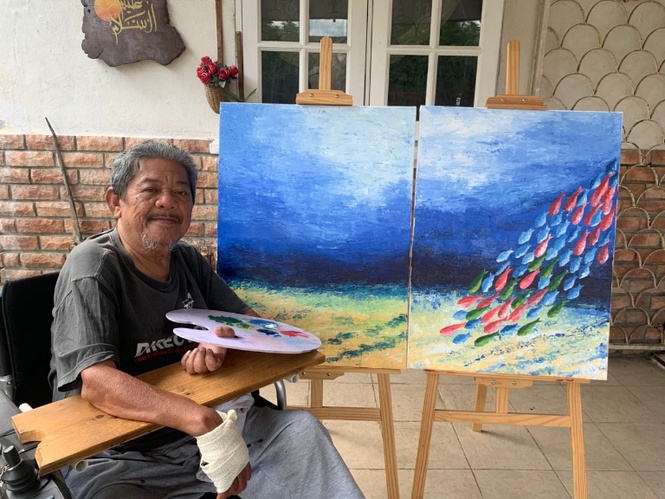
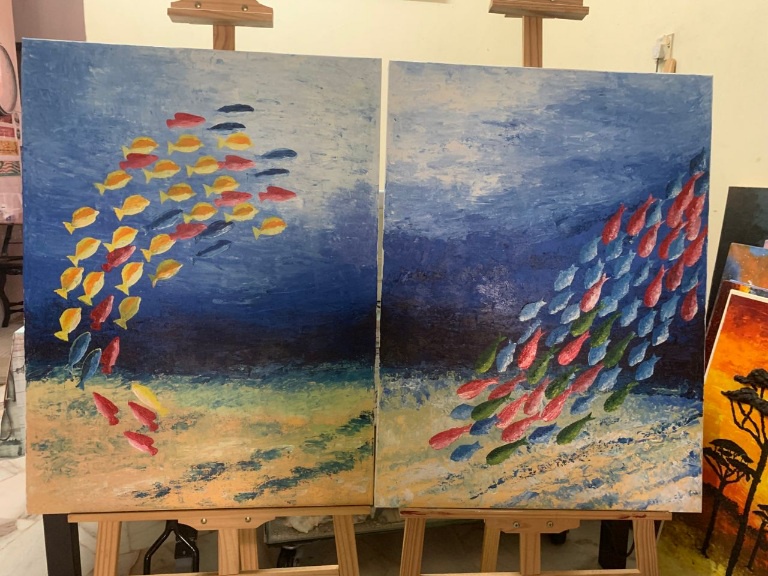
He sits nearby as his wife cooks, advising when to stir, when to rest, when to add spice. When fatigue overtakes him, he paints—slowly, carefully—with hands that no longer obey but still remember beauty. When the sun is kind, he tends a small garden, coaxing vegetables from soil that seems to understand perseverance better than most humans do.
They grow what they eat. They sell what they can make. They refuse pity but quietly accept help when it comes disguised as fairness.
What strikes you most is not his illness, nor the wheelchair, nor even the cruel randomness of a disease that has stolen movement but spared awareness.
What strikes you is how small the gap is between hope and despair—and how often it is bridged not by institutions, but by ordinary people doing extraordinary things quietly.
Sending a blood sample to the US should not be an impossible dream. Yet here it is, balanced on jars of acar limau and the promise of Ramadan customers.
This column is not written to shock. It is written to remind.
Remind us that behind every policy announcement, every subsidy scheme, every budget speech, there are real bodies waiting.
Real hands that can no longer open fully. Real couples negotiating love not in grand gestures, but in shared chopping boards and careful calculations.
It is also a call—to the world, to corporations, to NGOs, to anyone who has ever spoken about compassion, inclusion, or social responsibility.
Look here.
Help does not always arrive in the form of miracles. Sometimes it arrives as logistics, as lab fees, as shipping costs, as someone saying, “We will take care of this.”
In Ramadan, we speak often of empathy—of feeling hunger so we may understand the poor. Perhaps this year, we should also feel uncertainty, so we may understand those waiting for answers that science can provide, if only we help them reach it.
This man does not ask for sympathy. He asks for a chance.
And sometimes, a chance costs no more than believing that a life—even one lived from a wheelchair—is still worth investing in.
012-427-5621 Kamaruddin of Taman Rakyat Alor Setar Kedah
Mihar Dias (mihardias@gmail.com) is a content creator under the Newswav Creator programme, where you get to express yourself, be a citizen journalist, and at the same time monetize your content & reach millions of users on Newswav. Log in to creator.newswav.com and become a Newswav Creator now!
The User Content (as defined on Newswav Terms of Use) above including the views expressed and media (pictures, videos, citations etc) were submitted & posted by the author. Newswav is solely an aggregation platform that hosts the User Content. If you have any questions about the content, copyright or other issues of the work, please contact creator@newswav.com.