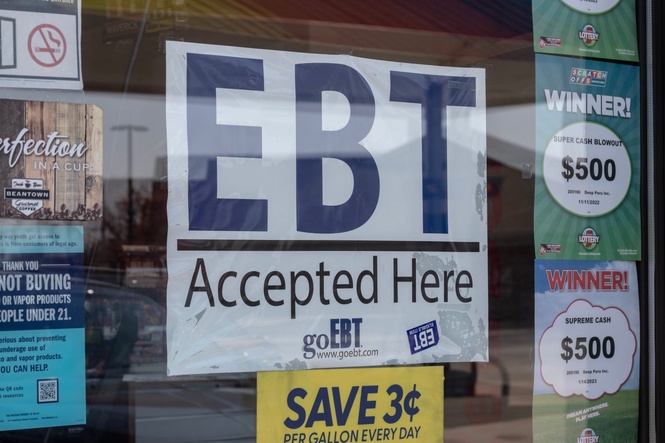
Federal investigators have taken action against 33 Los Angeles retailers accused of misusing Supplemental Nutrition Assistance Program (SNAP) benefits, including exchanging food assistance for cash and allowing purchases of prohibited products.
The U.S. Department of Agriculture announced the enforcement action on July 6, 2026, following a coordinated operation involving federal investigators and law enforcement.
Some stores allegedly exchanged SNAP benefits for cash, while others processed transactions involving products such as alcohol and vaping devices that cannot legally be purchased with food assistance.
For families relying on SNAP to stretch their grocery budgets, the case highlights why retailer compliance matters and how shoppers can protect their benefits from fraud.
Federal Agents Targeted 33 Los Angeles Retailers
On July 2, investigators from the USDA Office of Inspector General and Homeland Security Investigations executed search warrants at multiple retail locations in the Los Angeles area. Following the operation, the USDA’s Food and Nutrition Administration issued formal charge letters to 33 stores authorized to accept SNAP benefits. The official USDA announcement identified two categories of violations involving cash exchanges and purchases of prohibited merchandise. Six retailers were cited for exchanging SNAP benefits for cash, while another 27 were cited for transactions involving ineligible products. The agency also confirmed a criminal arrest connected to the enforcement operation, although its July announcement did not identify the individual.
What Were the Stores Accused of Selling?
SNAP benefits are intended to help eligible households purchase qualifying groceries, including fruits, vegetables, meat, dairy products, bread, and other approved foods. Federal rules generally prohibit using those benefits to purchase alcohol, tobacco products, and nonfood merchandise. Investigators identified transactions involving beer, hard seltzer, bottled liquor, and a vaping device at stores included in the enforcement action. The allegations involving six other retailers concerned trafficking, which occurs when SNAP benefits are illegally exchanged for cash or other prohibited compensation. These practices violate the program’s rules regardless of whether the retailer is a neighborhood convenience store or a larger grocery business.
Retailers Could Lose Their Ability to Accept SNAP
The consequences for stores found responsible for serious SNAP violations can extend beyond ordinary fines. USDA indicated that the 33 retailers could face permanent disqualification from accepting SNAP benefits and substantial monetary penalties. Permanent disqualification can be especially significant for businesses that depend on purchases made with Electronic Benefit Transfer (EBT) cards. The administrative charges do not, by themselves, establish that every retailer has been criminally convicted or received a final penalty. Federal criminal investigations may also result in separate prosecutions when prosecutors determine that the evidence supports charges.
Why This Matters for Families Buying Groceries
SNAP provides grocery assistance to households that may already be struggling with rising food, housing, and utility expenses. Retailer fraud undermines the integrity of a program intended to help eligible families afford food, although the Los Angeles announcement did not quantify financial losses from this particular operation. A shopper who uses an EBT card for legitimate grocery purchases should not assume that their benefits are affected simply because a retailer faces charges. However, a store that loses SNAP authorization would no longer be able to accept those benefits, potentially requiring customers to shop elsewhere. Families who depend on a nearby retailer may want to identify alternative participating grocery stores before their next shopping trip.
How to Protect Your SNAP Benefits From Fraud
Retailer trafficking is different from EBT card skimming, but both illustrate the importance of protecting food assistance benefits. Criminals can use stolen card information and PINs to make unauthorized purchases, sometimes leaving households without money for groceries. USDA’s guidance on stolen SNAP benefits advises cardholders to keep PINs private, check account activity regularly, and change PINs when suspicious transactions appear. Cover the keypad when entering your PIN and never provide your EBT card number or PIN to someone who contacts you unexpectedly. If you discover purchases you didn’t make, contact your state’s SNAP agency promptly to report the activity and secure your card.
Where to Report Suspicious SNAP Retailer Activity
Consumers who witness suspected SNAP trafficking or other retailer violations can submit information through the USDA’s SNAP fraud reporting resources. Useful details may include the store’s location, the approximate date of the incident, and a factual description of what occurred. Avoid confronting employees or attempting to investigate suspected wrongdoing yourself. If your own benefits have been stolen, notify your state’s SNAP office because reporting retailer misconduct and resolving an individual EBT account problem are different processes. Keep receipts and transaction records when available, particularly if you need to dispute an unauthorized purchase.
USDA Says Retailer Oversight Is Continuing
The Los Angeles operation was part of a broader federal effort to identify businesses violating SNAP requirements. USDA reported conducting tens of thousands of retailer evaluations and nearly 50,000 undercover compliance visits annually. Federal investigators can also pursue criminal cases involving suspected benefit trafficking and related offenses. Enforcement actions are intended to identify violations while allowing compliant businesses to continue serving eligible shoppers. For consumers, understanding the rules and recognizing suspicious transactions can provide another layer of protection for household grocery budgets.
Keeping Grocery Assistance Available for Its Intended Purpose
The charges against 33 Los Angeles retailers illustrate how SNAP fraud can involve both illegal cash exchanges and transactions for products that the program does not cover. The stores face potentially serious consequences, but the final outcomes depend on administrative proceedings and any separate criminal cases. For legitimate SNAP recipients, the most useful steps are protecting EBT information, reviewing transaction histories, and reporting suspected fraud through official channels. Families should also remember that SNAP benefits remain available for eligible food purchases at participating retailers.
Have you ever encountered a store that seemed to be misusing SNAP benefits, or experienced an unexpected transaction on your EBT card? Share your experience in the comments.
The post 33 Los Angeles Stores Face SNAP Fraud Charges After Federal Investigation appeared first on Grocery Coupon Guide.