THE Philippines joined the United States and 39 other countries in calling for at least 24 hours’ advance notification of launches of intercontinental ballistic missiles (ICBMs), submarine-launched ballistic missiles (SLBMs) and space launch vehicles (SLVs), amid growing concerns over the risks posed by recent missile testing activity in the Pacific.
The joint statement was delivered Aug. 11 at the Conference on Disarmament in Geneva, with the 41 participating governments urging countries, particularly nuclear-weapon states, to adopt transparent and predictable arrangements for notifying states that could be affected by long-range missile launches.
The statement, posted on the Department of Foreign Affairs (DFA) official website on Thursday, Aug. 20, 2026, did not identify any specific country.
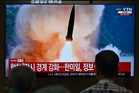
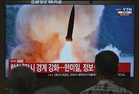
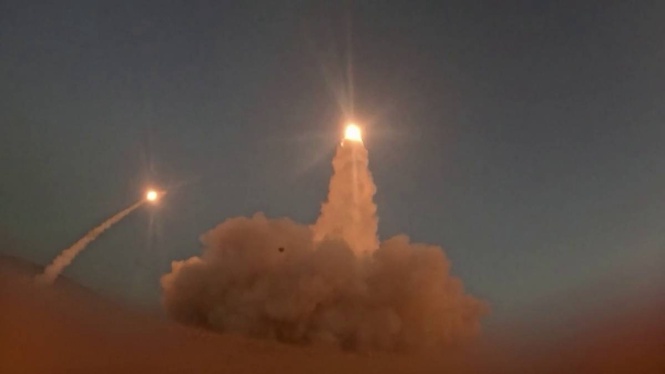
However, it came in the wake of China’s July 6 test of a nuclear-capable submarine-launched ballistic missile into the Pacific.
The United States has separately criticized Beijing for failing to provide adequate advance notification to all affected countries, with some reportedly receiving notice only about two hours before the launch.
The 41 governments said recent missile testing in the Pacific failed to follow notification and deconfliction practices adopted by most states.
They warned that conducting nuclear-capable ballistic missile tests without adequate advance notice and information could increase the risk of miscalculation, disrupt regional peace and security, and undermine global stability.
Under the proposal, notifications should be issued no less than 24 hours before launch and contain basic information such as the generic class of missile or space launch vehicle, the planned launch window, launch area and intended direction.
The countries also called for clear notices to aircraft and maritime vessels in accordance with international standards, particularly when launch trajectories could affect airspace or waters near expected impact or landing areas.
The statement pointed to the Hague Code of Conduct Against Ballistic Missile Proliferation (HCOC) as one existing mechanism for improving transparency.
It said 145 countries participate in the HCOC, which promotes confidence-building measures and greater transparency concerning ballistic missile programs and launches.
The participating governments stressed that regularized notification arrangements would not restrict a country's military development or operational requirements.
Instead, they said, such measures would reduce the possibility of miscalculation, build confidence and demonstrate a shared commitment to international security.
The United States has been particularly critical of China's notification practices following the July missile test.
In a separate statement at the Conference on Disarmament, Washington said the test involved a submarine-launched nuclear-capable ballistic missile and argued that the notification provided by Beijing did not meet standards followed by most states.
China has rejected the criticism. Its foreign ministry said the joint statement was politically motivated and accused the countries involved of hypocrisy and double standards.
Beijing urged countries to stop what it called the abuse of multilateral arms-control mechanisms and instead pursue dialogue and exchanges on arms control.
The diplomatic dispute highlights growing concerns over strategic missile activity in the Indo-Pacific, where long-range weapons testing can affect multiple countries and international air and maritime routes.
For the Philippines, participation in the joint statement places Manila among a broad coalition seeking greater predictability and transparency in missile activity in the region.
The call also underscores the importance of advance warnings for countries located near potential missile trajectories, launch areas or impact zones.
The joint statement said the participating governments would continue working with other countries to strengthen and expand missile-launch notification frameworks and to hold states accountable when their actions fall short of accepted responsibilities.