_1652931074_9592.jpg)
The 5th generation Hyundai Tucson has been globally revealed and it looks really futuristic.
The best-selling model from Hyundai has been given a complete overhaul. That’s right, there’s an all-new Hyundai Tucson and it looks like a revolutionary upgrade over the last. This 5th generation model takes on a boxy ‘Art of Steel’ design philosophy and introduces a new ‘Pleos Connect‘ infotainment system in some markets. It was debuted in New York, so Hyundai’s emphasis seems to still be in the US market. That’s being said, we’re sure Hyundai Motor Malaysia already has a timeline to introduce this to our country so let’s see what the new Tucson’s all about.
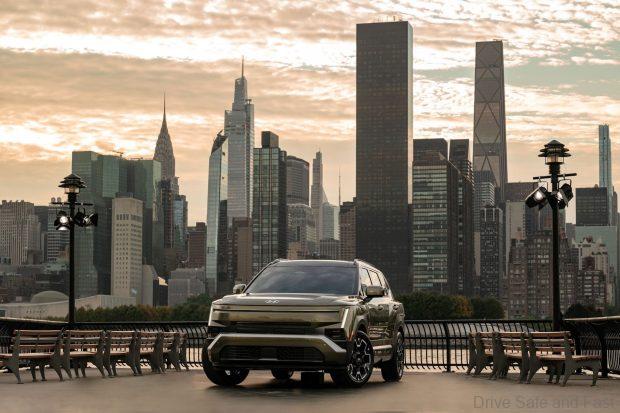
“Art of Steel” Styling: Larger Footprint and Architectural Lighting
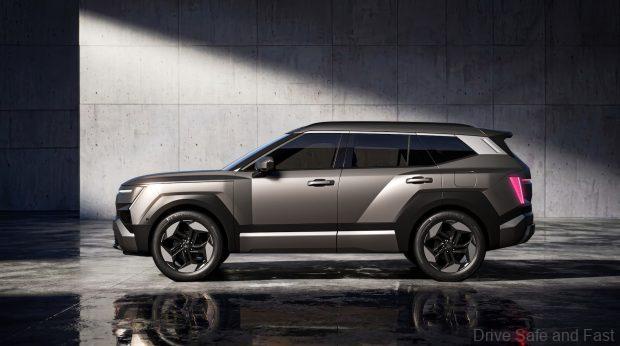
The new Tucson drops the parametric fluid curves of its predecessor for a chiseled, upright silhouette defined by the “Art of Steel” design language. The aesthetic emphasizes structural rigidity, featuring chiseled squared-off fenders, crisp body lines, and an authoritative road stance.
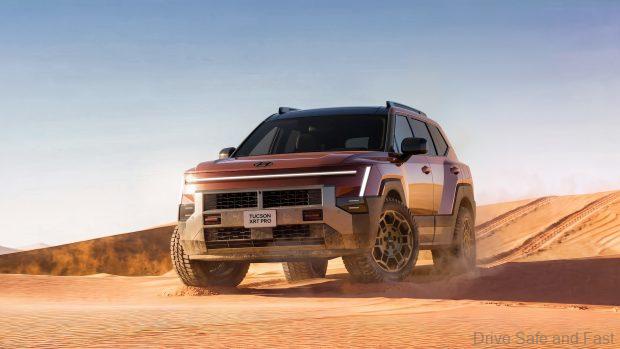
Dimensionally, the long-wheelbase platform grows noticeably:
- Length: 4,700 mm (+60 mm)
- Width: 1,905 mm (+40 mm, the widest jump in its class)
- Height: 1,685 mm (+20 mm)
- Wheelbase: 2,785 mm (+30 mm)
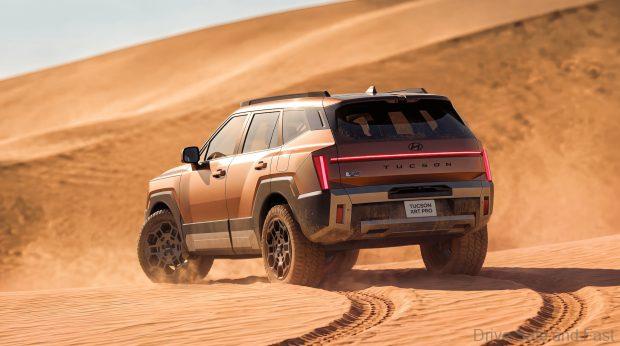
The exterior lighting draws direct inspiration from modern architectural structures. Up front, H-Edge lighting blends indirect center illumination with edge daytime running lights to exaggerate vehicle width. This is complemented by available Micro Pixel Lighting (MPL) that deploys 25,600 individual LED pixels for adaptive beam shaping, weather projection, and dynamic welcome choreography.
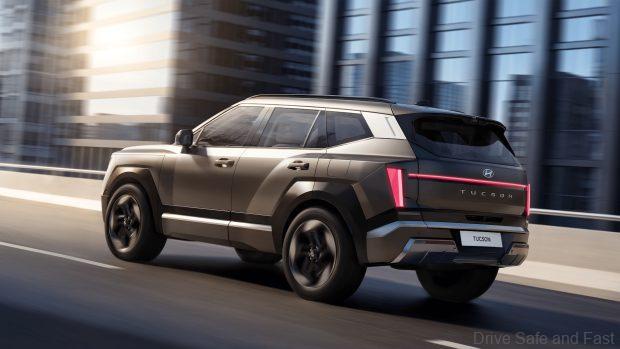
At the rear, sculptural Prism Rear Lamps feature transparent edges and deep internal LED patterns to provide a distinctive night-time signature. Practical improvements include a 20 mm longer front overhang for enhanced pedestrian impact safety and wider door-opening angles enlarged from 73 to 83 degrees for effortless ingress and egress.
Furniture-Inspired Interior: Tactile Minimalism and Ergo Seats
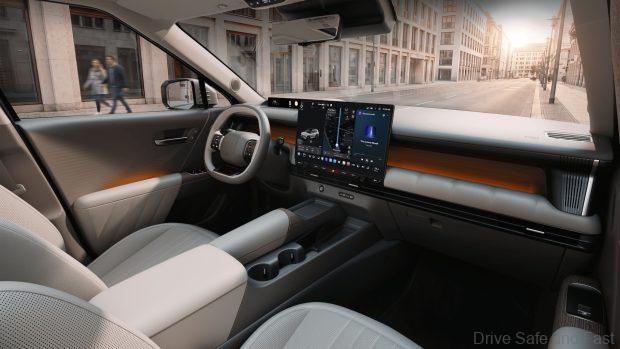
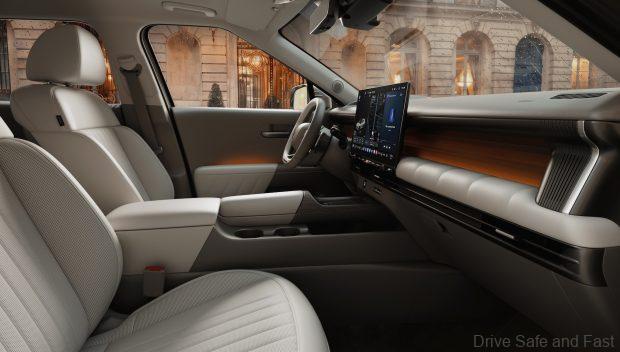
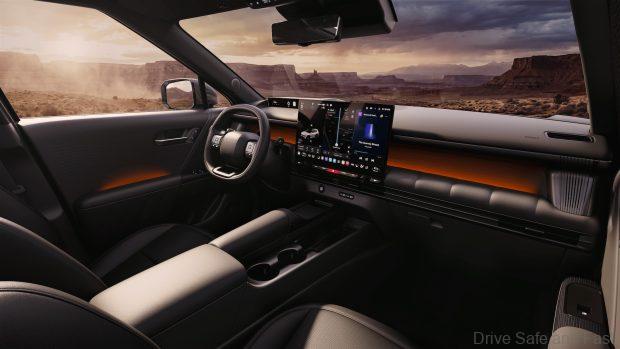
The cabin adopts an open, lounge-like layout that separates form from function. A dual-tiered dashboard pairs an expansive horizontal upper surface with a deep open lower storage shelf.
To minimize driver distraction, essential operational controls remain tactile:
- Display Architecture: A Double D-Cut multifunction steering wheel sits ahead of a slim 9.9-inch digital gauge cluster mounted directly above the column. Center-stack multimedia tasks are handled by a floating screen measuring up to 17 inches (or 12.9 inches on standard trims).
- Physical Dials Retained: Unlike many modern crossovers that bury routine settings in sub-menus, the Tucson retains dedicated physical dials and buttons for HVAC climate controls and audio volume.
- Shift-by-Wire Stalk: Moving the gear selector to a column-mounted stalk frees up the center console for dual 15W Qi 2.0 wireless phone chargers and high-output 100W USB-C ports.
- Lounge Comfort: Front occupants can option an Ergo Motion Seat utilizing a seven-cell pneumatic massage system, alongside a one-touch Relaxation Comfort Seat that reclines up to 10 degrees for roadside rest stops.
- Multi-Air Climate: Air conditioning is dispersed gently through a mix of direct and indirect multi-vents to eliminate harsh blowing drafts.
Rear passenger accommodations benefit significantly from the stretched platform, offering a generous 1,064 mm of rear legroom, 1,031 mm of headroom, and an expansive 1,067-litre rear cargo area.
Pleos Connect and Native Gleo AI Integration
Digital connectivity marks a huge evolutionary leap with Pleos Connect, Hyundai’s new Android Automotive OS (AAOS)-powered software ecosystem.
Operating natively without mandatory phone pairing, the platform integrates an expanding app marketplace, cloud gaming, and continuous over-the-air (OTA) update capability.
The system is anchored by Gleo AI, an onboard agentic virtual assistant capable of parsing contextual, conversational instructions. Rather than requiring rigid syntax commands, drivers can ask complex lifestyle queries—such as finding a hiking trail with parking within a 30-minute radius—and the AI will aggregate navigation routing and amenities dynamically.
Powertrains: Next-Gen Hybrid Efficiency and Plug-In Range
Hyundai continues to prioritize flexible electrification, offering internal combustion, self-charging hybrid (HEV), and plug-in hybrid (PHEV) powertrains:
- Next-Gen Hybrid (HEV): Pairs a 1.6-litre turbocharged petrol engine with an electric motor setup and a 1.49 kWh battery, producing up to 245 PS and 38.7 kgf·m (380 Nm) of torque routed through a 6-speed automatic. It targets an impressive EPA fuel economy rating of up to 42 mpg (approximately 17.8 km/l) and hits 0–60 mph in 8.5 seconds.
- Plug-In Hybrid (PHEV): Generates a combined 292 PS and 38.7 kgf·m of torque, backed by a 17.1 kWh battery that delivers an estimated pure-electric zero-emissions range of up to 81 km. Charging is facilitated via an onboard 7.2 kW AC charger.
- 1.6T-GDI Petrol: Produces 184 hp and 27.0 kgf·m of torque, paired with an 8-speed torque-converter automatic transmission for conventional mechanical simplicity.
All powertrains feature an integrated Electric Water Pump (EWP) that consolidates cooling loops to reduce weight and parasitic thermal drag.
Crucially for outdoor and camping enthusiasts, hybrid variants introduce HEV Stay Mode, which keeps the air conditioning, cabin heating, multimedia, and USB power sockets running while the combustion engine remains switched off. Handling on hybrid models is augmented by E-Traction, which precisely modulates electric motor torque during hard cornering to tuck the front nose in and maintain cornering grip.
Rugged XRT and XRT PRO: Real Trail Capability
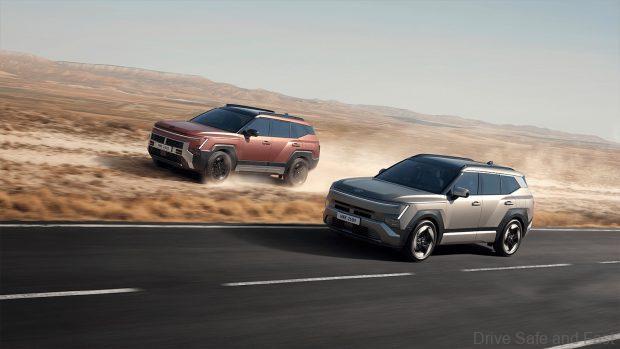
For buyers seeking lifestyle capability, Hyundai has split the adventurous trim lines into two distinct tiers: the lifestyle-oriented XRT and the trail-focused XRT PRO.
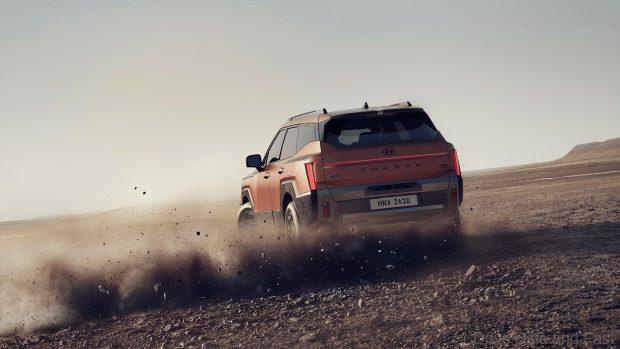
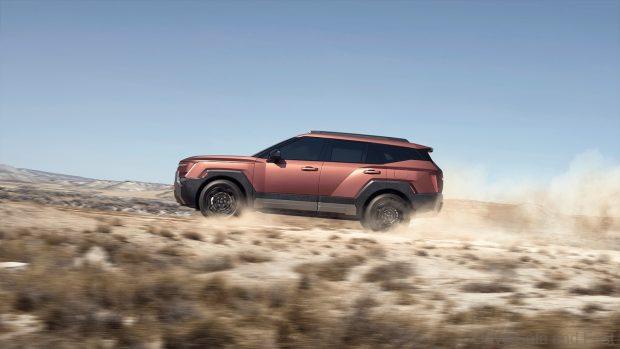
The XRT PRO raises standard ground clearance to 210 mm (+30 mm) and adds genuine off-road hardware, including all-terrain tires, front recovery tow hooks, protective forged-carbon-pattern body cladding, and enhanced approach and departure angles.
It also introduces Smart Terrain Assist (STA), which actively monitors wheel traction and presents a real-time “stuck score” graphic on screen. This is supported by low-speed Target Speed Control (operating between 2 and 25 km/h for assisted hill descent and ascent), a transparent Ground View Monitor, and semi-automated Trailer Reverse Assist.
Safety Standards and Market Availability
Underneath the steel skin, the body shell uses hot-stamped high-strength steel with reinforced 2.0 mm center pillars for superior crash-load dispersion. The safety suite includes an In-Cabin Monitoring Unit (ICMU) that tracks driver drowsiness via ocular recognition, Child Presence Detection, Navigation-Linked Smart Cruise Control, and Level 2+ semi-autonomous driving assist.
The all-new Hyundai Tucson will launch first in South Korea later this year, followed by rollouts in North America, Europe, and Asia-Pacific markets throughout 2027. Given Malaysia’s growing appetite for high-spec C-segment crossovers and electrified family haulers, the fifth-generation Tucson promises to be an enticing, distinctive alternative when it eventually reaches local shores.
The post 5th Generation Hyundai Tucson Revealed With ‘Art Of Steel’ Design first appeared on DSF.my.
.jpg?width=1200&auto=webp&trim=0%2C0%2C0%2C0)