
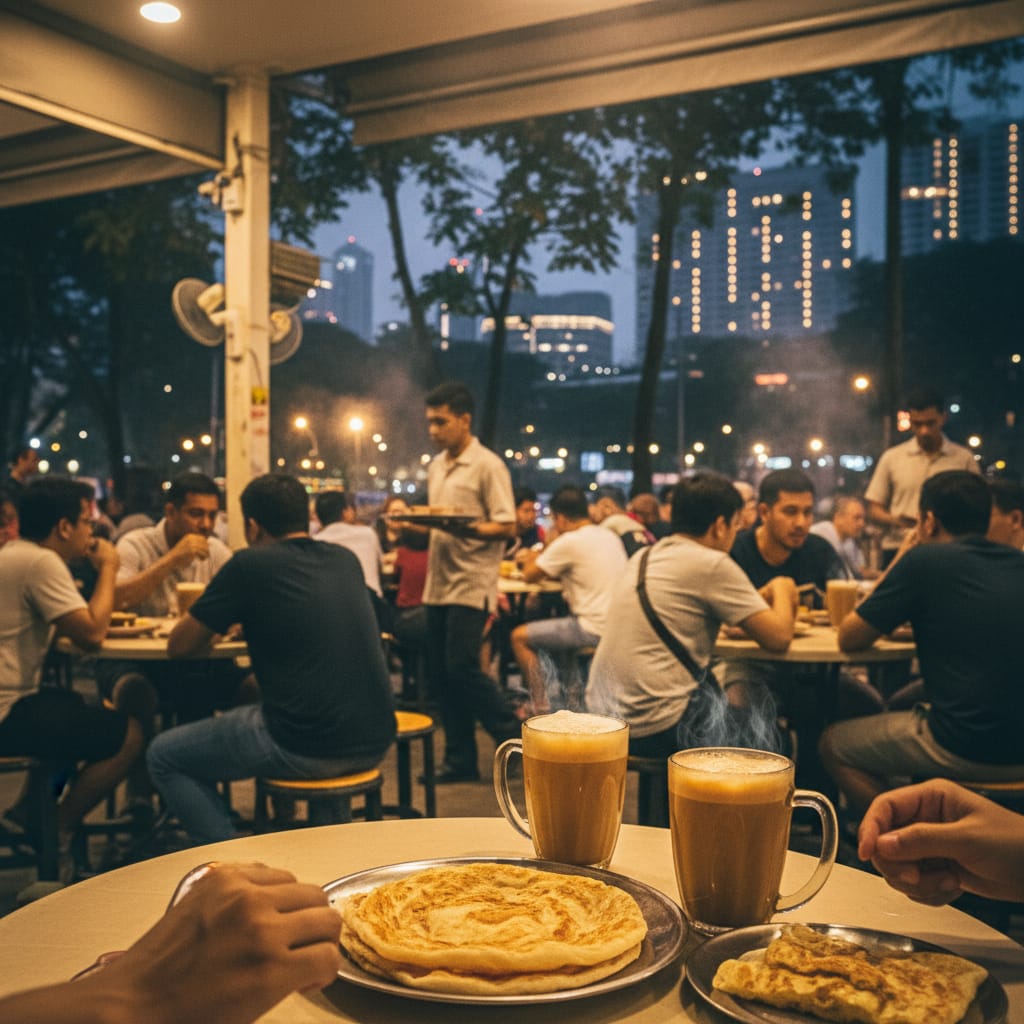
Hope Against the Tide: Will Malaysia’s Iconic Mamak Restaurants Survive?
For decades, the ubiquitous mamak restaurant has been Malaysia’s unofficial 24-hour living room—a warm, open tent under which roti canai and teh tarik have brewed unity across races. Yet this cherished national institution now finds itself gasping for air, a once-mighty banyan tree whose roots are rotting from beneath. Industry associations have warned that over 600 Indian Muslim (mamak) restaurants face permanent closure, threatening an estimated 5,000 livelihoods tied indirectly to the sector. A perfect storm of rising costs, shifting customer loyalties, a crippling labour drought, and new competition is battering these beloved eateries. But many Malaysians still hope the mamak flame does not flicker out.
The Escalating Cost of a Simple Meal
The first sharp thorn in the mamak’s side is price. Once the people’s wallet—a haven for students and night owls—a simple meal of roti canai and a drink can now easily climb to RM15 or RM20. According to PRESMA, operators are drowning under a 10% to 30% surge in operational costs, driven by global supply chain shocks and rising logistics. What was once a budget anchor has become a luxury buoy floating out of reach for many. The beloved “teh tarik” now tastes less like comfort and more like a quiet sigh at the cash register.
Shifting Customer Loyalties: The Chinese Departure
Compounding the wound is a quiet exodus. The Chinese community has long been a vital tributary feeding into mamak cash flows, drawn by 24-hour convenience and familiar flavours. But that tributary is now diverting. Many Chinese customers, feeling the pinch, have returned to cheaper Chinese-owned restaurants that better suit their palate and pockets. The mamak’s once-diverse, cross-cultural crowd—a beautiful rojak of faces—is thinning. Losing that reliable customer base is like a ship losing its ballast; the vessel still floats, but every wave rocks it harder.
The Unending Labour Crisis: Empty Chairs in the Kitchen
Even if customers return, many mamak outlets cannot fully open their doors. The culprit is a devastating labour shortage, as crippling as a drought on a rice field. PRIMAS has repeatedly sounded the alarm: a severe lack of foreign workers is the primary reason for impending closures. Owners complain of bureaucratic red tape and unclear quotas from the Home Ministry. Meanwhile, local Malaysians show little interest in the demanding, low-paying kitchen roles, leaving owners with a skeleton crew. In a mamak, the tawa (griddle) needs hands; today, too many griddles sit cold, and too many orders go unserved—like a train running with half its carriages missing.
A Demand for Better Ambience and Hygiene
Consumer expectations, too, have evolved. Many traditional mamak outlets, with their open-air layouts and plastic chairs, once traded on a chaotic, “lived-in” charm—a beautiful mess. However, viral videos of hygiene lapses have shattered that illusion like a stone through a glass window. Customers increasingly demand air-conditioned comfort and spotless floors. Mamak owners who cannot afford such upgrades are losing ground to polished competitors, watching their old charm become a liability.
Mounting Burdens and New Competition
The financial noose tightens further. Operators are crushed under the weight of rising rentals and an expanding tax base, including service tax on commercial leases. These are not mere pebbles in the shoe; they are boulders on the chest. To make matters worse, fierce competition has arrived from an unexpected direction: Halal restaurants run by Hui Chinese Muslims. These modern rivals offer air-conditioned elegance, exotic menus like Lanzhou lamian, and pristine hygiene. They are the sleek speedboats overtaking the mamak’s weathered fishing vessel, siphoning away curious customers with every bowl of hand-pulled noodles.
A Final, Hopeful Plea
Despite the grim horizon, many refuse to let the mamak disappear. These outlets are not just businesses; they are cultural heirlooms, the 3 a.m. sanctuary for a broken heart, the first date’s awkward laughter over a shared roti tissue. Industry leaders and politicians are urging government intervention: faster foreign worker approvals, tax relief for digitalisation, and subsidies to ease the burden. For the sake of Malaysia’s unique culinary soul, one hopes this iconic national treasure weathers the storm—and that long after this crisis passes, the smell of fried dough and the clatter of teh tarik glasses still echo through the night.
Moy Kok Ming (moykokming@gmail.com) is a content creator under the Newswav Creator programme, where you get to express yourself, be a citizen journalist, and at the same time monetize your content & reach millions of users on Newswav. Log in to creator.newswav.com and become a Newswav Creator now!
The User Content (as defined on Newswav Terms of Use) above including the views expressed and media (pictures, videos, citations etc) were submitted & posted by the author. Newswav is solely an aggregation platform that hosts the User Content. If you have any questions about the content, copyright or other issues of the work, please contact creator@newswav.com.