Batteries account for up to 40% of an electric vehicle’s sticker price, locking everyday drivers out of the EV market and forcing carmakers into fragile, expensive overseas supply chains. Malaysia is launching a direct counterstrike against this bottleneck. Operating out of a 15,000-square-foot facility in Sepang, Gigafactory Malaysia Sdn Bhd (GMSB), the commercial arm of NanoMalaysia Berhad under MOSTI, has launched local production of ASEAN’s first homegrown, graphene-enhanced EV battery.
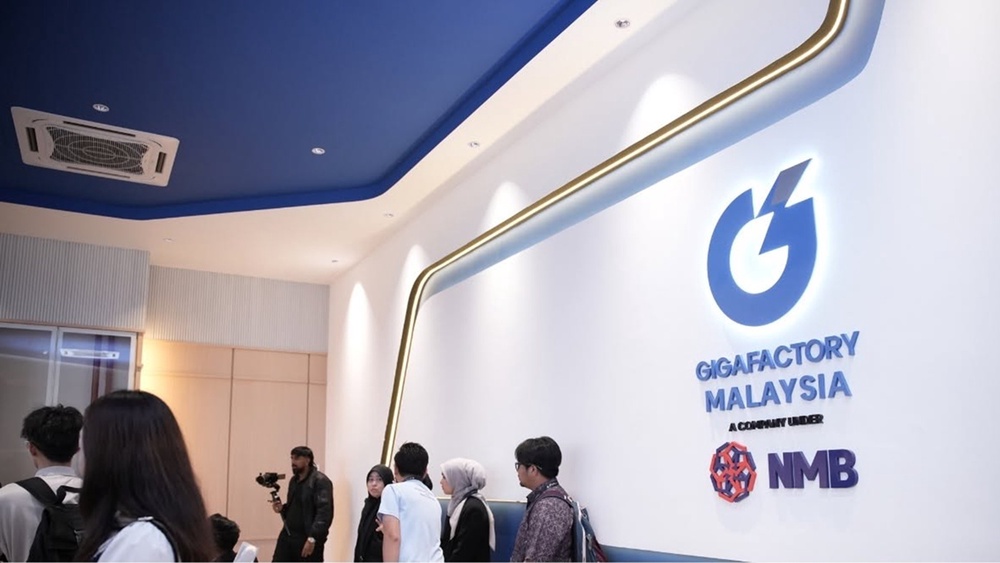
Backed by a cumulative RM20 million R&D roadmap, this homegrown power unit promises massive range, hyper-fast charging, and localized cost savings to finally bring affordable electric mobility to the masses.
⚡ TL;DR: Malaysia's Homegrown Graphene EV Battery ASEAN Breakthrough: Produced by Gigafactory Malaysia (GMSB) in Sepang under a cumulative RM20M roadmap stemming from NGAP 2020. Supercharged Performance: Graphene-enhanced NMC chemistry targeting up to 640 km range and rapid 12-minute fast charging. Initial Production Scale: Operates at 1 MWh/year (~92,000 cells), prioritizing electric two-wheelers, energy storage, and local orders. Proven Durability: Exceeds 1,000 charge-discharge cycles while retaining over 90% original capacity in internal testing. Direct Cost Reduction: Local manufacturing removes import taxes, foreign logistics fees, and regional storage markups to make downstream EVs cheaper.The Chemistry Shakeup: Supercharging NMC with Graphene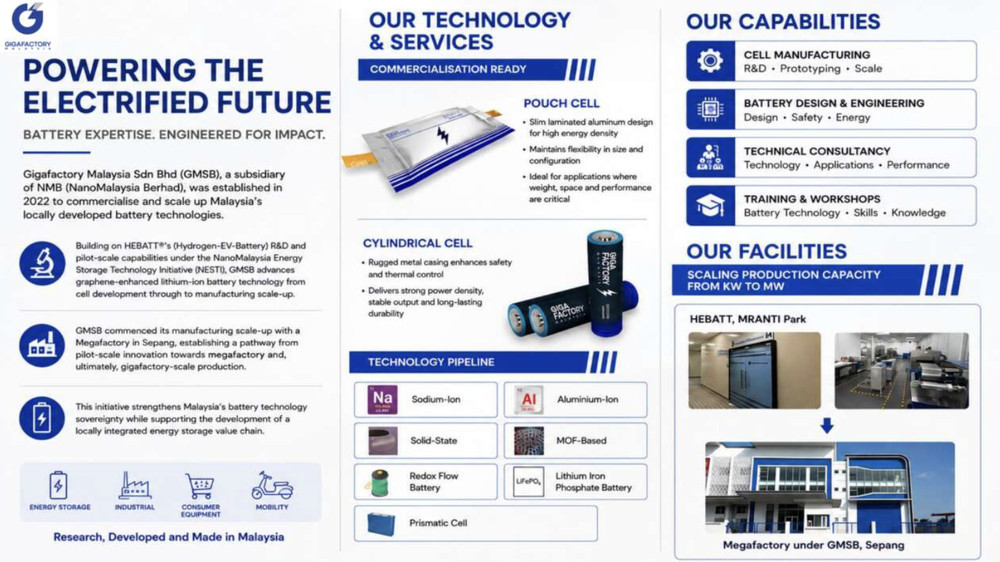
Standard EV batteries usually force a compromise: pick standard Nickel Manganese Cobalt (NMC) for range, or Lithium Iron Phosphate (LFP) for stability. NanoMalaysia’s engineers bypassed this trade-off by taking proven NMC chemistry and lacing both electrodes with graphene.
By replacing standard graphite with high-conductivity graphene, electron flow accelerates and heat vanishes far faster. NanoMalaysia CEO Dr. Rezal Khairi Ahmad highlights that this modification triples effective energy storage capacity over conventional setups, delivering peak performance for high-density applications exceeding 200 Wh/kg.
What does that mean on the road? Up to 640 km on a single charge, full top-ups in just 12 minutes, and a battery that retains over 90% of its original capacity after 1,000 rigorous charge-discharge cycles.
The Graphene Edge: Unlocking 640km Range & Fast ChargingInfusing graphene into both the anode and cathode of standard NMC chemistry triples effective energy storage density. This allows cells to exceed 200 Wh/kg—enabling a projected 640 km driving range and rapid 12-minute fast charging without degrading battery longevity.
Beyond NMC: Next-Gen Battery Pipeline UnderwayWhile graphene-enhanced NMC is GMSB's primary commercial priority, NanoMalaysia's technology roadmap extends into solid-state, sodium-ion, water-based aluminum-ion, and redox flow chemistries developed through its NESTI initiative.
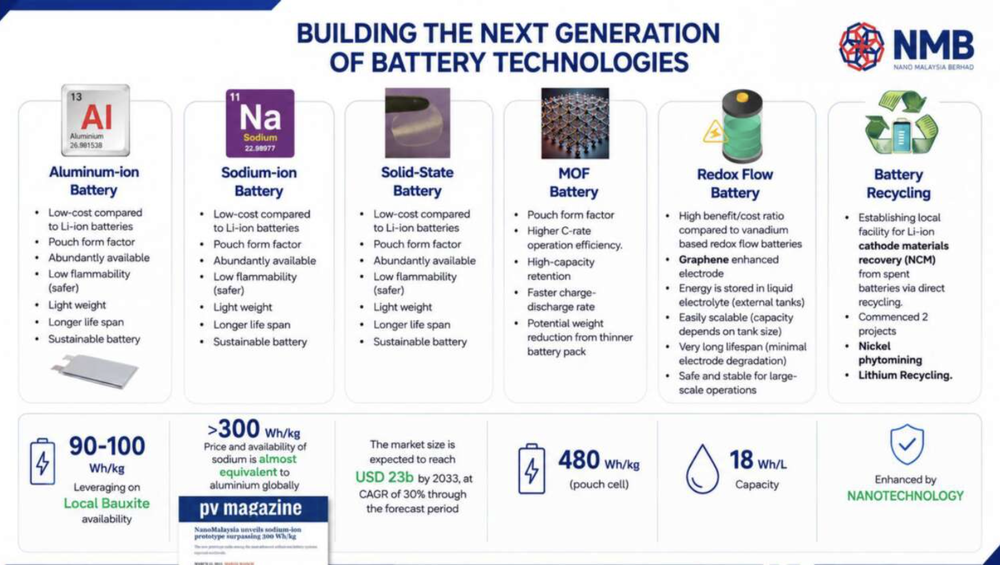
The Sepang pilot facility operates on a flexible build-to-order strategy, laying the groundwork for true gigawatt-hour scale.
Strategic Metric Sepang Pilot Launch Target Initial Annual Capacity ~1 MWh (~92,000 individual cells) Immediate Market Focus Electric Two-Wheelers (~200 packs @ 5 kWh each) First Customer Order 25 kWh secured by a local organization Regional Supply Chain Strategic partnership with Indonesia (NBRI) via Bateri Nusantara Export Horizons Regional shipments slated for 2027 (India, S. Korea, Indonesia, Pakistan) The "Bateri Nusantara" Alliance: Securing Critical Raw MaterialsTo safeguard material supply, Gigafactory Malaysia is partnering with Indonesia’s National Battery Research Institute (NBRI) under the Bateri Nusantara banner, coupling Indonesia's massive nickel reserves with domestic nickel phytomining initiatives in Sabah and local graphene production.
Batteries represent up to 40% of an EV's sticker price. Manufacturing cells directly in Sepang bypasses foreign supply chain markups, removing expensive import tariffs, long-distance freight, and regional warehousing overhead for domestic automakers.
Local cell manufacturing is engineered to directly undercut the cost of imported alternatives. By producing batteries on home soil, GMSB aims to lower the total retail cost of downstream EVs by stripping out heavy structural markups, including import taxes, international shipping, and regional storage overhead.
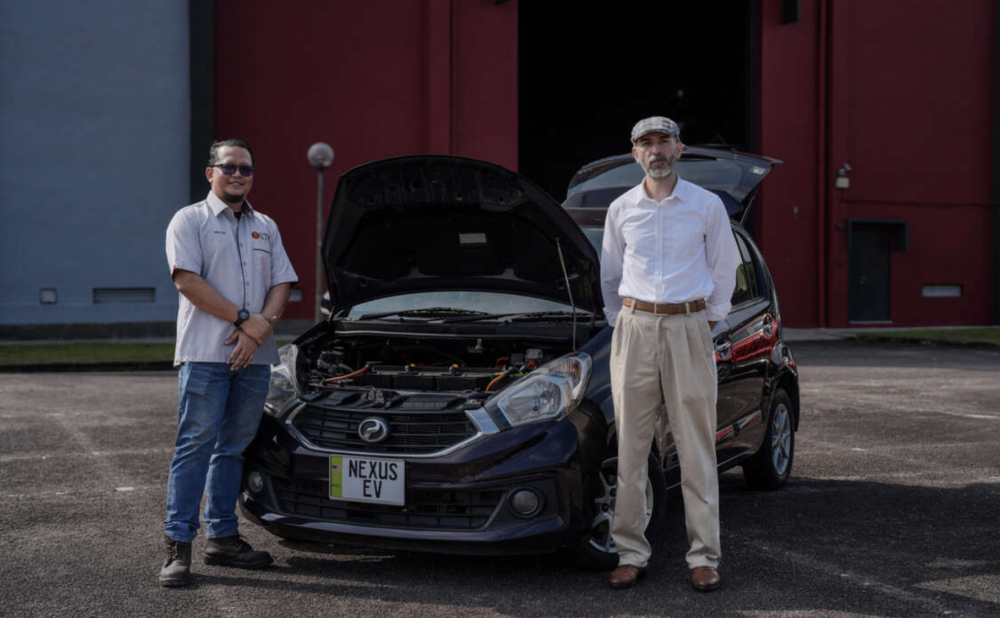
Foreign technology reliance has kept Malaysian carmakers tied to volatile international prices. Projects like the "Nexus EV", a converted Myvi engineered by UTM and NanoMalaysia using a Hybrid Electric Storage System (HESS), proved local talent can innovate. Now, GMSB brings actual manufacturing scale to the table.
Developed jointly by UTM and NanoMalaysia, the Nexus EV experimental Myvi showcases a Hybrid Electric Storage System (HESS). By pairing lithium batteries with supercapacitors, the system buffers high acceleration spikes and maximizes regenerative braking, significantly protecting battery lifespan.
By building cells in Sepang and sourcing regional materials like nickel through strategic partnerships with Indonesia, Malaysia can slash logistics overhead, skip import taxes, and shield domestic EVs from global supply disruptions.
Full Ecosystem: Charging, Storage & ICE ConversionsBeyond battery cell fabrication, NanoMalaysia is creating an end-to-end domestic supply chain through its EMERGE and REVIVE initiatives—spanning EV charging infrastructure, local component manufacturing, grid-level energy storage, and internal combustion engine (ICE) to EV conversions.