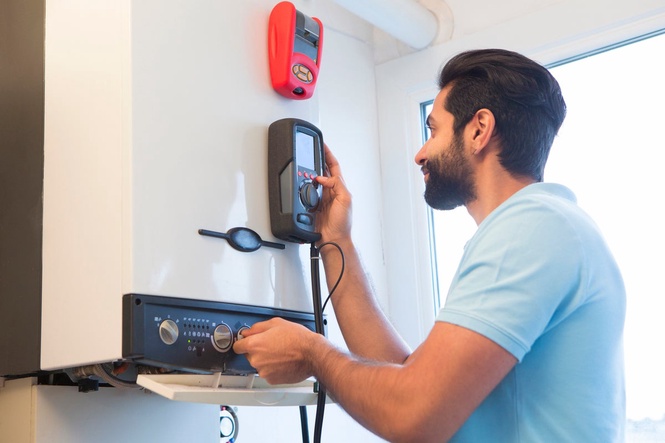
If you've had your heating switched off for months, the last thing you want is to discover your boiler isn't working when the first cold snap arrives. Yet it's often only when temperatures drop that homeowners realise something isn't quite right with their central heating.
The good news is you don't need to be a heating expert to carry out a few basic checks. Testing your boiler, checking the pressure and making sure your radiators are heating properly can help you spot potential problems before they turn into costly repairs.
Here's how to check your boiler is ready for winter, what you can safely do yourself and when it's time to call a professional.
Get a boiler installation quote for your home
Use our comparison tool to get a range of free quotes from leading boiler installers across the UK.
Read more: How long should a gas boiler last?
Eight essential boiler checks before winter
1. Turn your heating on and check it works
The simplest way to check your boiler is ready for winter is to turn the central heating on before you actually need it. Start by checking that your boiler is switched on and, if it has a summer or hot-water-only setting, change it to central-heating mode.
Next, turn your room thermostat up a few degrees above the current room temperature. This should tell the heating system to start warming your home. Let the heating run for around 20–30 minutes, then check that your radiators are beginning to warm up.
If nothing happens, check your heating programmer or timer. Your boiler might be working perfectly well but simply isn't scheduled to come on. If your boiler won't start despite the controls being set correctly, check for any warning lights or error codes before attempting anything else.
2. Check your boiler pressure
Low boiler pressure is a common reason for central heating systems to stop working properly. Fortunately, checking it is usually pretty straightforward. Most modern boilers have a pressure gauge on the front or underneath the unit. Some newer models show the pressure on a digital display.
In many sealed central heating systems, pressure should be between 1 and 1.5 bar when the heating is cold. However, the correct range varies between boilers, so make sure you check your manufacturer's instructions.
If the pressure is below the recommended level, your boiler may need repressurising. On some systems, this involves opening a filling loop beneath the boiler to allow more water into the heating system.
The exact process depends on your boiler, so follow the manufacturer's instructions and only attempt this when the system is switched off and cool. If you're unsure, ask a heating engineer.
Keep an eye on the pressure afterwards. If it repeatedly falls, there could be a leak or another underlying fault that needs professional attention. Unusually high pressure should also be investigated.
3. Check your radiators and bleed them if necessary
Once your heating has been running for a while, check that each radiator is warming up. If a radiator is cold at the top but warm at the bottom, there may be trapped air inside, which prevents the hot water from circulating properly. This can usually be fixed by bleeding the radiator.
Here's how to do it:
- Switch off the central heating and allow the radiator to cool
- Place a cloth or small container beneath the bleed valve, usually found at the top of the radiator
- Insert a radiator key and slowly turn the valve anticlockwise
- You should hear a hissing sound as the trapped air escapes
- When water begins to appear, close the valve carefully without over-tightening it
- Check your boiler pressure afterwards, as bleeding radiators can cause it to drop
If a radiator is cold at the bottom, this could indicate a build-up of sludge or another circulation problem. If one radiator remains completely cold, check that its valves are open before calling an engineer.
4. Check your thermostat and heating controls
Heating controls can easily be overlooked, particularly if you haven't used them since the spring. Check that your thermostat is working and that your heating schedule still suits your routine. If you have a smart thermostat, make sure it's connected and that any programmed schedules are correct.
Ian Palmer-Smith, appliance repair expert at Domestic & General, says problems with heating coming on unexpectedly can sometimes have a simple explanation. "If you're noticing your boiler is turning on or off sporadically throughout the day, you may need to simply adjust your timer settings using your boiler manual for help."
It's also worth checking the thermostatic radiator valves (TRVs) on individual radiators, as these may have been turned down or switched off during the warmer months.
Remember, if your room is already warmer than the temperature set on your thermostat, the heating won't come on. But rest assured, that's normal rather than a sign of a faulty boiler.
For more information on heating settings, read our guide to the ideal temperature for every room in your home.
5. Look for leaks and listen for unusual noises
While your heating is running, take a few minutes to look around the boiler, any visible pipework and your radiators for signs of problems.
Check for water dripping from pipes or valves, any damp patches beneath radiators and any visible corrosion. Even a small leak can cause your heating system to lose pressure over time, so it's worth getting it checked before the problem becomes worse.
Listen to your boiler, too. It’s normal to hear a bit of noise during normal operation, but persistent banging, whistling or gurgling could indicate trapped air, circulation problems or another fault.
Unusual noises aren't always a sign of something serious, but if they're new or getting louder, it's a good idea to have the system inspected by a qualified heating engineer.
6. Check your condensate pipe
If you have a modern condensing boiler, it will have a condensate pipe that carries away waste water produced during operation. In some homes, part of this plastic pipe runs outside the property, but during prolonged freezing weather, the water inside can freeze, potentially causing the boiler to stop working.
Before winter, check whether any accessible external sections are properly insulated and that the pipe outlet isn't visibly blocked.
If your boiler stops working during freezing weather, a frozen condensate pipe could be responsible, particularly if the boiler is making gurgling noises or displaying an error code. Palmer-Smith recommends gently warming the frozen section of pipe by "applying a hot water bottle directly to the pipes".
You can also use warm water, but never boiling water, which could damage the plastic pipe. Only attempt this if the pipe is safely accessible from ground level, and don't use a naked flame.
Worcester Bosch, for example, advises that once the pipe has thawed, you may need to reset the boiler according to its instructions. If the problem persists, contact a heating engineer.
7. Test your carbon monoxide alarm
It’s very important to have a working carbon monoxide (CO) alarm in any home with a gas boiler. Carbon monoxide is a poisonous gas that can't be seen, smelled or tasted, and it can be produced when gas appliances like your boiler aren't burning fuel correctly.
Press the test button on your alarm, following the manufacturer's instructions, and check that it hasn't reached its replacement date. If it has a replaceable battery, make sure that's working too.
A carbon monoxide alarm is an important safeguard, but also it isn't a substitute for having your boiler serviced regularly. If the alarm sounds, leave the property immediately, get into fresh air and seek emergency assistance. Don't ignore the warning or assume the alarm is faulty.
8. Check when your boiler was last serviced
Even if your boiler appears to be working perfectly, it's important to check when it was last professionally serviced. An annual boiler service can help identify developing faults and check that it’s operating safely. "Having your boiler serviced annually is a great action to take to prevent boiler breakdowns, as well as improve its efficiency," says Palmer-Smith.
Servicing may also be necessary to keep your manufacturer's warranty valid. If you haven't had your boiler serviced within the past 12 months, now is a good time to arrange one before engineers get busier during winter. Gas boilers should always be serviced by a Gas Safe registered engineer.
If your boiler is older and you're experiencing repeated faults, it may also be worth considering whether repairs are still economical. Our guide to how much a new boiler costs in the UK explains what to expect if replacement becomes necessary.
When should you call a Gas Safe engineer?
While homeowners can carry out basic checks, some problems should always be left to professionals.
Call a Gas Safe registered engineer if your boiler repeatedly loses pressure, develops persistent faults, leaks, makes unusual noises or stops working despite basic troubleshooting. Never remove the boiler casing or attempt to repair the gas components yourself.
If you smell gas or suspect a gas leak, don't operate electrical switches, smoke or use naked flames. Open your doors and windows if safe to do so, leave the property and call the National Gas Emergency Service on 0800 111 999 when you get to a safe location.
Ultimately, checking your boiler before winter is about identifying problems while there's still time to deal with them. A few minutes spent testing your heating now could save you from discovering a fault on the coldest day of the year.
And once you've confirmed everything is working, you can turn your attention to reducing its running costs. Our guide to energy-saving tips for your home explains how to keep bills down during the colder months.
Read MoreDo solar panels work when it’s cloudy?
Households could get access to free or cheap loans to install solar panels
What the 2026 Budget means for you and your energy bills
Households could get access to free or cheap loans to install solar panels
What the 2026 Budget means for you and your energy bills
Best heat pumps in the UK: Installation, price and efficiency compared
Gas boiler vs heat pump: Which saves more money, according to an energy expert