With the ongoing Wuhan virus outbreak, there are concerns by passengers about contracting germs and virus while travelling especially on long haul flights. Malaysia Airlines has assured that their aircraft are equipped with an air filtration system that reduces passengers’ exposure to harmful bacteria and viruses.
The national carrier has shared a couple of informative illustrations on how air is being circulated in an aircraft. According to MAS, the air in-flight is recirculated and filtered regularly by High-Efficiency Particulate Air (HEPA) filters. They added that with the HEPA filters and frequent air circulation, the air you breathe is likely to be cleaner than most office buildings and it is on par with the air quality in most hospitals. As shown below, the cabin air is changed 20-30 times per hour.

Malaysia Airlines has also provided an illustration of how air is being circulated for both single-deck and double-deck aircrafts. The national carrier’s fleet currently consists of the Boeing 737-800, Airbus A330-200, A330-300, A350-900 and A380-800.
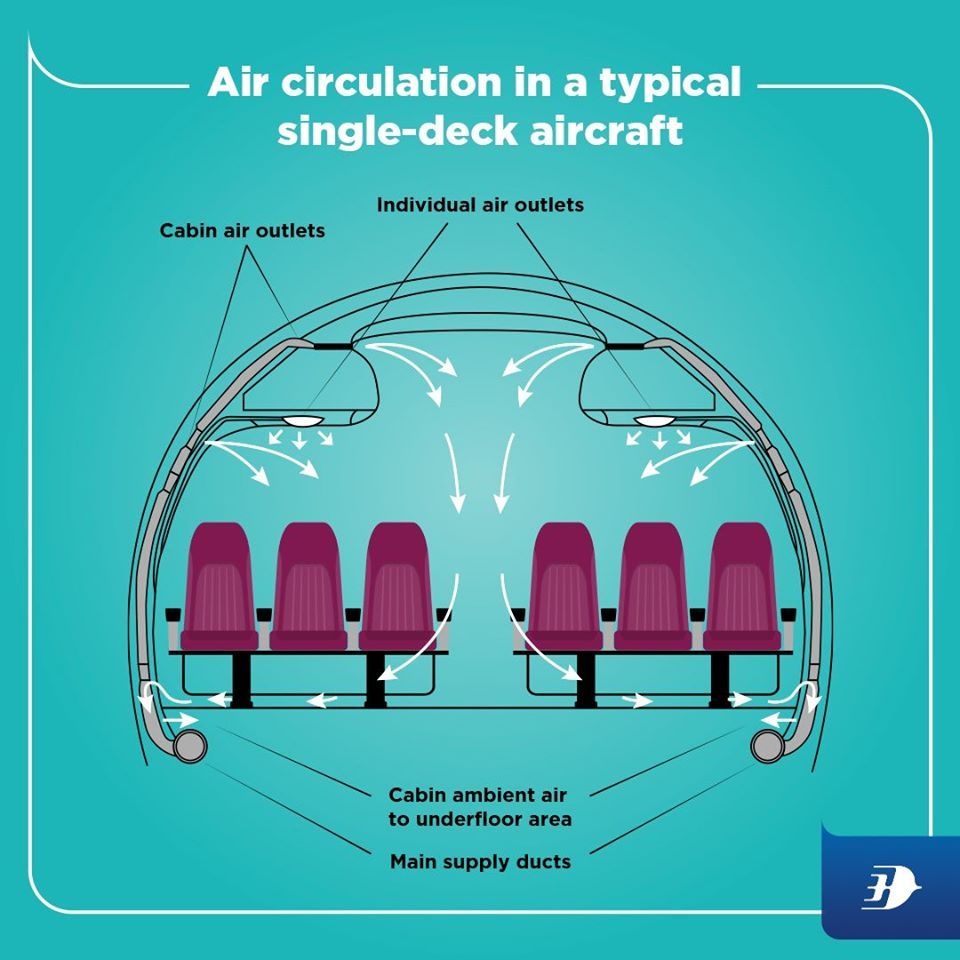
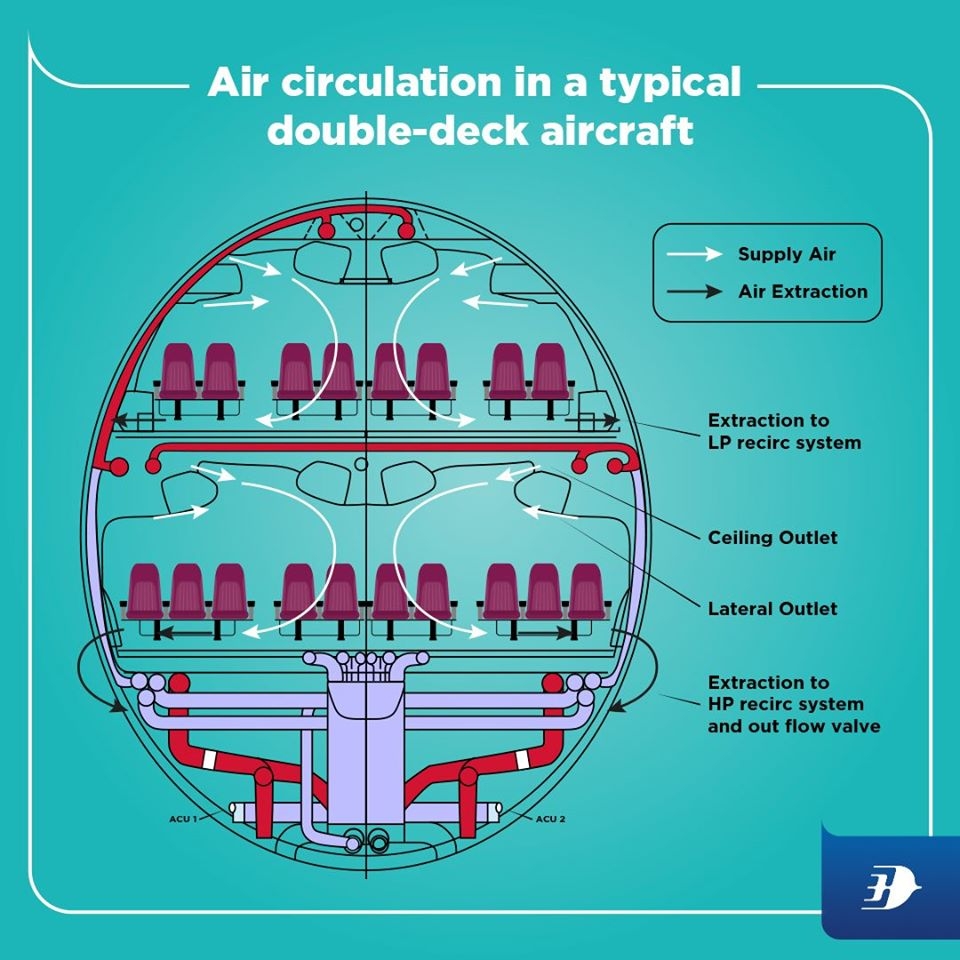
Malaysia Airlines also urge all passengers to practise good hygiene and to observe appropriate cough and sneeze etiquettes besides washing your hands often. According to their previous advisory, passengers may bring their own mask for their own protection. In addition, the airline has also included medical communicable disease kit in every aircraft to cater for ill passengers.
As of 2:30 pm on 1st February, there are 8 confirmed coronavirus cases in Malaysia with zero deaths. To learn more about Coronavirus and how it spreads, you can check out this video.
Statistik #novelcoronavirus2019 di seluruh dunia yang dikemas kini jam 2.30pm, 1 Feb 2020.
Malaysia kekal 8 kes positif #2019nCoV setakat ini dan kesemuanya rakyat #China. pic.twitter.com/Tc9uz2x36G
[ SOURCE ]
Related reading
The top 7 fake news about the Wuhan Virus
Expert: No need to wear masks for Wuhan coronavirus
Go watch this video to understand the Wuhan Virus
The post MAS reveals how its aircraft reduces the spread of the Wuhan virus appeared first on SoyaCincau.com.