

Stillbirth and miscarriage both describe a pregnancy loss but they differ according to when the loss occurs. In Malaysia, miscarriage is the most common complication in early pregnancy with an incidence of 8-20% among known pregnant women. The majority of miscarriages occur in early pregnancy is usually between the 9th to 13th week. Malaysia defines miscarriage as a foetus weighing less than 500 grams or if it is less than 22 weeks gestation.
However, stillbirths are described as:
- loss of foetuses weighing at least 500 grams or;
- when birth weight is unavailable, foetuses has 22 completed weeks of gestation (which does not show any sign of life such as a beating heart, pulsations of the umbilical cord or definite movement of the voluntary muscles) or;
- (if both the above are unknown), with a crown-to-heel length of 25 centimetres or more.
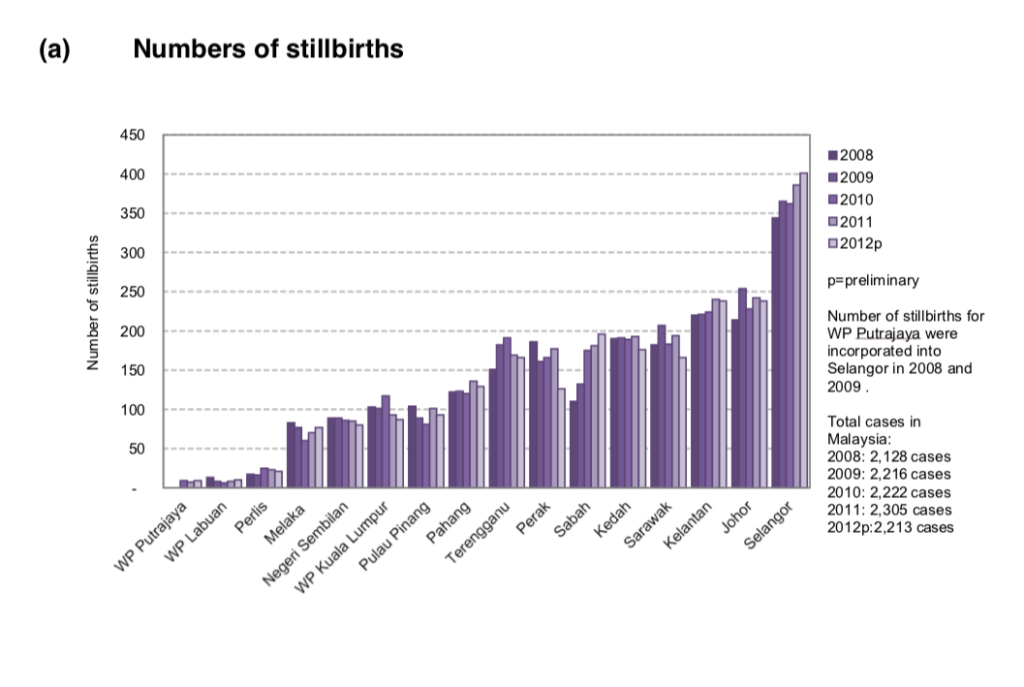
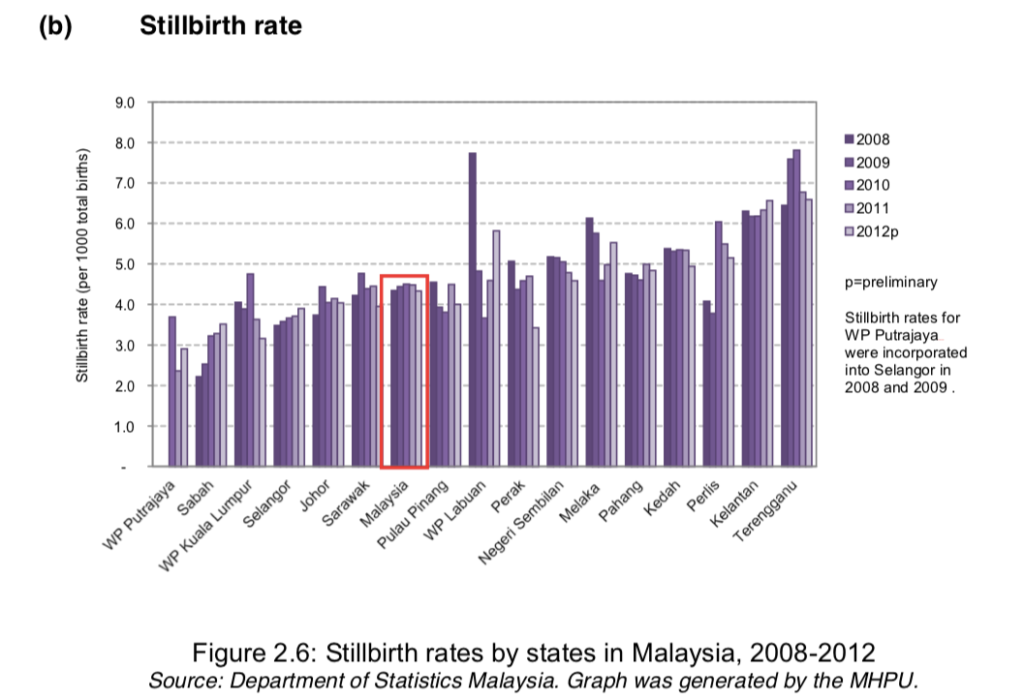
According to a study made by Malaysia’s Ministry of Health (MOH), the stillbirth rate in Malaysian between the year 2008 to 2012 remains constant at around 4 to 5 per 1000 births. However, it is higher than average in the states of Terengganu and Kelantan.
Based on UNICEF’s data in October 2020, around 2 million stillbirths occurred worldwide in 2019. The global stillbirth rate of 2019 was 13.9 stillbirths per 1000 total births. This means, 1 in 72 total births results in a stillborn, or 1 every 16 seconds. This data might be an underestimate, however, because stillbirths are often not reported.
Just like miscarriages, stillbirths would also affect the mother’s emotions — if not more. Many women who experienced a stillbirth often report anxiety, loss of self-esteem, avoiding people or social activities and even experiencing depressive symptoms in both the short and long term. These negative psychological effects sometimes continue into subsequent pregnancies — even following the birth of the next healthy child.
Can stillbirths be prevented?
In some ways, we can try to prevent stillbirths by improving the mother’s health (before pregnancy or in the early stages of pregnancy). This includes managing preexisting conditions and lifestyle choices that can help improve the chances of a successful pregnancy.
Although many stillbirths have more than one cause, the NICHD-supported Stillbirth Collaborative Research Network (SCRN) have examined more than 500 stillbirths in the United States and identified some of these reasons as likely causes and contributors to stillbirth:
- Placenta problems
There are a few types of placenta problems that can occur during pregnancy that may cause stillbirth. Placenta issues include placenta accreta, placenta previa and placental abruption. One example of placental abruption is when the placenta separates from the womb. Since the placenta carries oxygen, nutrient and sufficient blood flow to the foetus, a cut-off of those important things would highly likely cause stillbirth.
- Infection
Stillbirth can also happen when there’s an infection to the foetus or in the placenta. Sometimes, when the mother is seriously infected, it can also affect the condition of the baby in the womb. Beware when you fall sick during pregnancy (i.e. high fever) or if you’re infected by TORCH: Toxoplasmosis, Other (syphilis, varicella-zoster, parvovirus B19), Rubella, Cytomegalovirus (CMV), and Herpes.
- Umbilical cord problems
Sometimes in the womb, the umbilical cord can get knotted or squeezed, cutting off oxygen to the developing foetus. This is more common toward the end of the pregnancy.
- High blood pressure disorder
High blood pressure in mothers — either due to chronic high blood pressure or preeclampsia — also contributed to stillbirths.
- Smoking (tobacco or marijuana), prescription painkillers or illegal drugs
Apart from stillbirths, smoking or taking illegal drugs during pregnancy can cause other health issues to the developing babies such as preterm birth, low birth weight, and birth defects of the mouth and lip and increases the risk of sudden infant death syndrome (SIDS).
***
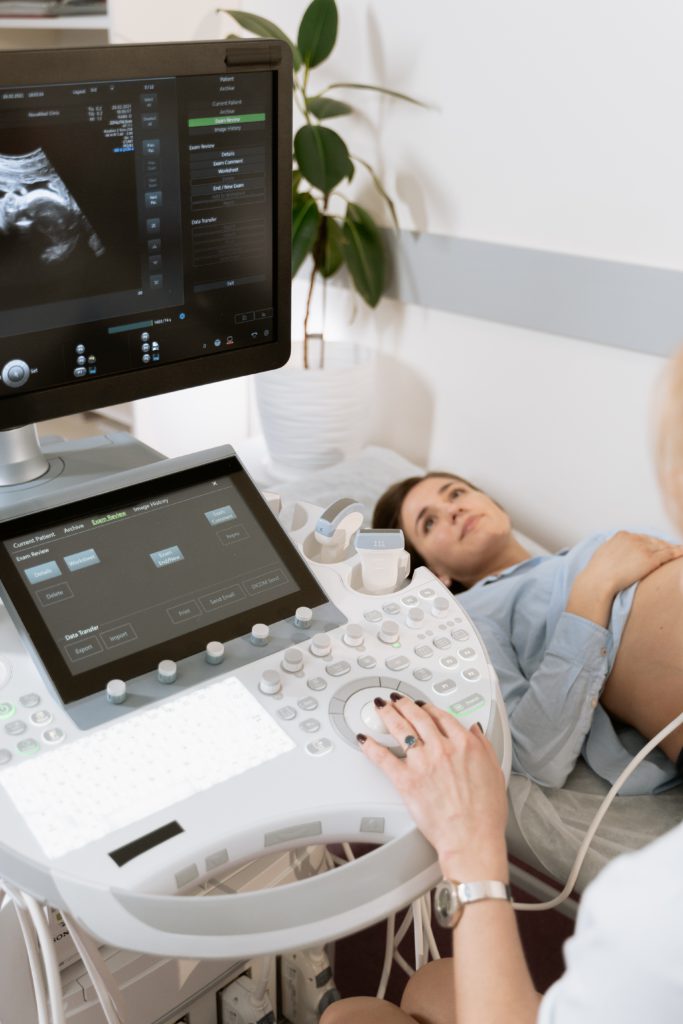
Photo by MART PRODUCTION from Pexels
Firstly, make sure to go to all the antenatal appointments so that your OBGYN can detect your baby’s growth and development or early problems in the foetus. If you experience any bleeding or stomach pains, make sure to take note of the date or time and inform your doctor too. Even itching should be informed to your doctor because itching could be a sign of a liver disorder called obstetric cholestasis or intrahepatic cholestasis that is linked to an increased risk of stillbirth.
When you get to your third trimester, you should sleep on your side because studies have shown that sleeping on your side could reduce the risk of stillbirth tremendously. If you sleep on your back, the baby and your womb would put pressure on the main blood vessels that supply oxygen and blood flow. Studies have shown that when mothers sleep on their back in late pregnancies, the babies become less active and their heart-rate changes patterns. This is believed to be caused by the lower oxygen levels.
Most importantly, mothers must monitor their baby’s movements in the womb. From between 16 to 24 weeks, you would start to feel your baby moving. Most babies settle into a pattern by 24 weeks and they will continue moving up until the time of labour. Mothers must learn their baby’s pattern of moving and notice if the baby move less or stop moving altogether. Babies would move less when they are unwell to conserve energy. Early detection could help prevent stillbirths and save the baby.
Sadly, if you have a stillborn, the first thing you would have to do is to register with the Malaysian “Mother Newborn Child Mortality Registry”. If you are a working woman, you would still be entitled to the full maternity leave benefit from your employer. Make sure you know the benefit you would get in your compensation package early on. In Malaysia, maternity leaves are 60 consecutive days of paid leave. Companies can also extend the leave beyond this initial period but without pay. Beginning January 1st 2021, the new Malaysian 2020 Budget extended the maternity leave period for employees in the private sector to 90 consecutive days.
Mothers must take this time to fully recuperate, get on with postnatal care and get back their strengths. People around (especially immediate family members) should give full support to mothers to prevent postpartum symptoms that can affect the mother for a long time.
Aliza M. is a content writer under Headliner by Newswav, a programme where content creators get to tell their unique stories through articles and at the same time monetize their content within the Newswav app.
Register at headliner.newswav.com to become one of our content writers now!
*The views expressed are those of the author. If you have any questions about the content, copyright or other issues of the work, please contact Newswav.