.jpg)
Speculate No More, Malaysia Is Still An Attractive Destination for Foreign Direct Investments (FDI) in 2021.
By Mihar Dias
(C) Copyright March 2022
Contrary to popular belief Malaysia did attract a significant amount of foreign direct investments (FDI) in 2021 and is still a destination of choice for many foreign direct investors. So, doomsayers take note.
According to MIDA, out of a total amount of approved investments worth RM306.5 billion in 2021, FDI accounted for RM208.6 billion or 68.1%. The remaining 31.9% were from domestic direct investments (DDI) at RM97.9 billion.
It was a whopping year-on-year increase of 224.9% from a mere RM64.2 billion in 2020. That should shut the mouth of many prophets of doom who were speculating that Malaysia was no longer an attractive destination for FDI.
Since 2019 when 1MDB corruption scandals erupted there were endless speculations that Malaysia was no longer trusted by foreign investors and we were seen as losing ground to our neighbours like Indonesia.
For example, during the height of the pandemic, we saw some manufacturers, mostly labour intensive assemblies, such as SONY which was in Malaysia for over three decades, relocating its operations, next door.
MIDA, in its latest press release of March 8, stated that in 2021, The Netherlands injected RM78 billion, Singapore RM47.3 billion, the People’s Republic of China RM31.3 billion, Austria RM18.9 billion and Japan RM9.9 billion. They accounted for 88.9% of total FDI approved by the agency in the manufacturing, services and primary sectors.
Most of the FDI went to Pulau Pinang with RM83.5 billion which was recorded as the highest investment approved in 2021. Kedah was in second place with RM68.3 billion followed by Kuala Lumpur RM37.7 billion, Selangor RM28.8 billion and Sarawak RM25.7 billion. All these states accounted for 79.6% of total approved investments in 2021.
The Electrical and Electronics (E&E) industry contributed the most to FDI with RM148 billion for 94 approved projects.
The breakdown shows that RM42.2 billion were from Risen Solar for the design development and manufacturing of solar modules and solar cells, RM30 billion from Intel Electronics to produce wafer fabrication and stacked dies in Pulau Pinang.
Intel which started its facility in the 1970s is an old reliable investment partner for the state. By increasing its investment it clearly shows its confidence in the country despite the financial scandals of corruption related to 1MDB.
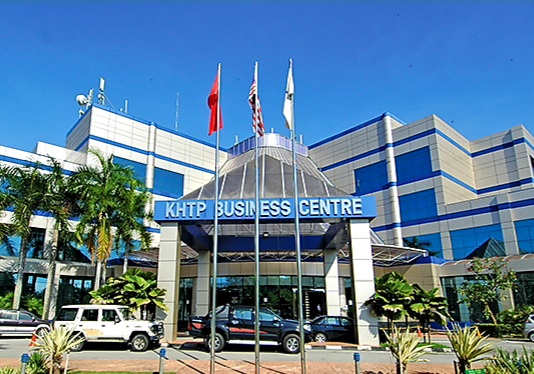
Across the Penang bridge at Kulim Hi-Tech Park, AT&S invested RM8.5 billion to establish design development and manufacturing of integrated circuit substrates. Rural and agricultural Kedah that once served as a hinterland merely supplying food and water to Penang, is now moving into the hi-tech industry.
Apparently, this new venture will be producing IC substrate, a type of baseboard used to package bare IC (integrated circuit) chips. Many young men and women whose parents were once farmers, we suspect would be abandoning their jobs in the rice fields and head for Kulim Hi-Tech Park for better wages.
Meanwhile, in Melaka, Infineon Technologies invested RM3.25 billion. However, while this was certainly good for Malaka we were not told what Infineon was planning to do with its investment in the state.
More recently MIDA had secured 352 other projects with proposed investments of RM39.2 billion for the manufacturing and services sectors.
They are expected to create more than 19,000 new job opportunities for Malaysians. That, however, remains to be seen in 2022 or 2023 when they start their operations.
In sum, the latest FDI and those secured in 2021 had clearly shown that Malaysia is still a preferred destination for some foreign investors. Thus proving the negative armchair critics wrong on their prediction that Malaysia was losing out to its neighbours.
Anyway, what we lost were likely to involve labour-intensive manufacturing industries looking for low-cost production centres.
On the other hand, what we gained are perhaps more in higher technology sectors which are likely to spur the growth of new advanced manufacturing technologies and will eventually produce a highly-skilled workforce.
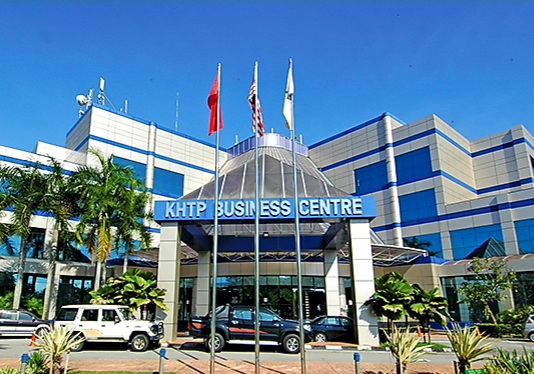
Photo Credit: Google
Mihar Dias is a content writer under Headliner by Newswav, a programme where content creators get to tell their unique stories through articles and at the same time monetize their content within the Newswav app.
Register at headliner.newswav.com to become one of our content writers now!
Newswav is solely an aggregation platform and hosts the content. The views expressed and content above including media (pictures, videos, etc) were provided by the author. If you have any questions about the content, copyright or other issues of the work, please contact Newswav.