
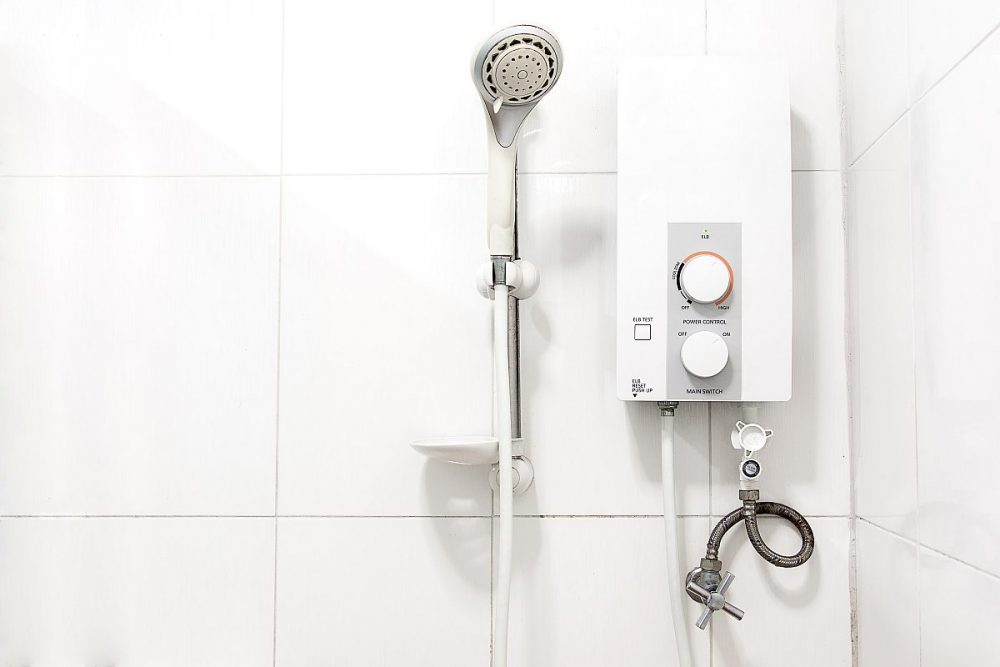
On March 10th, I read shocking news of a married couple that passed away after being electrocuted from their water heater. The incident took place in Taman Puncak Tringkap, Brinchang, Cameron Highlands. It happened in the morning when a 46-year old man who was showering was found unconscious. His 35-year-old wife found him and tried to help by using a wooden stick but she too was electrocuted based on the burnt marks found on her palm during the initial investigation. It was so sad to know that this couple’s lives ended in such a way, leaving three young children behind, the eldest aged 10 and the youngest only 2 years old.
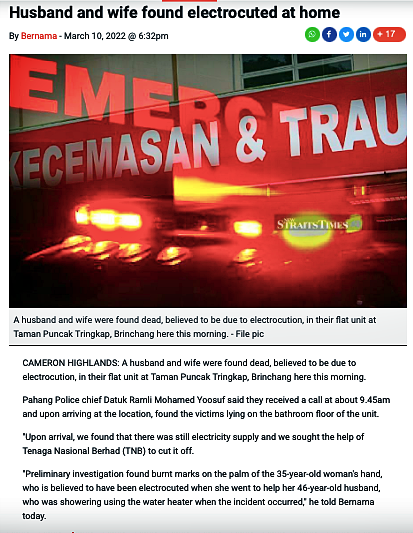
The incident last week was not the first time electrocution from a water heater has happened. Back in 2016, a 19-year-old student studying in South Korea was believed to have been electrocuted while showering in her family’s home at Seremban 2. The scalding on her left chest and the post mortem indicated that her death was caused by electrocution.
Another incident happened in 2020 when a 32-year-old woman who was bathing her 3-year-old son screamed for help and when her 30-year-old brother came to the rescue, it was said that both of them was electrocuted due to their water heater. The child who was in a weak condition was quickly rushed to the hospital.
All three of the news above are shocking and sad. But, can we actually prevent them from happening?
Usually, after we get the electrician to install a water heater in our bathroom, we tend not to think about it anymore. However, this apparatus could be hazardous to us — especially if it had been used for years, without service. Similar to servicing the air-cond at your home, the water heater should also be checked and serviced regularly to prevent current leakage or other problems. Even back in 2017, the Malaysian Energy Commission (Suruhanjaya Tenaga Malaysia) has advised homeowners to replace shower heaters/water heaters that are more than 10 years old.
Below, I share some advice given by an electrician on the best way to prevent electrocution by a water heater or to check for any problems with the water heater at your homes:
1. Do not install the water heater yourself.
Please find an electrician to do this. Even though there are many do-it-yourself products out there but if you’re not handy with electrical items or unsure about the earth and live wire placements, you must get a professional to do the installation to prevent future issues.
2. Check the TEST or ELCB (Earth Leakage Circuit Breaker) or RCD (Residual Current Device) button on your water heater at least twice a month.
After your water heater is installed, you would see some buttons on the heater casing. Depending on the brand of your heater, there might be the word TEST, ELCB or RCD. All three of these have the same function. When the heater switch (which is usually outside your bathroom) is on, try to press the TEST or ELCB or RCD button. If there is a click and then the power to the heater is cut off, this means the button is working. These buttons are very important if there are power/current leakage.
3. Inspect any loose cables.
Make sure there are no exposed cables or loose connections — the earth wire can sometimes get disconnected. In case you don’t know what to look for, ask an electrician to check for you. This should be done every couple of years.
4. Test your house fuse box or RCCB (Residual Current Circuit Breaker).
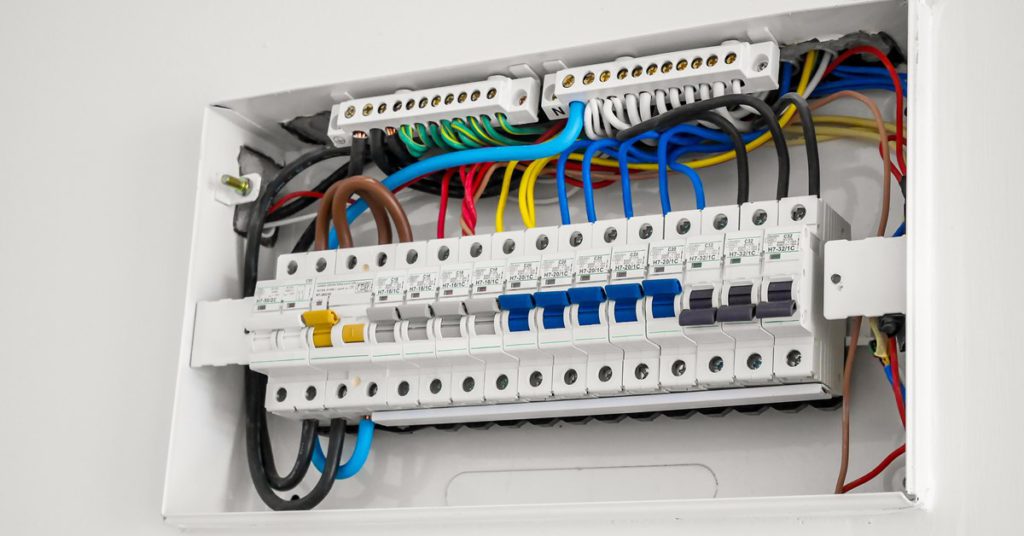
Do you know that big fuse box that is near your main door (or sometimes under the staircase or in the kitchen)? This fuse box is called the RCCB. Once a month, check your RCCB by opening the case and pressing the TEST button. This TEST button works similarly to the ELCB button. If switches in the fuse box trip and power are cut off when you press this button, then everything is fine. If the power is not cut off, please get an electrician to check on it as soon as possible. This trip is akin to a power trip when there are loud thunder or lightning nearby.
Aliza M. is a content writer under Headliner by Newswav, a programme where content creators get to tell their unique stories through articles and at the same time monetize their content within the Newswav app.
Register at headliner.newswav.com to become one of our content writers now!
Newswav is solely an aggregation platform and hosts the content. The views expressed and content above including media (pictures, videos, etc) were provided by the author. If you have any questions about the content, copyright or other issues of the work, please contact Newswav.
