
In Malaysia, the celebration of Eid Al Fitr or ‘Hari Raya Aidilfitri’ in Bahasa Malaysia is synonymous with many local traditions, including returning to our hometowns, visiting family members, green raya packets and so on. Oh, and who can forget about the scrumptious delicacies during Aidilfitri, from rendang, lemang to the slew of sweet and savoury kuihs!
Another iconic dish synonymous with Aidilfitri has got to be Ketupat, a parcel of rice cooked in coconut leaf and wrapped in an iconic diamond-shaped container of palm leaf pouch. Yummy! However, did you know that the delicacy is not just significant to our local culture but is also present in other countries, including Brunei, Singapore, Thailand and Indonesia?
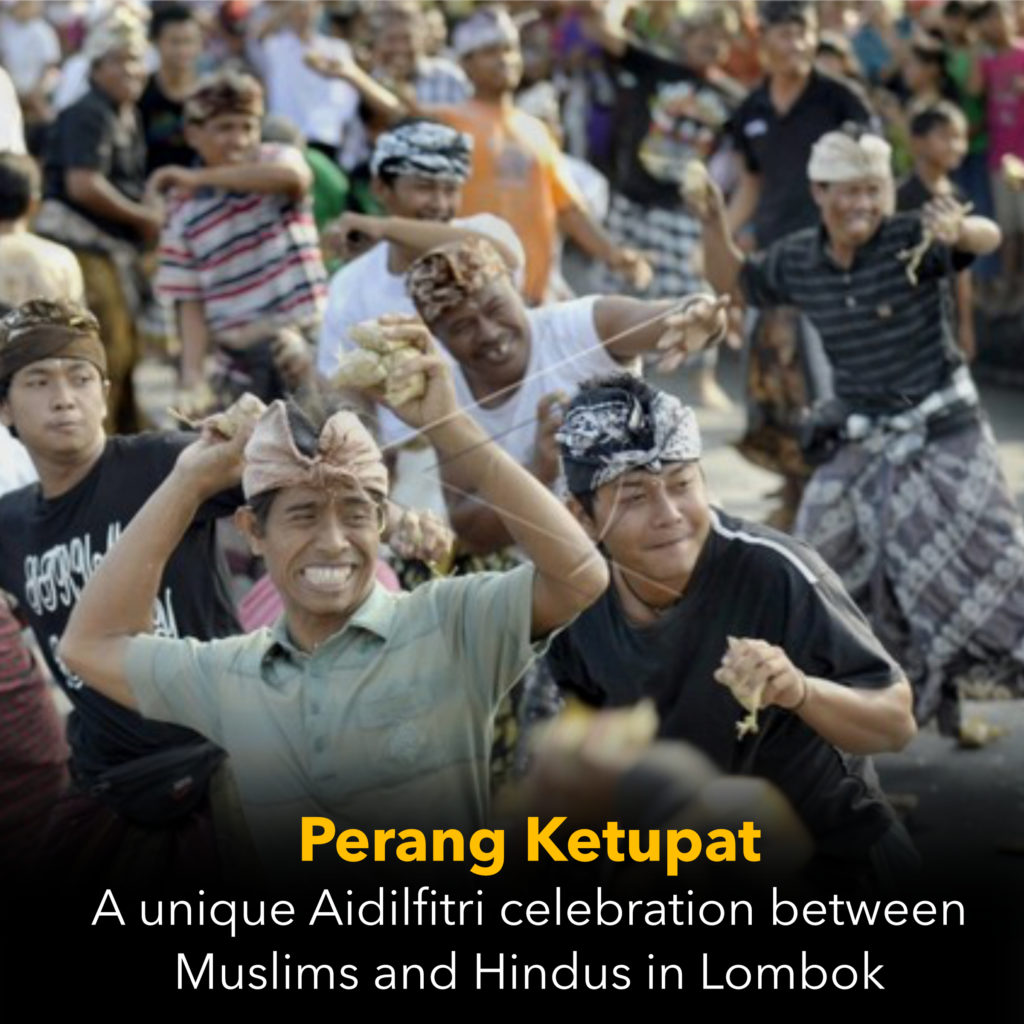
In fact, the Ketupat plays an important role in a unique celebration on the picturesque island of Lombok in West Nusa Tenggara, Indonesia after the end of Ramadan. Called the ’Perang Ketupat’ or the Ketupat War, Muslim and Hindu residents would gather at the Pura Linggar Complex on the West part of the island to engage in what essentially is a food fight; throwing Ketupats at each other!
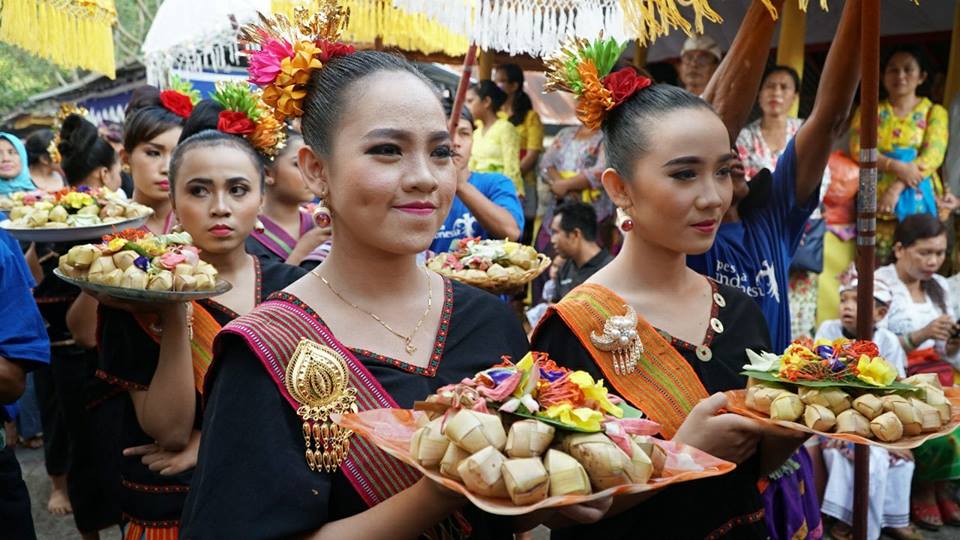
A tradition that has lasted hundreds of years, it is not an actual ‘war’ but instead a symbol of brotherhood and unity among the two major religions of the island. As shared by the Jakarta Post in a special report, the tradition is between those from the Muslim-majority Sasak people and the Hindu-majority Balinese people of Lombok.
In case you didn’t know, Bali and Lombok are neighbouring islands, with the former being a Hindu-majority and Lombok a Muslim-majority island. Both religions live in perfect harmony together in the islands of Indonesia, especially in Lombok. Perang Ketupat is a testament to the strengthened ties among the Muslim and Hindu communities within Lombok.
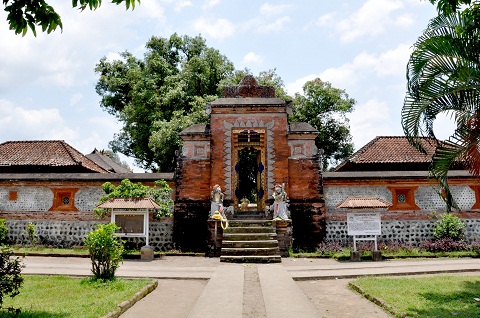
Such religious harmony is also apparent at the very venue in which the tradition is held every year. The Pura Lingsar complex is a Hindu temple built in 1759 during the era of Anak Agung Gede Ngurah, a descendant of the Karangasem king of Bali. The King ruled a majority of Lombok and Bali during that period.
While it is a Hindu temple in terms of architecture, the historic complex actually has two houses of worship; one for Hindus and the other for Muslims. The Pura Lingsar complex – which has been designated as a cultural heritage site by the Indonesian government – entails the Pura Gaduh temple, a Hindu place of worship and the Kemaliq building, a building used for a number of Muslim rituals by the Sasak people.
The tradition will be held every at the end of the holy month of Ramadan, or specifically the 7th day of the Muslim month of Shawal. The date is also significant for the Muslim community in Lombok, whereby it is the day they commemorate Raden Mas Sumulir, a Muslim cleric believed to have brought Islam to the island in the 15th century.
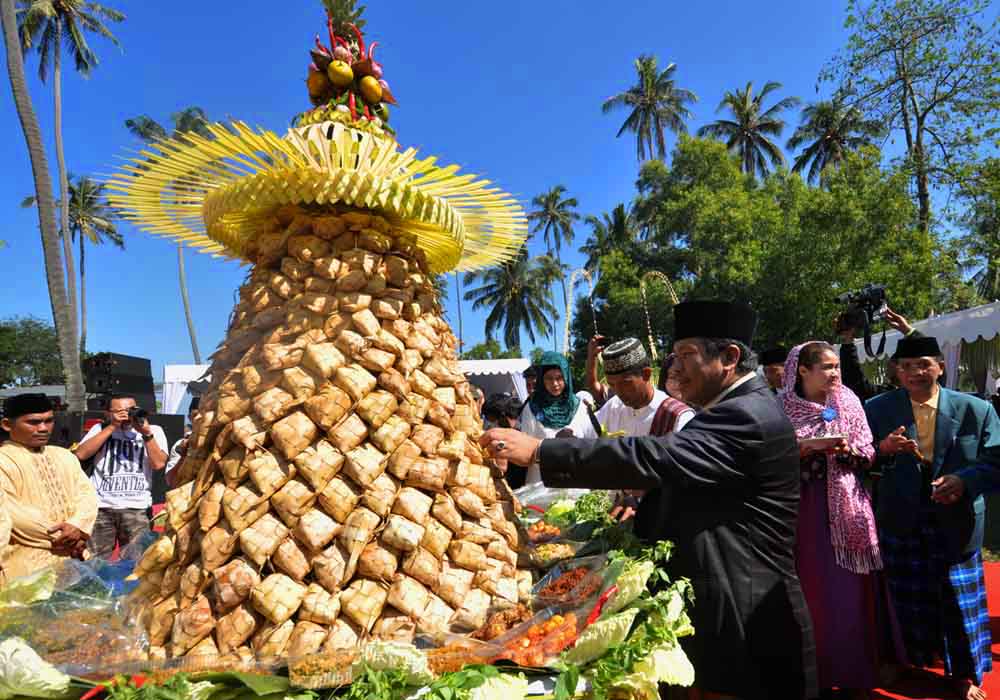
Coincidentally, that particularly annual date is also when the local Hindu community celebrate the odalan, or the anniversary of the Pura Lingsar by performing the Pujawali ritual to pay respect to the godly figures of Batara Gunung Agung, Batara Gunung Rinjani and Batara Lingsar. Hence, in the Pura Gaduh temple, Hindu followers will prepare offerings for Pujawali, while at Kemaliq, Sasak Muslims prepare the traditional kebon odek in the form of various fruits, crops and of course, the ketupat made by both the Muslim and Hindu communities.
Referencing the tradition, Warta NTB, a local Lombok publication elaborated on the local legends regarding the start of the Perang Ketupat. In the 17th century, there was rising tension because, in the process of building the Pura Lingsar complex, the local Muslim community rejected such a project. The tension further escalated to the point that both religious communities were prepared to go to war with each other.
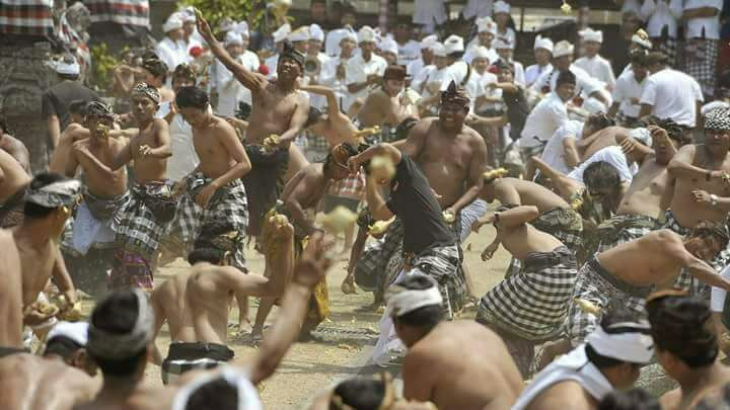
During a confrontation between the two communities which almost turned violent, a respected Kyai, or a Muslim religious leader stepped forward to diffuse the tension. He then gave a speech that made both factions realise the importance of mutual respect and living harmoniously together, regardless of religion and ethnicity.
Since that day, both communities decided to turn the physical war into a symbolic war with ketupats to commemorate peace. This historic tradition may be the only event in the world in which members of the Muslim and Hindu communities carry out their rituals at the same place and time simultaneously.
Truly a unique tradition that all of us could learn a thing or two from. Such religious harmony should be something that we strive for, as at the end of the day, we are all human beings.
Jamie is a content writer under Headliner by Newswav, a programme where content creators get to tell their unique stories through articles and at the same time monetize their content within the Newswav app.
Register at headliner.newswav.com to become one of our content writers now!
Newswav is solely an aggregation platform and hosts the content. The views expressed and content above including media (pictures, videos, etc) were provided by the author. If you have any questions about the content, copyright or other issues of the work, please contact Newswav.