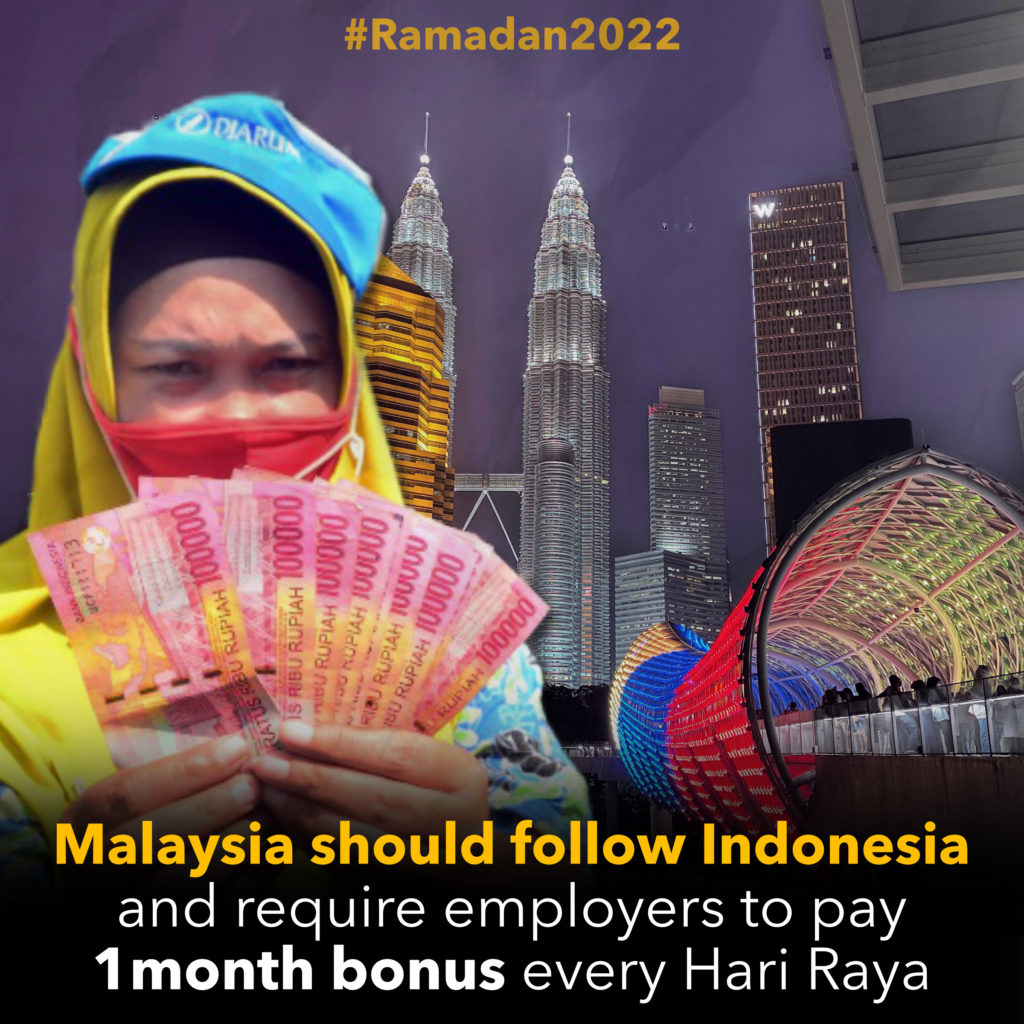
This #Ramadan2022 marks the third time that the holy month of Ramadan is celebrated by Muslims worldwide in the midst of the Covid-19 pandemic. Thankfully, after two years of muted celebrations due to movement restrictions, this year’s Ramadan marks a momentous moment with things beginning to return to normal.
In Malaysia, we are now in the transition phase to endemicity, thus allowing for Muslims to congregate in mosques at full capacity again, performing the Taraawih prayers and other customary acts of worship synonymous with Ramadan Mubarak. Furthermore, the preparations for Hari Raya Aidilfitri, which will be celebrated when #Ramadan2022 ends are also in full swing nationwide, with malls and bazaars being at their liveliest in a long time.
The upcoming first day of Shawal on 3 May will undoubtedly be one of the most memorable and bittersweet moments for Malaysians. As reported by Bernama, Prime Minister Datuk Seri Ismail Sabri Yaakob has assured that balik kampung is allowed for the first time in some 3 years, invoking a sense of elation among the rakyat.
Malaysian employees need more social protection and employment reform
However, despite our nation’s recovery against Covid-19, the grave effects of the pandemic persist, especially in terms of the economy. Many are still without a job or have had their incomes slashed. As such was made more apparent by the immense popularity of the 2022 Special Withdrawal by the Employees’ Provident Fund (EPF), the fourth such scheme introduced by the federal government since the start of the pandemic.
EPF in a statement on 16 April elaborated on the latest withdrawal scheme, revealing that a whopping 5.3 million applications were made as of 14 April, equivalent to 44 per cent of all EPF members that are eligible for the scheme. Accordingly, a whopping RM40.1 billion worth of payments has been initiated to employees since 18 April 2022.
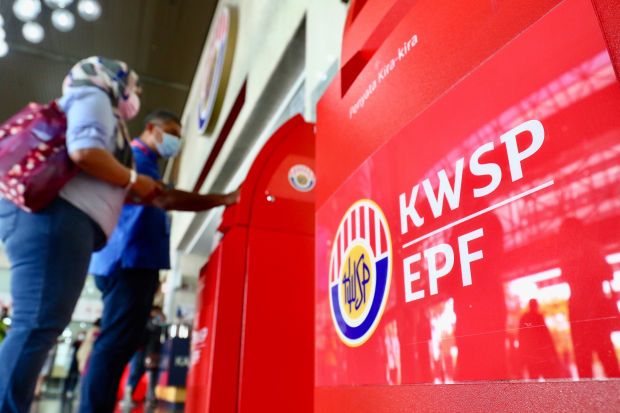
A closer look at the withdrawal applications would yield several interesting findings. EPF members from the M40 (RM1,701 – RM4,900 monthly income) group have the most applicants percentage-wise with 59 per cent, followed by B40 (under RM1,701 monthly income) with 55 per cent and T20 (Above RM4,900 monthly income) with 39 per cent. Such a high percentage, even for the T20 group showcased that the economic effects of Covid-19 are still present, especially when the top reason (23 per cent) for withdrawal is to supplement daily/monthly essential expenditure.
Commenting on the latest EPF withdrawal scheme, Bank Negara Malaysia (BNM) Governor Tan Sri Nor Shamsiah Mohd Yunus said that our country should urgently reform our social protection system to ensure that the rakyat would not face serious financial hardship in the future. As reported by the Malaysian Reserve, BNM also shared that households with a monthly disposable income of less than RM1,000 consume an average of 81 sen from every RM1 in additional income and that the marginal propensity to consume (MPC) is larger for lower-income households than for higher-income households.
Hence, more social protection measures and employment reforms should be made to safeguard the interests of the rakyat. Speaking of which, increasing the minimum wage in Malaysia to RM1,500 per month starting this 1 May as reiterated by the Human Resources Minister Datuk Seri M. Saravanan is definitely a step in the right direction.
Another measure that our country can take in terms of employment reform is to introduce a mandatory 13th-month salary payout for employees similar to the one enforced in our neighbouring country Indonesia. In fact, it can be argued that given the timing of the EPF withdrawal scheme being so close to Hari Raya, many members would not apply for withdrawal should our country implement something similar to Indonesia’s unique employment regulation called the ‘Tunjangan Hari Raya’.
Tunjangan Hari Raya, a mandatory extra one-month salary payment to employees in Indonesia
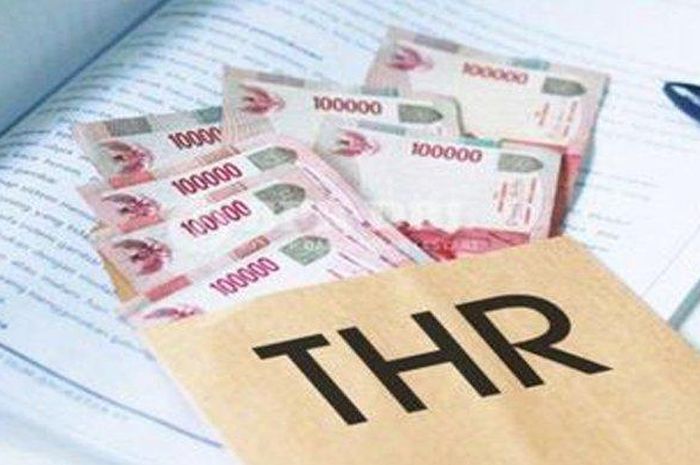
In Indonesia, the Tunjangan Hari Raya (THR) or ‘Religious Holiday Allowance’ is a requirement for all employers to pay a 13th-month salary each year to their employees. Not exactly a bonus payment (that is considered a separate form of payment that is customary in the Republic), the requirement is governed under the Republic of Indonesia’s Ministry of Manpower under Regulation M/6/HK.04/IV/2021, the regulation entails:
- All permanent employees in the country must receive the financial payment once a year before their longest religious festivities.
- The payment must be made in the form of money. Alternative compensation methods are not allowed.
- Its amount must be equal to the employee’s one month salary for those who have worked for 12 months continuously.
- If the employee has not worked for 12 months, the payment must be prorated.
- The amount must be inclusive of basic salary and fixed monthly allowance if any, but doesn’t have to include bonuses.
EmerHub went into further detail regarding THR in its blog, asserting that employees working in Indonesia would be receiving THR if they are permanent employees or if they’ve signed an agreement for a specific period (PKWT) or an indefinite period (PKWTT). However, those who are working freelance are not eligible for THR.
Moreover, as Indonesia is a multi-cultural and multi-religious nation, THR will only be given if the employee’s religion is recognised by the Republic. The religions recognised by Indonesia are Islam, Protestantism, Catholicism, Hinduism, Buddhism, and Confucianism. Besides that, THR payment is still mandatory if your respective religious holiday comes along immediately after you started working at the company or organisation, though it would be prorated as mentioned above.
THR must also be paid 7 days before the employee’s major religious holiday. In fact, the Indonesian Ministry of Manpower will be putting out a THR payment deadline for all employers to adhere to. However, should the employers and employees agree to set out a preferred payment time, THR can be paid at one specific religious holiday to all employees, regardless of their religion.
This is usually done before Eid Al Fitr or known as Lebaran in Indonesia when a majority of citizens would perform the Mudik, the activity where migrants or migrant workers return to their hometown or village during or before major holidays.
Global practice of the 13th-month salary requirement
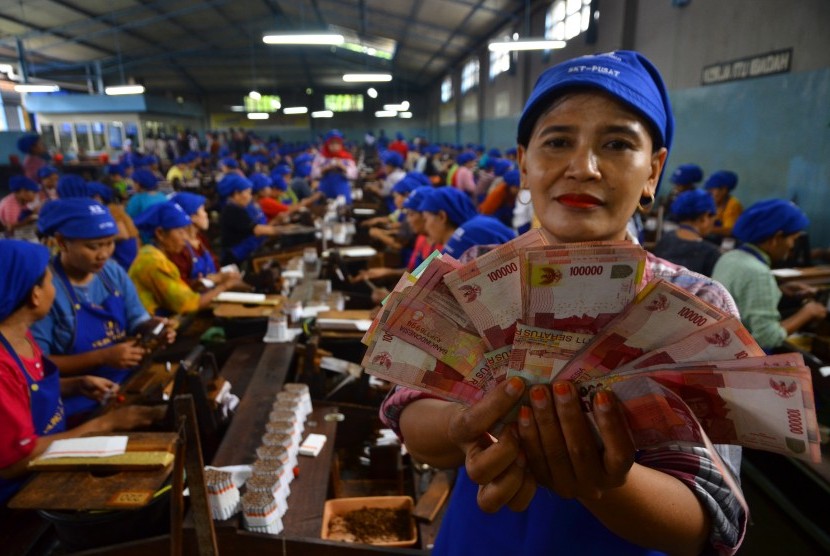
The practice of a mandatory 13th-month salary is not exclusive to Indonesia but is actually a rather common practice in various countries worldwide. In fact, Indonesia is the second country in Southeast Asia to adopt such a regulation, with the Philippines being the pioneer of the practice when it became the first country in the world to make it mandatory in 1975.
Joel F. Ariate Jr. and Miguel Paolo P. Reyes documented a detailed history of the 13th-month pay through the Presidential Decree 851 on 16 December 1975 in the Philippines with the efforts of organised labour in the country playing a huge part in the decision. Practised up to this day, the structure is similar to Indonesia’s THR with the only difference being that the payment is made before 24 December each year so that the country’s citizens can celebrate Christmas joyously.
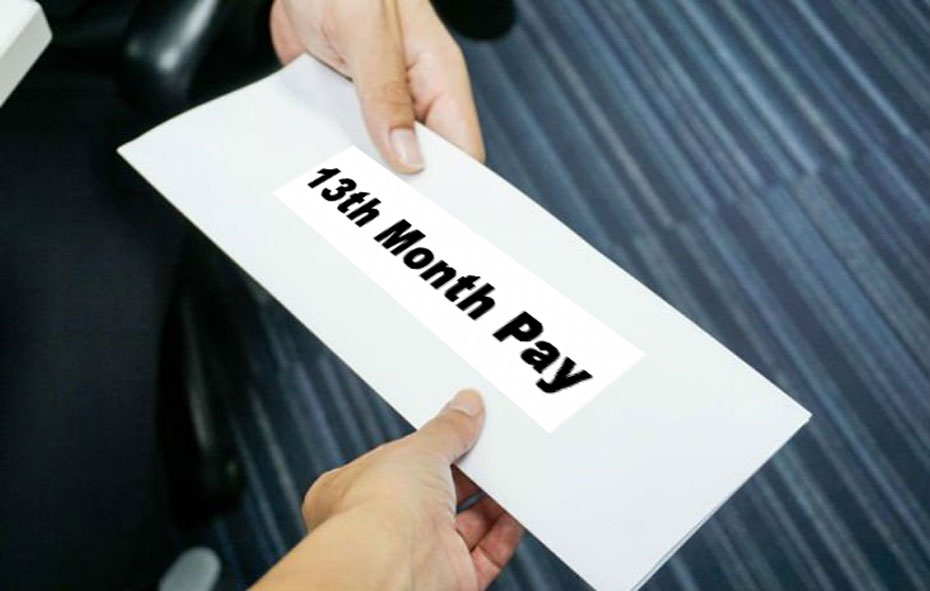
Besides the two countries mentioned above, a 13th-month pay is also mandatory in two other Asian countries, which are India (to be paid within the 8 months of the end of the financial year) and Saudi Arabia (paid on Eid Al Fitr). According to New Horizons, other countries in the world that have made similar regulations include:
- Angola
- Argentina
- Armenia
- Bolivia
- Brazil
- Colombia
- Costa Rica
- Dominican Republic
- Germany
- Greece
- Mexico
- Ecuador
- El Salvador
- Guatemala
- Honduras
- Italy
- Mauritius
- Nicaragua
- Nigeria
- Panama
- Peru
- Portugal
- Uruguay
- Paraguay
- South Africa
- Spain
- Switzerland
- Venezuela
Malaysia should adopt a similar measure in the near future
In Malaysia, a 13th-month salary is only considered a customary practice and is usually made in the form of bonus payments that are up to employers’ discretion. However, rather than giving the choice to employers, isn’t it time for our country to plan for the introduction of a mandatory 13th-month pay which would benefit the rakyat immensely?
The constant need for employees to dip into their EPF savings over the past 2 years pretty much alludes to the fact that employees’ welfare in Malaysia is not up to par with the other countries mentioned above. Furthermore, the fact that our nation doesn’t have a mandatory 13th-month salary means that our wage packages are essentially worse than the countries that have the practice. For example, if the country has the same minimum wage as Malaysia on paper, their salary package is actually better as employees would have another month’s payment of that salary each year.
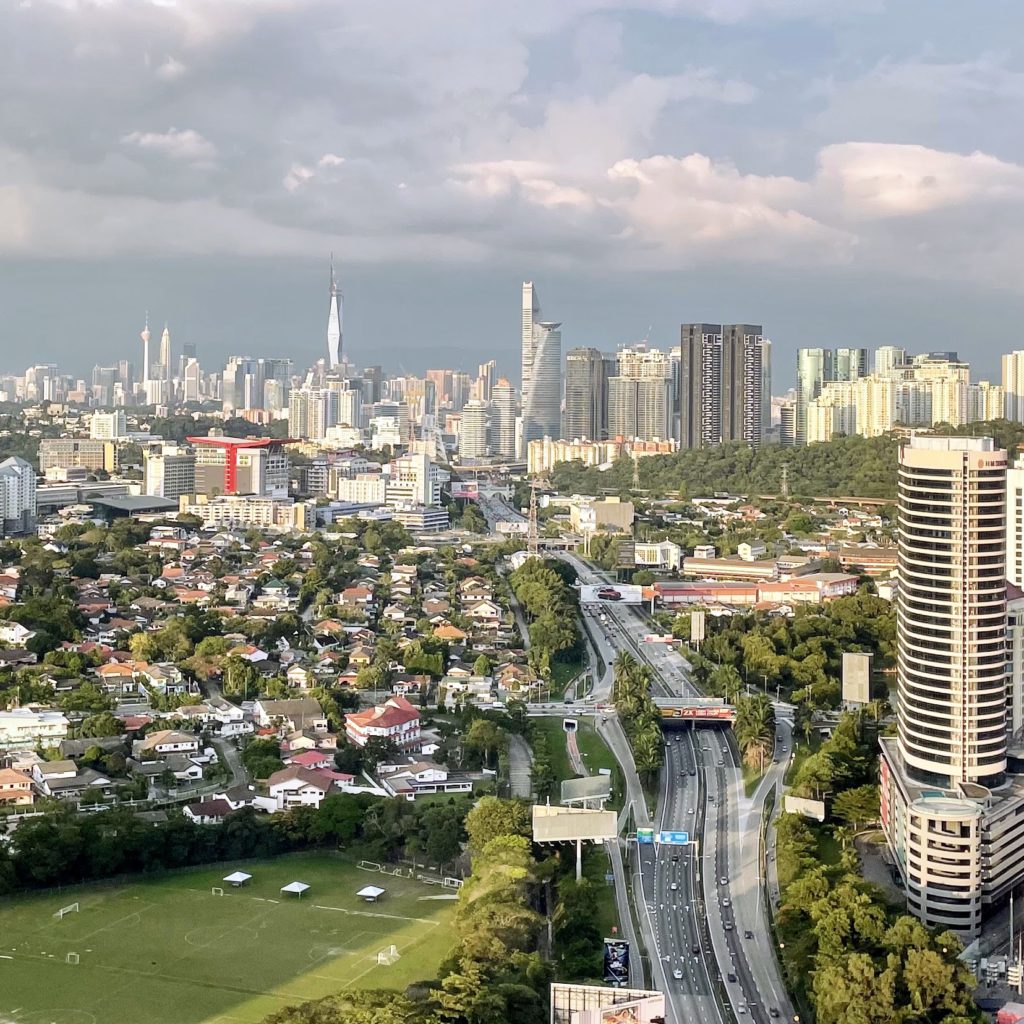
Of course, such regulation should not be introduced immediately but gradually, or even targeted to certain income groups first. In fact, isn’t a 13th-month salary requirement a logical policy follow up to the recent increase in the minimum wage? Moreover, given the similarities between Indonesia’s Mudik tradition to our very own Balik Kampung tradition every Hari Raya, an annual mandatory extra month payout makes a lot of sense, especially considering that is a time period when the rakyat inevitably spends more.
Besides, if the Philippines and Indonesia could implement such a measure for decades, why can’t Malaysia?
Jamie is a content writer under Headliner by Newswav, a programme where content creators get to tell their unique stories through articles and at the same time monetize their content within the Newswav app.
Register at headliner.newswav.com to become one of our content writers now!
Newswav is solely an aggregation platform and hosts the content. The views expressed and content above including media (pictures, videos, etc) were provided by the author. If you have any questions about the content, copyright or other issues of the work, please contact Newswav.