
China has carried out a successful test of a deep-sea device that can cut fiber-optic cables at depths of 11,483 feet. The announcement points to a new level of access to critical underwater infrastructure.
Submarine cables handle almost all global internet traffic, yet they remain physically exposed on the ocean floor. Any advance that can reach them more easily tends to draw attention beyond the engineering world.
The test took place on April 11 aboard the research vessel Haiyang Dizhi 2. According to China’s Ministry of Natural Resources, the system reached 3,500 meters, going deeper than other known remotely operated vehicles.
This places the device beyond systems such as Japan’s MARCAS-V-ROV and the UAE’s Olympian T2, both of which operate at depths of around 3,000 meters.
Going Deeper Than Most Existing Systems
Reaching 3,500 meters may not seem remarkable at first, but underwater conditions make every extra meter more challenging. Pressure increases, visibility drops, and control becomes harder.
According to a 2024 report from the International Telecommunication Union, very few publicly known systems can even approach 3,000 meters. That gives this new device a bit more room to operate in parts of the seabed that are usually harder to access.
Reporting from the South China Morning Post noted that the system is already considered close to real-world deployment, suggesting it may not stay in the testing phase for long.

The Cables That Keep The World Running
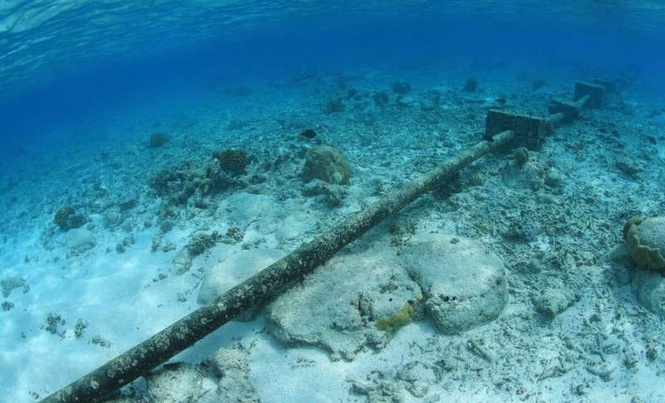
Under the ocean, there are more than 745,000 miles of fiber-optic cables. They carry about 99% of intercontinental internet traffic and support roughly $22 trillion in daily financial transactions.
Compared with satellite systems, which handle a much smaller share of global data, submarine cables remain the primary infrastructure for high-speed communication. According to industry observations cited in the source, their importance has made them a growing focus of international concern.
A Tool Built For Both Repair And Cutting
The system uses electro-hydrostatic actuators, a technology originally developed for aerospace. In simple terms, it allows complex movements with less bulky hydraulic equipment, which helps in deep-sea conditions.
It also works with a diamond-coated grinding wheel, about 150 millimeters wide, spinning at 1,600 rpm, designed to cut through cables reinforced with steel, rubber, and polymers while remaining precise enough to limit disturbance to the seabed.
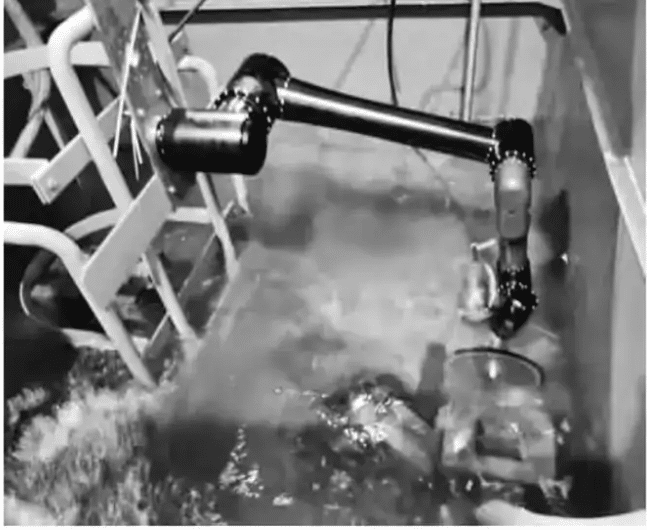
Researchers behind the project highlight practical uses like repairing cables or maintaining underwater pipelines. As Hu Haolong from the China Ship Scientific Research Center put it:
“Enhancing marine resource development capabilities, advancing the blue economy and building China into a maritime powerhouse,” he added that, “constitute critical components of realising the Chinese dream.”
Enjoyed this article? Subscribe to our free newsletter for engaging stories, exclusive content, and the latest news.