The revamped and rebranded London Museum will open on Saturday, 28 November, unlocking its doors to Londoners and visitors across the country and beyond who will have the final say as to whether this “new sort of museum” captures the feeling of London.
Ever since the museum’s former Barbican location, then called the Museum of London, closed four years ago, no dedicated, comprehensive museum has focused solely on London.
But almost half a decade may have been worth the wait, as the newly titled London Museum is reopening in a brand-new location in the centre of the city, in West Smithfield just round the corner from Farringdon Station.
Most importantly, admission is completely free and walk-ins are welcome, but the museum is urging visitors to book a free ticket in case it’s very busy during its opening weeks.
In time for its 50th anniversary, the London Museum has given its seven-million-object collection a new home in two former market buildings after 10 years of renovations and £437m spent.
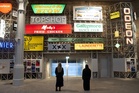
The museum is not simply changing locations. Visitors can expect everything from a network of Victorian underground vaults housing displays to evening DJ sets and new additions to the collection, such as the original red sign from the first Morley’s chicken shop in Sydenham.
“We’ve always been ambitious and bold. Over the years, we have created a new sort of museum,” Sharon Ament, director of London Museum, tells The Independent ahead of Saturday’s opening.
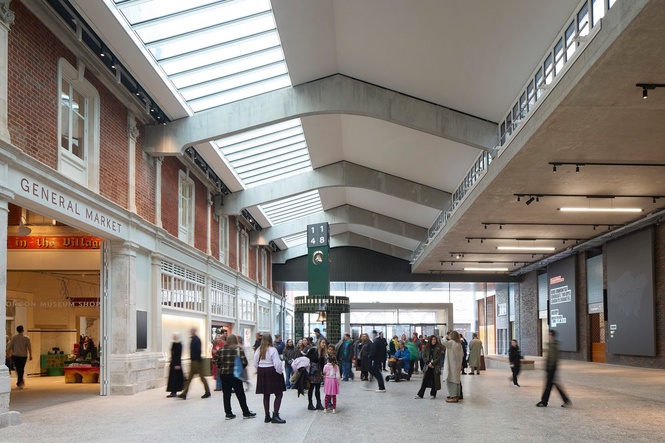
When London Museum inherited the Smithfield Victorian General Market near Farringdon station, the site, which was once the country’s most important place to buy and sell meat and poultry, was derelict and damaged.

Workers have restored its historic facades, designed by the architect Horace Jones, excavated vaults and salt stores, preserved decorative ironwork and stonemasonry, and turned the expansive trading floors into a state-of-the-art museum. An adjacent 1960s poultry market building will open in 2028 as the museum’s learning centre, collection stories, and more temporary exhibitions.
“It’s remarkable to be repurposing this set of buildings that had a former life as a market and making it into a museum, that feels like a really special thing to do,” Ms Ament said. “It’s creating a place where people, I think, would just want to hang out.”

The initial motivation to move the museum out of its London Wall location near the Barbican was the lack of space to curate more exhibitions, and the fact that it was tucked away in the folds of the City of London, making it harder for visitors to find.
“When I arrived in 2012, I realised that this fantastic collection of seven-and-a-half million objects, this fantastic institution – which had a history from the get-go of being really innovative, engaging the public, breaking down barriers – was just not getting the exposure it needed. No one can find it,” Ms Ament said.

“The benefits of the new building for people travelling into London are that they get off at Farringdon; we’re at the centre of a transport hub, and that was the big wow.”
Ms Ament wants it to be a “museum for everyone”: extending its hours so commuters can pop in after work, covering a wide range of subjects to attract different demographics and ages, representing people born and bred in the capital while also appealing to visitors.
The museum is split into three distinct spaces named Past Time, Real Time and Our Time.

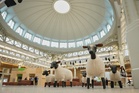
Visitors will enter through Real Time, which showcases London as it happens through giant animated screens displaying real-time data, such as how many buses have run that day. The space also includes a cafe that will be open daily, with an extended 24-hour opening Thursday to Sunday. The Temperance Cocoa Rooms sits on the former site of an original cocoa room, opened during the 19th-century temperance movement as an alternative to the pub.
Our Time serves as a central hub with installations rooted in the city’s living memory, while also providing space for social gatherings with a restaurant, shop and events space. The inaugural exhibition and programme of events in Our Time, titled “London Tastes”, is guest-edited by Ruby Tandoh and Jonathan Nunn, and explores the capital’s diverse food culture, spotlighting institutions like Brixton Market, Beigel Bake and the capital’s iconic pie and mash shops.
Another interesting display captures the voices of London’s Generation Alpha, drawn from the museum’s first major collecting project with young people.
Down a floor to Roman-street level is the Past Time gallery, where the majority of the museum’s objects and artefacts are found, telling the story of London from prehistory to present day.
While it may seem odd to walk through the two large Past and Our Time spaces, which offer fewer exhibitions and more places to sit, the underground space feels sequestered from the busy world above, allowing visitors to focus on the displays before them.

The Past Time artefacts are accompanied by written descriptions and interactive displays such as handheld speakers, video loops and touch screens. Visitors start with London’s earliest inhabitants, then move to transformative events like the Great Fire of London and the blitz, and cultural milestones like the London 2012 Olympic Games and Paralympic Games.
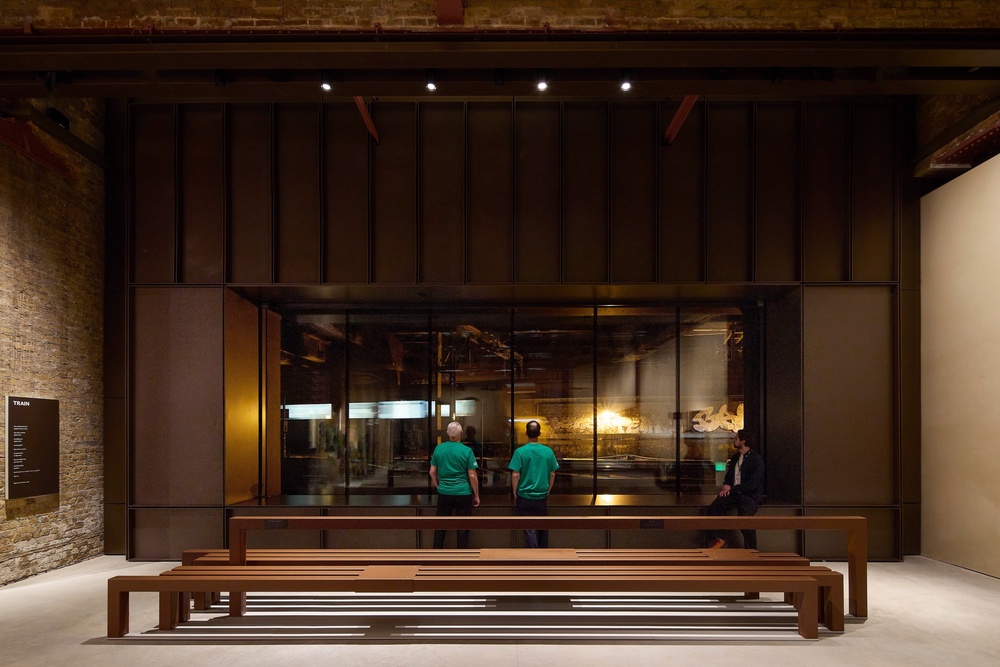
One of the most intriguing features in the permanent galleries in the old salt store is a window that lets visitors watch trains rumble by as passengers peer in, a unique feature of the museum that connects it to the London of today.
Moving to Smithfield Market proved even more beneficial than first thought. During renovation works at the museum’s new site in 2019, builders broke through a wall and found an 800-square-metre underground network of lost Victorian vaults. Once thought to have been used as storage units by the market and the nearby railway, the abandoned space will now host a rotating schedule of experiences, displays and events.
London Museum’s first exhibition in its network of underground vaults is titled “Londinium: the making of a Roman city”. The free exhibition will open in spring 2027, illuminating who the very first Londoners were, with never-before-seen objects from the Bloomberg Collection of Roman artefacts.
On display will be a collection of Roman wax writing tablets, an infant’s feeding bottle offering rare insight into childcare and family life, and Britain’s earliest known example of Eurasian cockroach eggs, discovered inside a Roman bakery oven. The artefacts, along with dynamic projection and spatial soundscapes, will shed light on how a once-rural landscape transformed into a thriving urban centre.
“The story of London spans 2,000 years,” said Ms Ament. “Apart from the fact that London is just bloody cool, we can do anything with [the subject of] London. We can talk about fashion. We can talk about food. We can talk about music. We can talk about poverty. We can talk about the British Empire. We can talk about the Romans.
“London is not just any city, is it? It’s a global city.”