
A father’s excitement over a new 20TB hard drive turned to confusion when his computer refused to recognize the device and formatting attempts repeatedly failed. The brand-new drive, purchased online and arriving in sealed packaging, produced only faint clicking sounds before becoming completely unresponsive, prompting his son to investigate what lay beneath the convincing exterior.
When the son opened the drive’s casing, he found no storage components whatsoever. Instead, the enclosure contained iron wheel weights crudely glued to the plastic shell, a small circuit board programmed to report a fake capacity, and absolutely nothing capable of storing a single digital file. The father had paid for what was essentially a hollow box designed to mimic the heft and appearance of legitimate hardware.
The counterfeit storage device represents a growing category of technology fraud that preys on consumers seeking high-capacity storage at bargain prices. Legitimate 20TB external hard drives typically cost over two hundred dollars, with portable versions often exceeding three hundred dollars. The drastic price discrepancy should serve as an immediate warning sign, yet convincing packaging and fraudulent online listings continue to trap unsuspecting buyers.
How the Counterfeit Drive Deceived Its Owner
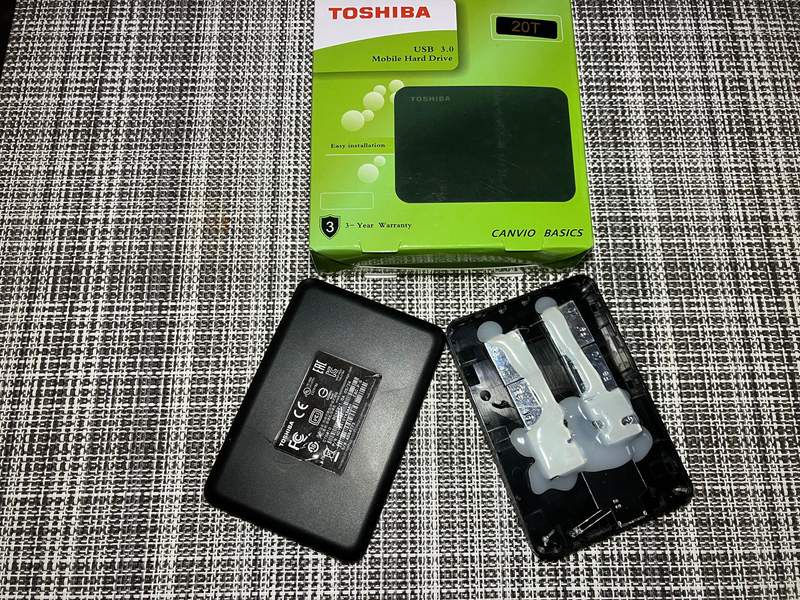
The device arrived in a box bearing Toshiba Canvio branding, complete with authentic-looking labels and a sealed exterior that suggested factory-fresh quality. Toshiba manufactures genuine Canvio portable hard drives, but the company’s official specifications list maximum capacities of only 4TB for that product line. The 20TB claim alone signaled impossibility, though this detail escaped the father who trusted the marketplace listing.
Inside the box, the scammers included a leaflet explaining how to reformat the disc drive, adding another layer of false legitimacy to the deception. The external casing matched the weight and feel of a real hard drive precisely because of the iron weights hidden within. This attention to physical mimicry meant the device passed initial handling inspection without raising suspicion.
When connected to a Windows computer, the fraudulent drive mounted successfully and appeared as a 19TB storage volume. The circuit board’s firmware had been programmed specifically to report this high capacity, creating the illusion that the hardware functioned correctly. Files could even be copied to the drive and their names appeared in the directory, but any attempt to open or retrieve those files resulted in immediate failure and system hangs.
Martin, the son who examined the device and spoke with Ars Technica, described the behavior: “The device appeared to mount on the desktop with the device name in Mandarin (turned out this simply said ‘Hard Disc’). I tried copying a file, and the name did appear on the ‘hard disc.’ It was only when I tried to open this file from the hard disc that the problems began to emerge. The file could not be opened, no matter how hard I tried, including reformatting the hard disc. At that point nothing was ‘working’ at all.”
Technical Deception Through Firmware Manipulation
The small printed circuit board inside the counterfeit drive contained minimal flash storage but was engineered to deceive the operating system. A user unfamiliar with storage verification tools might easily blame themselves or their computer for the subsequent failures rather than recognizing the hardware itself as fraudulent.
Windows-savvy users know that operating systems report drive capacities in gibibytes or tebibytes, meaning a genuine 20TB hard drive would display approximately 18.2TB in Windows. The reported 19TB figure should have raised additional suspicion, as it did not align with expected binary conversion standards. This subtle inconsistency added to the growing list of red flags that only became apparent after purchase.
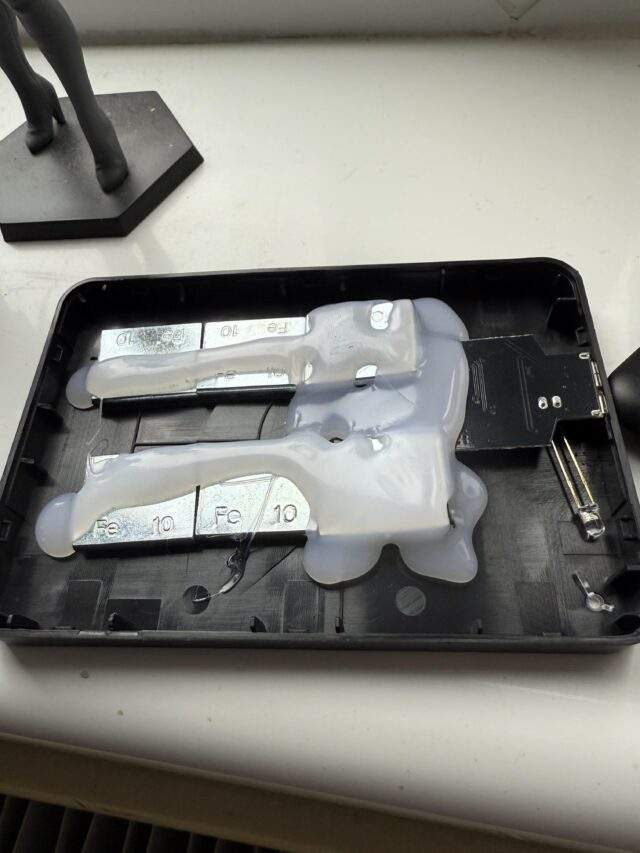
The counterfeit drive contained no platters, no read heads, no controller board capable of managing data, and no mechanism whatsoever for storing information. Every component required for actual data storage was absent, replaced entirely by weights and a deceptive circuit board programmed to create the appearance of functionality.
Seller Refuses Full Refund Despite Clear Evidence
The father purchased the counterfeit 20TB hard drive from a website called UK.Chicntech, a domain that primarily sells car supplies, kitchen accessories, and home textiles rather than computer hardware. The site’s inventory appears sparse and disorganized, with limited electronics listings that include items like aromatherapy devices rather than reputable technology products.
When Martin contacted Chicntech support with photographs showing the opened drive casing and the iron weights inside, company representatives repeatedly refused to acknowledge any problem. According to Martin, support staff claimed that “the car wheel weights ‘did not affect the performance of the device'” and requested information that had already been provided multiple times. The company’s best offer consisted of a thirty percent partial refund, permission to keep the useless device, and a free gift from an unrelated Japanese website.
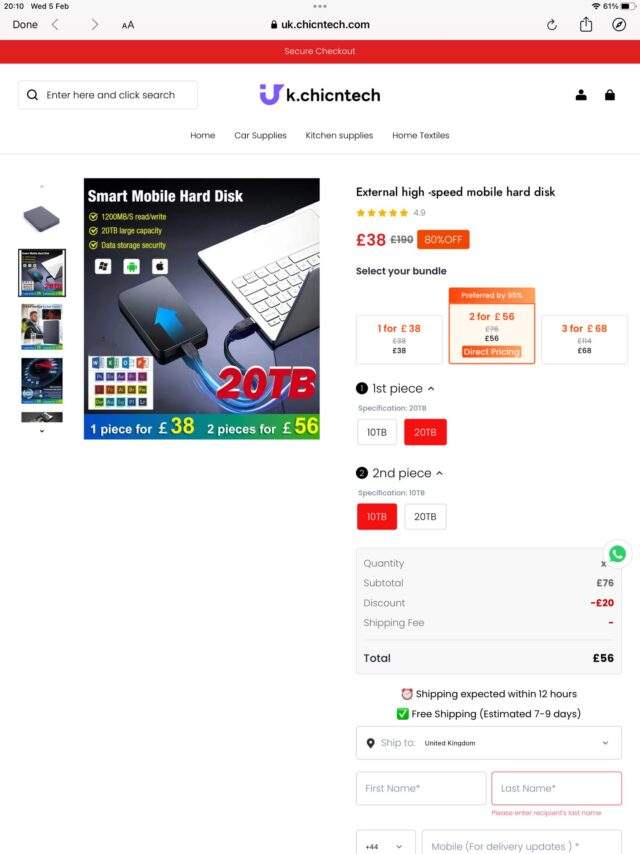
Chicntech’s returns policy contains deliberately confusing language that complicates refund attempts. The policy states that electronic products are considered used once energized, potentially voiding return eligibility the moment a customer plugs in the device to test it. Martin indicated his father is currently pursuing a refund through his credit card company after exhausting direct channels with the seller.
Wider Pattern of Counterfeit Storage Scams
Similar fraudulent listings have appeared across multiple online platforms and marketplaces. Shoppers have discovered counterfeit technology devices sold through well-known companies including Walmart and Amazon, where individual sellers can create profiles to push fake products before disappearing. The anonymity of third-party marketplace listings enables bad actors to vanish quickly once complaints begin accumulating.
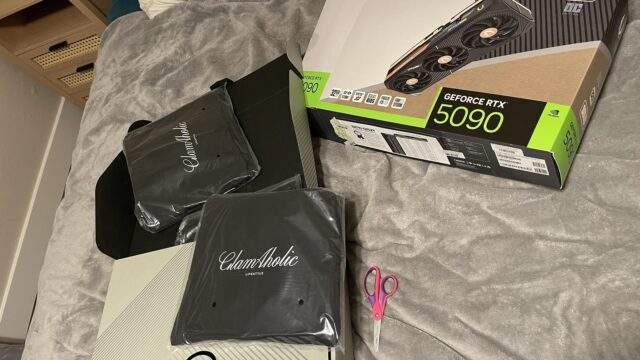
A related incident at Micro Center involved factory-sealed graphics card boxes containing backpacks instead of the expected components. The retailer reportedly discovered thirty-one Zotac GPU boxes filled with backpacks, suggesting the tampering occurred higher in the supply chain rather than at the store level. Micro Center replaced the affected customer’s purchase with genuine hardware, but the case illustrates how counterfeit operations can infiltrate seemingly legitimate distribution channels.
Consumer watchdogs warn that counterfeiters now produce convincing imitations of legitimate casings, logos, and stickers designed to pass routine scrutiny. Online forums contain numerous reports of fake drives and SD cards that masquerade as high-capacity storage while containing minimal or non-existent actual memory. The counterfeit 20TB hard drive that Martin’s father received fits squarely within this established pattern of technology fraud.
Enjoyed this article? Subscribe to our free newsletter for engaging stories, exclusive content, and the latest news.