
Read part 1 here
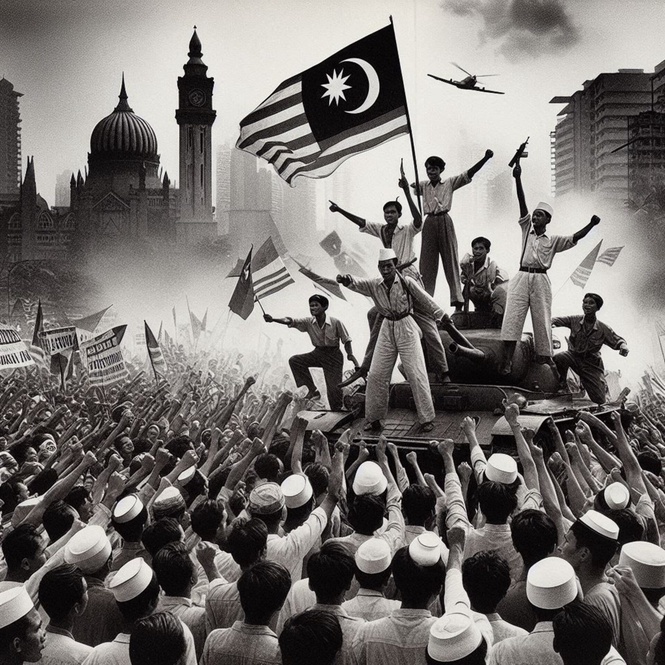
Celebrating the Triumph of Malayan Communist Party?
The first few minutes of the movie Pendatang, produced by Kuman Pictures, showed the setting of what feels like a post-Baling talk of 1955 by the Malayan Communist Party and Tunku Abdul Rahman in Baling Kedah. Chin Peng and Rashid Mydin and the gang supported by Communist Party of China went back into the jungle after the talks failed to bring a peaceful resolution.
The Maoist-Marxist-Leninist armed struggle of the Communist Party resumed. The aspiration of the PKM (Parti Komunis Malaya) and to install Chin Peng as a prime minister of the new republic of Malaya was stalled. Today, with the help of the Armed Forces, especially Askar Melayu di Raja, the insurrection was crushed. Malaysia is what it is today. Run by nationalists and religion is preserved, albeit in all its glory and horror. All religions are respected.
In Pendatang, the scenario is the opposite. The Communists triumphed, the country was ruled by a junta reminiscent of the Bintang Tiga, and the administering of martial-law-like government favored the Chinese. As I write this, I think of the academic work Red Star Over Malaya by Cheah Boon Kheng and Noel Barber’s War of the Running Dogs, that narrates the British Malaya’s 12-year Emergency Period, that cost thousands of lives. A time when the British with the help of Malay soldiers crushed the insurgency.
Is Pendatang a Communist-sympathized movie? Revival of the aura of Maoist-Marxist-Leninist ideology that form the revolutionary ethos and guides the spirit of Parti Komunis Malaya? These are central questions worth analyzing. The movie started with a premise, an ideological one that promoted the triumph of the anti-British Malaya, anti-Malay, anti-nationalist regime. Segregation law is strictly enforced. and the Chinese-dominated junta ruled, like the Taliban in Afghanistan or the Communist Army established by Mao Zedong.
As mentioned earlier, the Malays, in the movie, are the “pendatang,” taken out by force, yanked out of their dwelling, and relocated. A “Gaza-situation for the Gopeng Malays.” Tanah Melayu is no longer relevant as a nationalist cry and the Malay home is now a place to be used for anything by the “Bintang Tiga” (Malayan Communist) -like forces.
The property of the Malays is confiscated, and the people are sent to segregation camps/kampongs and make them suffer the plight of a people occupied, as in Gaza and West Bank. How the people voted “YES” for the segregation referendum is not clearly alluded to in the movie, and I assume that many of the votes would have come from the Chinese community, reminiscent of the scenario of the separation of Singapore from Malaya in 1965.
The junta favors the Malayan Chinese, at least as depicted in the first few scenes of the movie.
This movie is the hope by the filmmakers that the ideology of the Malayan Communist Party has come to its final glory and the cry of “Unity and Glory” of the new regime will triumph.
The above notes are my initial reading of the opening scene of Pendatang wherein the Malays are chased out of their homes and their homeland.
My second reading: On ideology
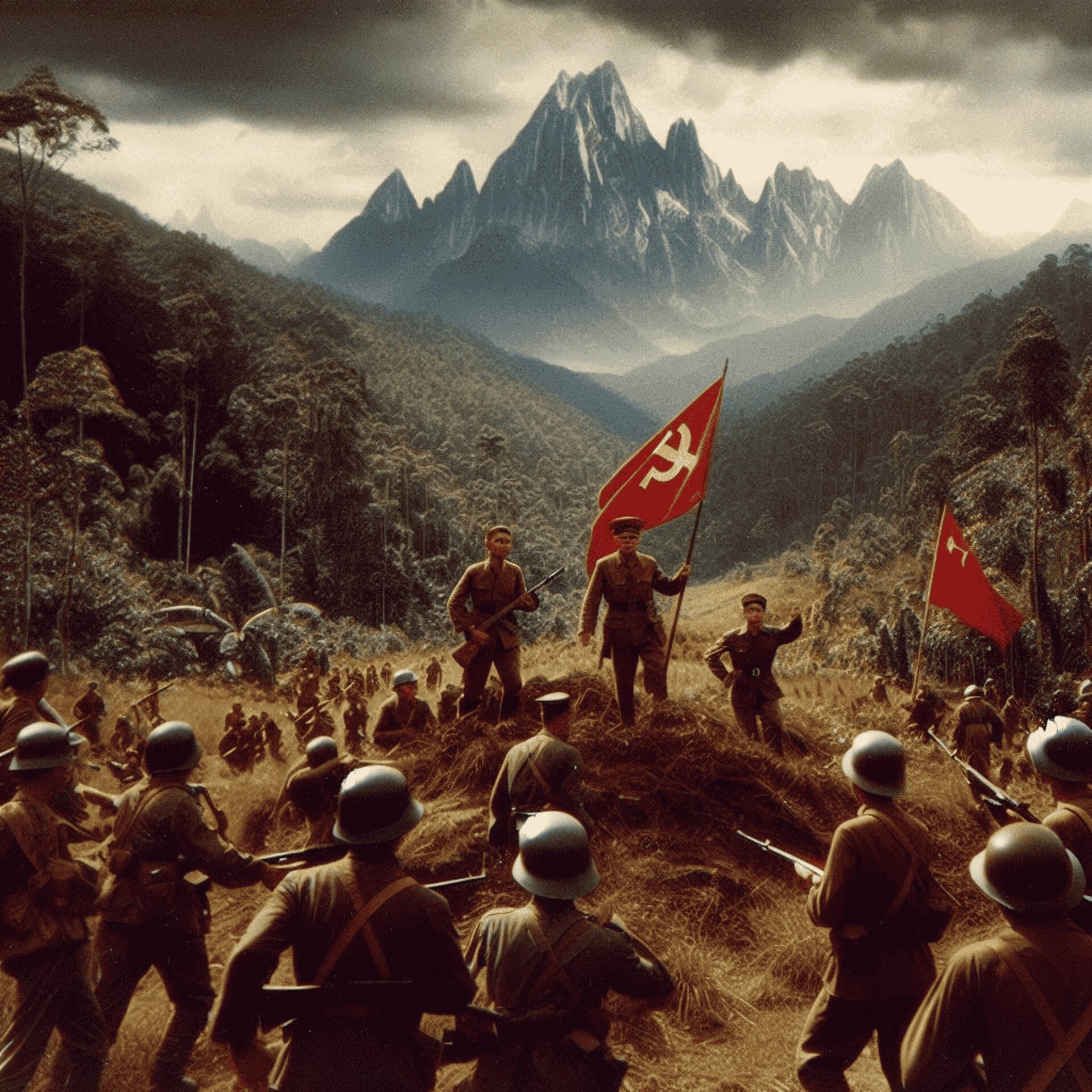
I did a closer reading of it, after watching it the second time. Good effort at a rushed product. Poor acting overall, truncated dialogue, unclear theme, weak plot, too much display of skills of shooting each other, overkill in representing gangsterish behavior ala’ Malaysian with guns, disjoint/dissonance of the central figure (the Malay girl’s) representation to the central theme of Pendatang and an escape from the central conflict the movie is supposed to cinematize.
It started off with a good intention of showing that, had the Communists won and favored the Chinese, the Malays would have been totally segregated into oblivion. The ending where the Malay businessperson (poorly acted) is negotiating the cuts (percents) seems too confusing, taking away the need for the movie to end its restating of the thesis of “outsiders/pendatang,”. It ended like a bad gangster movie of the B-grade.
I feel that the writers, director, and producer had wanted to present the ideology of revenge against the dominant race: the Malays and do a reverse segregation. Poorly crafted movies are merely a medium to the message.
A lot is missing in this movie. A totally rushed job manifested in the chaotic narrative arc that seems to stray away from the central theme, or a way for the writer to find a quick exit from further elaborating the propaganda message romanticizing the return of Malayan Communism.
DR AZLY RAHMAN grew up in Johor Bahru, Malaysia and holds a Columbia University (New York City) doctorate in International Education Development and Masters degrees in six fields of study: Education, International Affairs, Peace Studies, Communication, Creative Non-Fiction, and Fiction Writing. He has written more than 500 analyses/essays on Malaysia. His 30 years of teaching experience in Malaysia and the United States spans over a wide range of subjects, from elementary to graduate education. He is a frequent contributor to scholarly online forums in Malaysia, the USA, Greece, and Montenegro. He writes at: https://azlyrahman.substack.com/ and https://www.linkedin.com/in/azly-rahman-73286826/
Dr. Azly Rahman is a content creator under the Newswav Creator programme, where you get to express yourself, be a citizen journalist, and at the same time monetize your content & reach millions of users on Newswav. Log in to creator.newswav.com and become a Newswav Creator now!
The User Content (as defined on Newswav Terms of Use) above including the views expressed and media (pictures, videos, citations etc) were submitted & posted by the author. Newswav is solely an aggregation platform that hosts the User Content. If you have any questions about the content, copyright or other issues of the work, please contact Newswav.