
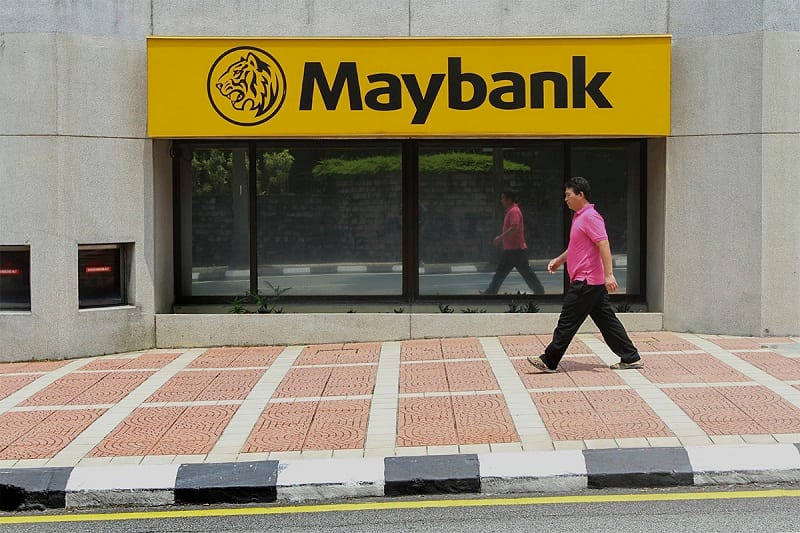
The aroma of freshly fried bananas and regional delicacies wafting through the morning air across Kuala Lumpur or Jakarta provides a sensory anchor to an economic reality: palm oil is the lifeblood of Southeast Asian kitchens and export ledgers alike. Yet, behind the domestic tranquility of this shared agricultural staple lies an increasingly volatile matrix of regional geopolitics, corporate auditing, and institutional resource protection. In the corporate boardrooms of Malaysia and the legislative halls of Indonesia, a minor tremor can signal an impending tectonic shift. When a corporate giant from one nation encounters the regulatory machinery of another, the resulting friction exposes the sensitive financial plumbing connecting Southeast Asia's two largest economies. The recent corporate ripples involving Malaysia's preeminent financial institution have given regional investors an unsettling look at how aggressive domestic economic reforms can instantly reshape cross-border trade finance relationships.
The Gathering Storm in Jakarta’s Commodity Corridors
The financial landscape experienced a sudden wave of anxiety when reports emerged that the local unit of Malayan Banking Bhd. (Maybank), Malaysia’s top banking group, had its personnel summoned by Indonesian authorities. According to investigative reports carried by prominent international business outlets, personnel from [Maybank Indonesia were requested to provide information as witnesses] in connection with an ongoing state investigation. The inquiry, handled directly by the Indonesian Attorney General’s Office (Kejaksaan Agung), focuses on the export activities of PT Salim Ivomas Pratama, a massive agricultural enterprise and one of Indonesia’s absolute largest palm oil producers.
From an institutional standpoint, the probe is designed to uncover whether major commodity producers have systematically manipulated crude palm oil export prices. Legal investigators are closely scrutinizing whether specific shipments were intentionally invoiced below market prices in an attempt to conceal corporate profits and drastically reduce local tax obligations. To build their evidentiary foundation, investigators required physical trade and financing documentation. This led to the highly publicized scene where bankers from Maybank Indonesia reportedly carried boxes of corporate records directly to the Attorney General's Office in Jakarta to face structured questioning.
Corporate Delineation and the Anatomy of Exposure
In the high-stakes world of banking, reputation is identical to capital. As soon as news of the questioning broke, Malayan Banking Bhd. moved swiftly to manage public perception and prevent market panic back home in Malaysia. In an official corporate clarification issued immediately to regional exchanges, the parent group emphasized that Maybank Indonesia is not the subject of any investigation. The group reiterated that its personnel were merely fulfilling their legal obligations as external corporate witnesses to assist state authorities. Management stated firmly that the bank remains absolutely committed to maintaining the highest standards of governance, compliance, and corporate integrity across all jurisdictions where it operates.
An analysis of the underlying balance sheets suggests that Maybank’s direct financial vulnerability to the specific company at the center of the probe is remarkably contained. Financial analysts tracking the banking group note that Maybank Indonesia’s direct lending exposure to PT Salim Ivomas Pratama sits at a relatively modest 150 billion rupiah ($8.3 million), a minute fraction of the lender's total regional asset portfolio.
However, the institutional analysis deepens significantly when considering the historical context of regional corporate networks. While the individual loan balance to the palm oil subsidiary is low, Maybank has spent decades cultivating a deep, systemic banking relationship with the broader Salim Group conglomerate. Founded by the legendary late tycoon Soedono Salim and currently directed by his son, CEO Anthoni Salim, the massive corporate empire spans across core sectors including food production, mining, data centers, and advanced agriculture.
The credit facilities under state review were reportedly revolving credit lines structured purely for general working-capital requirements rather than facilities specifically earmarked to fund international export shipments. Nevertheless, state prosecutors are actively tracking the money trail to see if any general corporate funds provided by the bank were inadvertently woven into the transactions currently under regulatory scrutiny.
Resource Nationalism and Prabowo’s Economic Doctrine
To understand why a foreign bank’s local subsidiary was suddenly brought into an export audit, one must analyze the broader socio-political shifts occurring within Indonesia. Since taking full institutional office in late 2024, Indonesian President Prabowo Subianto has consistently championed a fierce economic doctrine centered heavily around resource nationalism and defensive economic sovereignty. The current administration has repeatedly expressed an institutional intent to aggressively harness the nation’s abundant raw materials while eliminating what it explicitly describes as structural "leakages" systemic loopholes that allow powerful merchants, agricultural tycoons, and international trading houses to siphon off massive wealth that should rightfully enter the state treasury.
As part of this overarching policy shift, the Indonesian government announced that it is systematically investigating at least 10 major palm oil producers nationwide for price manipulation. The strategic objective under the administration’s planned structural overhaul is revolutionary: eventually, all international commodity sales will be tightly managed by a government-appointed exporter operating under the direct oversight of the newly established sovereign wealth fund, Danantara. This model is designed to ensure that agricultural export proceeds are no longer routed to offshore accounts or shell entities, keeping the capital domestic.
By pulling Maybank Indonesia’s documentation into the public domain, Jakarta is signaling that its regulatory enforcement will no longer stop at the warehouse gates. Instead, the state is actively auditing the foundational plumbing of trade finance the commercial banks that issue the letters of credit, revolving loans, and transactional liquidity that keep these massive export operations running.
Market Disruption and Regional Financial Vulnerabilities
This aggressive domestic policy push arrives at an incredibly delicate moment for Indonesia’s macroeconomy, sending waves of anxiety through the wider financial markets. In a highly unexpected move, Bank Indonesia implemented an out-of-cycle interest rate hike on a Tuesday, a defensive monetary maneuver designed to shore up the volatile rupiah following an aggressive selloff in domestic equities and bonds that triggered severe capital outflows.
Institutional investors have openly voiced growing discomfort regarding the rapid expansion of state intervention in strategic sectors. The simultaneous convergence of a rigid export crackdown, an emergency central bank rate hike, and the high-profile questioning of a prominent foreign bank’s local division has put regional investor confidence in Southeast Asia’s largest economy to a serious test.
For the Malaysian investment community, this development underscores the complex regulatory hazards that local financial giants face when expanding across borders. Because the palm oil industry serves as a primary pillar for both the Malaysian and Indonesian economies, any regulatory friction in Jakarta inevitably triggers defensive evaluations in Kuala Lumpur. While other banking groups operating in the region, such as CIMB Group, have publicly remarked that market pullbacks can create unique long-term investment windows in a battered Indonesian market, the immediate operational reality remains highly complex. Regulated entities must balance compliance with foreign state mandates against the absolute protection of customer confidentiality.
The Path Forward for Cross-Border Banking
As the current investigation remains strictly in a fact-finding phase, it is crucial to recognize that no formal charges of misconduct or illegal manipulation have been leveled against Maybank or the Salim Group unit. The legal mechanism unfolding in Jakarta is an extensive audit process aimed at mapping out complex corporate supply chains and identifying tax gaps.
For Maybank and other foreign financial institutions operating within Indonesia, the strategic takeaway is clear: the era of hands-off, passive commodity trade finance is coming to an end. Under current political conditions, banks will likely be forced to implement significantly more stringent Know-Your-Customer (KYC) and transaction-monitoring protocols to independently verify that the export invoices they are financing match real-world global market valuations.
This structural evolution will undoubtedly increase compliance costs and add operational friction to cross-border transactions, but it remains the only viable path to navigating an era defined by aggressive economic sovereignty.
What do you think? I’d love to hear your opinion in the comments section.
At its core, this ongoing investigation is a poignant reminder of how deeply intertwined the fates of Malaysia and Indonesia truly are. We share more than just maritime borders, ancient cultural histories, and agricultural landscapes; our financial institutions are deeply embedded in the very foundations of each other's domestic economies. When we watch our premier national banks navigate the complex legal systems and intense political shifts of our closest neighbors, it forces us to reflect on the true nature of regional economic cooperation.
True partnership within Southeast Asia cannot exist solely during prosperous times; it is tested and forged when navigating complex regulatory shifts, national economic overhauls, and the challenging realities of corporate accountability. As everyday citizens who rely on the stability of these massive economic systems, we are reminded that true corporate transparency is not just an item on an internal compliance checklist it is the vital cornerstone that protects our shared regional future.
AM World (tameer.work88@gmail.com) is a content creator under the Newswav Creator programme, where you get to express yourself, be a citizen journalist, and at the same time monetize your content & reach millions of users on Newswav. Log in to creator.newswav.com and become a Newswav Creator now!
The User Content (as defined on Newswav Terms of Use) above including the views expressed and media (pictures, videos, citations etc) were submitted & posted by the author. Newswav is solely an aggregation platform that hosts the User Content. If you have any questions about the content, copyright or other issues of the work, please contact creator@newswav.com.