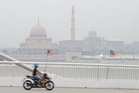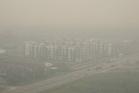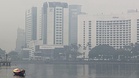
Regional evidence has frequently linked serious haze episodes affecting Malaysia to agricultural, forest and peatland fires in Indonesia.
TRANSBOUNDARY haze has become a persistent environmental and diplomatic concern for Malaysia.
It should no longer be regarded as a temporary inconvenience associated with dry weather.
Severe haze threatens public health, disrupts education, reduces economic productivity and limits the public’s right to live in a safe and healthy environment.
Regional evidence has frequently linked serious haze episodes affecting Malaysia to agricultural, forest and peatland fires in Indonesia.
Although the precise source of each episode must be established through scientific evidence, recurring hotspots and smoke trajectories cannot be dismissed as merely domestic matters.
Once pollution crosses an international boundary and harms another country, it becomes an issue of international responsibility.
The hostile reactions directed at Malaysia by some Indonesian social-media users are therefore unhelpful.
Public criticism should not be interpreted as an attack on Indonesia or its people. Malaysia and Indonesia share deep historical, cultural and economic ties.
Nevertheless, friendship between neighbouring states must not be used to avoid legitimate questions concerning environmental responsibility.
Indonesia must demonstrate through measurable enforcement—not diplomatic assurances alone—that it effectively controls activities within its territory.
Under the established “no-harm principle” of international environmental law, states must ensure that activities within their jurisdiction or control do not cause significant environmental damage to other countries.
This principle does not necessarily impose absolute liability for every fire.
However, it requires due diligence: appropriate legislation, continuous monitoring, effective investigation, prosecution of offenders, and reasonable preventive measures.
Both Malaysia and Indonesia are parties to the ASEAN Agreement on Transboundary Haze Pollution.
The agreement requires member states to prevent and monitor land and forest fires, control fire sources, exchange information, and respond promptly to requests for consultation. ASEAN has also adopted the Second Haze- Free Roadmap 2023-2030.
However, regional cooperation remains weakened by limited enforcement, consensus-based decision-making, and the absence of a meaningful liability and compensation mechanism. Malaysia should therefore pursue a firmer legal and diplomatic strategy.
First, Malaysia should formally request Indonesia to disclose concession maps, verified hotspot data, investigation findings, and enforcement actions involving plantation and forestry companies.
Transparency would enable both countries to distinguish between unsupported allegations and scientifically attributable pollution.
Second, Malaysia should propose a binding ASEAN compliance protocol. An independent regional technical body should be authorised to identify likely haze sources using satellite imagery, wind-direction modelling and ground-level evidence.
Persistent non-compliance should trigger mandatory investigations, public reporting and corrective action.
Third, Malaysia should introduce dedicated transboundary haze legislation. The law should allow Malaysian courts to investigate Malaysian companies, directors and controlling entities that finance, direct or benefit from unlawful overseas burning.
Businesses importing palm oil, timber, or other high-risk commodities should be required to maintain traceable, fire-free supply chains.
Fourth, Malaysia should advocate a regional liability and compensation framework. Where negligence or illegal burning is established, responsible corporations should contribute towards Malaysia’s healthcare costs, firefighting expenditure, economic losses, and environmental restoration.
Malaysia must also maintain its credibility by controlling domestic open burning and investigating Malaysian-linked companies operating in Indonesia. Environmental accountability must apply regardless of nationality.
Indonesia is a sovereign state, but sovereignty carries responsibilities. Preventable pollution cannot repeatedly cross national borders without accountability.
Malaysia must remain diplomatic, but diplomacy should not mean silence. The time has come for both countries—and ASEAN—to replace seasonal promises with transparency, enforceable obligations and measurable results.
Afi Roshezry Abu Bakar
Universiti Tunku Abdul Rahman
Associate Professor Dr Mohd Azmir Mohd Nizah
Universiti Sains Islam Malaysia.
The views expressed in this article are his own and do not necessarily reflect those of theSun.