
The Bureau of Immigration said similar trafficking patterns are appearing throughout Southeast Asia.
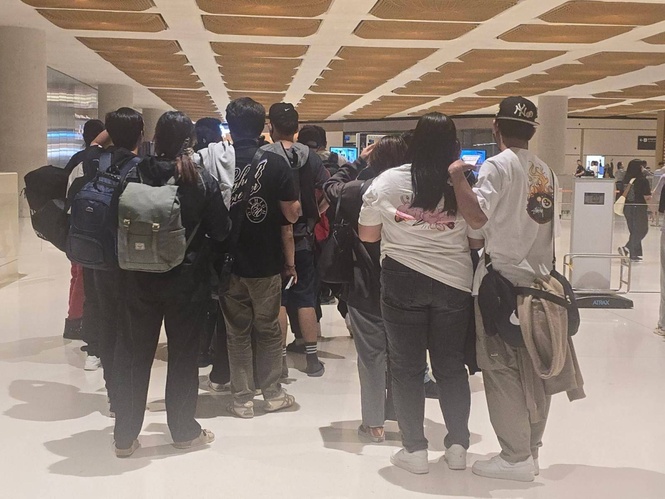
Authorities recently welcomed home another batch of 24 Filipinos rescued from scam hubs in Cambodia.
The victims — composed mostly of young professionals — recounted how they were promised legitimate work as customer service representatives but became part of “catphishing” syndicates targeting European men online.
Victims allegedly received only a fraction of their promised salaries while enduring verbal abuse, physical punishment, and humiliation whenever they failed to meet recruitment or scam quotas.
Some said they were forced to perform squatting exercises as punishment. Others disclosed they were physically assaulted.
Several also revealed they were “sold” multiple times between syndicates operating across the region.
Immigration officials described the setup as modern-day slavery operating under the cover of digital fraud.
The BI warned that traffickers are targeting “young urban professionals” — individuals who possess travel capacity, college education, and employment histories that make them less suspicious during immigration inspections.
Among those rescued were former overseas Filipino workers from the Middle East whose expiring contracts made them vulnerable to fake overseas offers.
Others had histories of legitimate travel abroad, allowing traffickers to exploit their mobility.
Authorities said some victims were instructed to pose as tourists during airport inspections.
Others carried fake employment papers and bogus seafarer documents to avoid detection.
At Clark International Airport, immigration officers intercepted two women pretending to be sea-based workers bound for Thailand.
During questioning, the women eventually admitted they were actually heading to Laos for work arranged by recruiters they met online.
Each allegedly paid P40,000 for the fraudulent travel documents.
In Davao, five suspected trafficking victims were intercepted after authorities discovered inconsistencies in their travel plans and employment claims.
According to investigators, the passengers were supposedly bound for Singapore, but were actually en route to Dubai to meet a recruiter connected to a trafficking network.
Viado said traffickers are evolving faster than ever. “These syndicates prey on Filipinos’ hopes for a better life abroad, but what awaits them is abuse, slavery, and despair,” he said.
The BI disclosed that at least 125 trafficking cases connected to online scam hubs were intercepted in 2024 alone.
Earlier this year, more than 200 Filipinos were repatriated from Myawaddy, Myanmar following rescue operations coordinated by the Philippine government.
Most victims, authorities said, were between 20 and 44 years old and came from Metro Manila and nearby provinces. Many were college graduates.
Some previously worked in call centers, sales, marketing, or information technology.
The BI said traffickers deliberately target individuals with strong communication skills because scam operations require workers to manipulate victims online convincingly.
Officials warned that the syndicates are earning millions through romance scams, fake investments, cryptocurrency fraud, and digital extortion.
Immigration authorities are now coordinating with the Department of Migrant Workers (DMW), the Inter-Agency Council Against Trafficking (IACAT), and foreign governments to identify recruiters, dismantle trafficking routes, and investigate possible accomplices inside airports and travel agencies.
Enormous challenge
But officials admitted the challenge remains enormous.
As long as fake online opportunities continue spreading across social media platforms, authorities fear more Filipinos may fall victim to traffickers disguised as recruiters.
The BI, the DMW, the Department of Foreign Affairs (DFA) and other state agencies also expressed concern over the so-called "backdoor" exits, which, to date, continue to thrive, allowing traffickers to move undocumented Filipinos into overseas scam compounds, cyberfraud hubs, and exploitative labor operations across Southeast Asia.
The BI said trafficking syndicates behind these operations have become more organized, more deceptive, and far more difficult to detect.
Viado said the government can no longer rely solely on airport screening and border inspections to stop traffickers.
“Everyone must work together,” he stressed, calling for a whole-of-government campaign involving local governments, coastal authorities, police forces, and anti-trafficking agencies.
Viado underscored that individuals who leave the country illegally are at greater risk of exploitation, since they are deprived of legal safeguards and government assistance abroad.
According to the BI, traffickers are increasingly exploiting remote southern maritime routes to transport victims out of the country undetected, bypassing immigration controls entirely.
The issue gained national attention after three Filipinos repatriated from Cambodia revealed they had left the country illegally through the southern backdoor route linking Jolo to Sabah.
The victims — two women and one man — arrived home on March 16 after escaping from a scam operation in Phnom Penh where they had been forced to work as “love scammers.”
Investigators discovered the three had no official departure records from the Philippines.
The victims later disclosed that they boarded a small boat from Sulu to Sabah before their passports were allegedly stamped with fake Philippine immigration departure seals.
From Malaysia, they traveled overland to Kuala Lumpur, flew to Thailand, and eventually entered Cambodia.
Their recruiters had promised them customer service jobs paying as much as $1,000 a month.
The promised salaries never materialized. Instead, they underwent training to scam foreigners online using fake romantic relationships.
The victims said they received only around $300 and were later beaten by their Chinese employers after demanding better pay or requesting to be transferred to another company.
Their mobile phones were confiscated, and they were abandoned in an unfamiliar area before eventually reaching the Philippine embassy for rescue.
Forensic examinations conducted by the BI’s document laboratory later confirmed the passports carried counterfeit immigration stamps.
Authorities believe the case represents only a fraction of a much larger trafficking network.
Viado himself described the situation as “just the tip of the iceberg.”
Both the BI and DMW urged aspiring overseas workers to verify all job offers through government agencies and avoid recruiters promising quick deployment, unusually high salaries, or tourist travel arrangements for overseas work.
For many survivors, the warning comes too late.
What began as a search for a better life abroad became a nightmare of coercion, cybercrime, and captivity inside Southeast Asia’s growing network of scam hubs.
The trafficking crisis has also reignited calls for stronger legislation against illegal departures.
Viado noted that Philippine law currently has no specific statute criminalizing illegal exits from the country.
Most cases instead rely on related charges such as document falsification or violations of the Philippine Passport Act.
The immigration chief said imposing direct penalties for illegal departures could serve as a deterrent against traffickers and discourage victims from accepting suspicious offers.
But labor groups argue that law enforcement alone cannot solve the crisis.
The Federation of Free Workers (FFF) warned that poverty, unemployment, and low wages are driving Filipinos into dangerous overseas work arrangements.
The labor group said many workers are no longer migrating simply for opportunity but out of desperation.
FFW cited reports linking Filipinos to recruitment schemes tied not only to scam hubs but also to war zones and extremist-linked activities abroad.
The FFF emphasized that hunger and economic insecurity make workers easy prey for traffickers promising quick money and overseas employment.
“When survival is at stake, even the dirtiest and most dangerous jobs can look like salvation,” said FFW President Sonny Matula.
FFW is pushing for a nationwide ₱200 daily wage increase and the nationalization of wage standards to reduce desperation-driven migration.
The group also urged the government to create more secure jobs, strengthen rural development, modernize agriculture, and address corruption and inequality.
Anti-trafficking advocates say the crisis exposes a harsh reality confronting many Filipinos: while authorities race to close illegal exits, economic desperation continues opening new ones.
For traffickers, the backdoor remains profitable. For victims, it can become a one-way passage into exploitation, violence, and modern-day slavery.