
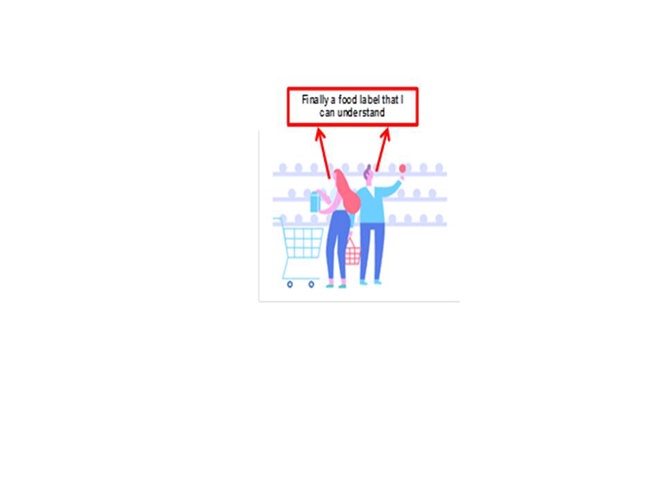
Such labels imply that consumers´ interest is best served if products containing palm oil are avoided.
Consumers have the right to expect information on food quality and constituents that is helpful and clearly presented, so that informed choices can be made.
Food labels were supposed to provide consumers with relevant information such as nutritional composition, origin, serving suggestion, and precautionary measures, among others.
However, there are also labels that are merely a part of a marketing scheme to confuse consumers.
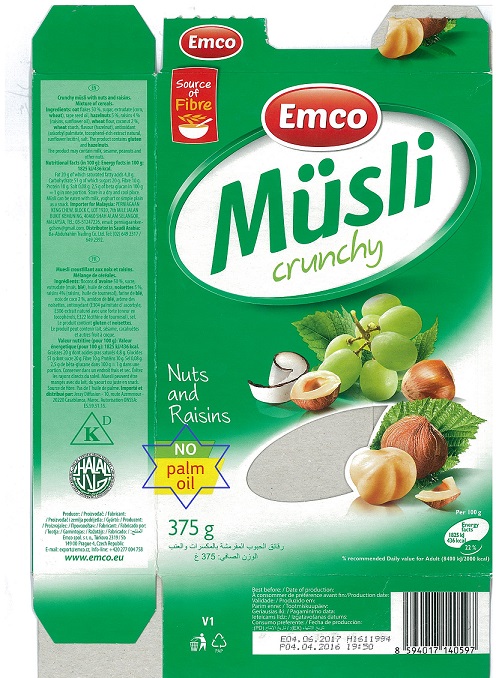
The ‘No Palm Oil’ label makes the implicit claim that avoiding products containing palm oil benefits either the environment, or consumer health, or both.
`No Palm Oil’ labels are generally found on food, personal care, and household products-generally any product that requires the use of vegetable oils is discriminatory and misleading as there is no substantial scientific evidence that consuming palm oil is hazardous for health.
Is palm oil unhealthy as the label implies?
Palm oil has a balanced content of fat (50% saturated, 50% unsaturated).
The more saturated the oil or fat, the more solid the consistency, and on the contrary, the more unsaturated is the oil or fat, the more liquid is the consistency.
Consumers often associate saturated fat as bad for health.
However, as far back as in 2104, a study titled `Association of Dietary, Circulating, and Supplement Fatty Acids With Coronary Risk’ by Gates Cambridge Scholar Dr Rajiv Chowdhury, the lead author of the research at the University of Cambridge and published in the journal Annals of Internal Medicine found that total saturated fatty acid, whether measured in the diet or in the bloodstream as a biomarker, was not associated with coronary disease risk in the observational studies.
Findings from a research by Nutrition Foundation of Italy again reaffirmed that there was no significant evidence to conclude that saturated fat was associated with an increased risk of coronary heart diseases or cardiovascular diseases.
It thus appears that No Palm Oil label misleads the consumer on the negative properties attributed to palm oil, the health effects of consuming palm oil and negative environmental impact of the production of it.
It is important to note that the cultivation and production of palm oil is significantly more efficient than that of any other vegetable oil.
Its productivity, measured in yields per area of agricultural land used, is significantly higher than that for other oils.
At the same time, the need for fertilizers or pesticides in cultivating the oil palm is significantly lower than, for instance, that of canola.
What has been receiving the most attention in European media and public opinion is the connection made between palm oil production and the destruction of rainforests.
As the narrative goes, the increasing hectares of oil palm plantations in countries like Malaysia or Indonesia for land, is responsible for deforestation and the vanishing of wildlife habitats especially those of some iconic and endangered species.
There are no numbers to indicate what it would mean in terms of land use if another vegetable oil like sunflower or rapeseed (other varieties like olive oil could simply never reach the required output on a global scale) were substituted for palm oil.
It is fairly easy however to imagine the consequences: for instance, if soybean production were to be increased significantly in order to replace palm oil, the detrimental effects on land areas covered by rainforest would be worse.
This is explained by the lower per hectare productivity of soybean oil compared to palm.
Similarly, the land area necessary to cultivate rapeseed at a scale sufficient to replace palm oil simply is not available in Europe.
Since palm oil is the most productive vegetable oil requiring the least amount of land, replacing it would mean more land acreage would be needed to supply the global oil demand.
This would bring more deforestation, and more carbon emissions.
If the issue remains uncurbed, in the long run, it can potentially cripple Malaysia’s palm oil industry in terms of income, livelihood, research and development.
It is best to opt for products with sustainably sourced palm oil, or in fact, any vegetable oil.
As consumers, we must approach the consumption of goods without extreme beliefs, and understand underlying issues before making any rash decisions.
When the practice of making unsubstantiated statements on foodstuffs continues to proliferate, the entire strategy espoused by the introduction of Regulation (EU) No 1169/2011 on the provision of food information to consumers (FIC Regulation) which entered into application on 13 December 2014 in the EU of protecting and empowering the consumer is meaningless.
Transparency and consumer protection must be upheld inside the European Union which takes pride in the strength of its institutions.
Continued and unabated use of the No Palm Oil label would only serve to demolish the very roots and principles upon which these institutions have been established.
FLK is a content creator under the Newswav Creator programme, where you get to express yourself, be a citizen journalist, and at the same time monetize your content & reach millions of users on Newswav. Log in to creator.newswav.com and become a Newswav Creator now!
The User Content (as defined on Newswav Terms of Use) above including the views expressed and media (pictures, videos, citations etc) were submitted & posted by the author. Newswav is solely an aggregation platform that hosts the User Content. If you have any questions about the content, copyright or other issues of the work, please contact Newswav.