

A dead satellite has broken up in Earth’s orbit, creating a dangerous debris cloud that could threaten other spacecraft.
Space-tracking firm LeoLabs spotted the debris of the Soviet-era Meteor 2-7 satellite when it passed over its radar site in Western Australia.
Having launched 45 years ago, the weather satellite has been inactive for decades and now poses a risk for other satellites in the same orbit.
“This is the latest in a series of events we’ve seen over the last six months,” LeoLabs noted in a post to X.
“Together, they point to a worrying trend for space safety and security, and underscores the critical need for persistent sensing.”
The meteor’s average altitude is 856 km, according to Orbital Radar, putting it in the upper reaches of low-Earth orbit.
At this altitude, objects can remain for centuries to millennia, providing they do not collide with other satellites.
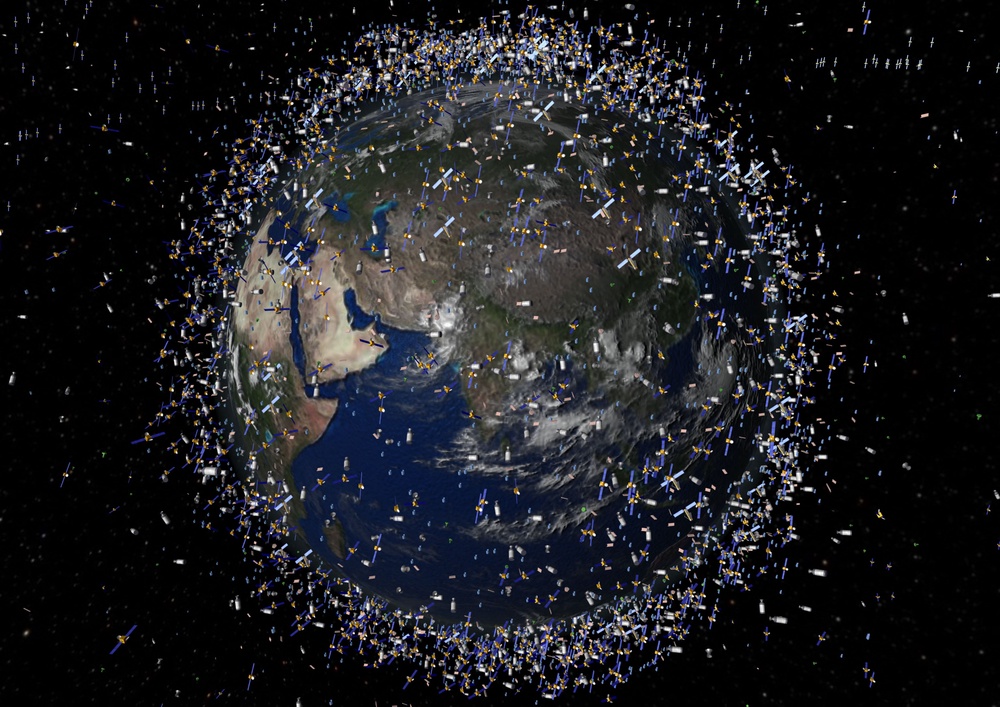
In 2024, astronauts aboard the International Space Station (ISS) were forced to shelter after debris from an exploded Russian satellite posed a risk of collision.
The RESURS-P1 satellite broke up into over 180 pieces of large debris at an altitude of roughly 355 km, two years after it had stopped functioning.
The pieces eventually burnt up in the Earth’s atmosphere without causing any catastrophic collisions.
Estimates from the United States Space Surveillance Network suggest there are tens of thousands of pieces of space junk larger than 10 centimetres in low-Earth orbit and as many as 200,000 objects between 1-10cm.
Astronomers have warned that a collision between large pieces of space debris could lead to something called the Kessler effect, whereby the subsequent debris could cause a cascade of further collisions.
This could ultimately wipes out active satellites and create a layer of space debris that is impossible for rockets to pass, effectively trapping humans on Earth.
Read MoreScientists trace radio burst to a 10 billion-year-old distant galaxy
Draconids meteor shower to peak tonight: The best time watch in the UK and US
Astronomers find mysterious signal coming to us from the early universe
Scientists discover unique ‘phoenix’ planet that was born from a dying star
Strange hole found on moon could lead to future astronaut shelter
Mars’s strangest cloud is even weirder than we thought, scientists say