
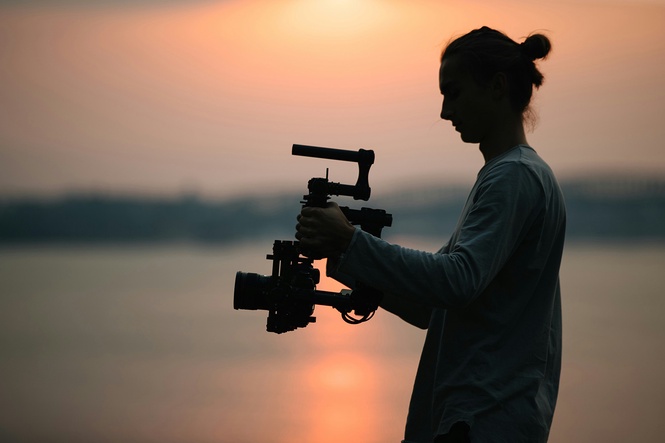
Have you ever thought of making your own feature film? It can be about anything you like with your own style and artistic vision. Or have you ever imagined your work being screened in prestigious International festivals like Sundance Film Festival or Cannes Film Festival? Or perhaps you just want to immortalize your visions into a personal work of art? Producing a long movie can be tough since you'll need a big budget, a paid crew that align with your creative vision, and the skills to promote the film worldwide. But don’t worry, this article is here to guide you (and encourage you) in starting your first filmmaking journey, and you can start simple with creating Indie Film!
Why start making indie films?
An independent film, often called an indie film, is a feature-length or short film made independently, without the backing of a major studio or a large production company. Indie films are typically low-budget, driven by the sincere creativity of the artists and creators. When it comes to starting a film project, the main idea is actually pretty simple. First you need to have a well-written script, then you need to gather the right people who can help you as a crew, then you start shooting and edit the final piece within the budget that you have. But it’s always easier said than done, so we interviewed young filmmakers who just started their journey in filmmaking to give us insight of the real fun (and struggle) of creating a film on their own.
One of them is Margareta Adi Putri, a Digital Media Production student, who just released her first indie film that she co-directed titled “Ai Cinta U!”. The film is about a complicated puppy love between high school students who come from different cultural backgrounds. For Margareta, independent films are typically “passion projects” that do not necessarily aim for financial gain, unlike mainstream films, which prioritize drawing large audiences and generating revenue. This explains why there is typically less saturation in indie films' plots and cinematography. Margareta mentioned that becoming a young indie film director was something unexpected for her but she has grown to love it. Because through indie films, she could reflect issues that directly connect with her daily lives, which makes indie films appealing and has different commercial value in contrast to big-budget blockbusters.
Another young and talented filmmaker is Adriana Musa, she is the director of an indie short film called “Adil” which got showcased at Taylor’s University SOMAC’s Short Film 2023. The story itself is personally inspired by her father, who worked tirelessly to provide for his big family. However, "Adil'' wasn't her first short film; she had been creating movies for a while now, and she admitted that there was no specific factor that made her start doing filmmaking other than to just go for it. And the best thing about making indie films is the creative freedom you have. Unlike mainstream movies, indie filmmakers are not bound to any tight schedule or any rules from big companies, making it the best way to learn filmmaking for the first time. Whether using a phone or camera, Adriana encouraged people to just “get started with anything as long as you have the will to learn how to do it.”
So without further ado, let’s go for it like what Adriana and Margareta did! Here is a step-by-step guide on indie filmmaking for those of you who are interested in starting your own film or just simply curious about how films are made:
Step 1: Pre-Production Phase
According to Margareta, the pre-production phase is the planning phase where the story is written and planned. The script will act as the guide for all crews from the director to actors and cameraman. It consists of the detailed description of what will happen in the film. Script writing can be the most time-consuming process for some filmmakers and you often need help from other people. Adriana believes that creating and capturing a story based on personal experience that she went through or close to her heart is easier for her job as a filmmaker, it allows her to properly understand the story deeply and know the direction she’s heading for.
After the script is done, then the producer will look for the director, cast and crew to help them with the film. But don’t worry, you can always start with a small team, perhaps with your friends who can work well with you. The recruited director must align their visual of the script with everybody else’s through the storyboarding process where they plan and draw out the visuals of each scene. Whether you want to use a medium shot, full-body shot, or any other angles, you need to plan all of it in the storyboard. Other than that, you need to scout the locations where you will shoot, this process is called location recce. Adriana said that the places she stumbled upon were usually somewhere she didn’t plan and were owned by people. It could be anywhere like a neighborhood, public places, malls or even Airbnbs, depending on the story. What she usually did was ask for consent from the local people by sending them an agreement so her crew can shoot at the location. The next process is blocking, which means testing out the shots at the planned location. But you don’t necessarily need the real actors to do this because it’s not the actual shooting, you’re just testing to see if the angles in the storyboard that you planned earlier are possible to be shot in the location itself.
Other than the things mentioned above, there’s also fundings and budgeting. According to Adriana, she finds this process quite challenging as a director. Fundings can come from many sources such as personal savings, crowdfundings, investors, film festivals, or even sponsorships. But sometimes, if you don’t reach a certain fund that you expected, you will need to cut a lot of costs down and work the production around it.
Step 2: Production Phase
Believe it or not, the production phase might be the most straight-forward process during filmmaking. All you need to do is assemble your cast, crew and equipment then shoot according to what you planned in pre-production. For Margareta, her short film only needed to spend about five days to shoot every scene. However, it could be very crowded because all of the crew were there including the cameraman, audioman, lighting, wardrobe, makeup crew and the talents. For Adriana, the production phase is really the director’s time to shine as they will need to manage all of the crew and make sure the shooting is according to the schedule and budget they have. One tip from Adriana is to always be ready for the unexpected. Directors should always have contingency plans as there are things the crew cannot control, for example: rainy days, child actors’ tantrums or crews who pull out at the last minute before shooting. Another tip from Adriana is to always shoot more angles and pay attention to the audio quality, as this could save you from the hassle of post-production editing problems.
Step 3: Post-Production Phase
Both Margareta and Adriana agreed that the post-production phase is categorized into two sections. The first one is offline editing which is the process of making the rough cut of the film by assembling and cutting the clips the way the writer wants. This part is crucial and will really affect the storytelling, pace and the story structure of the end product. Once the offline editing is final, there’s the online editing to make the clips pretty by editing the color grading, audio balancing, music, subtitles and end credits. This process will finalize the film.
After you’ve wrapped up your film don’t forget to celebrate it! But there’s one more additional step which is your film’s promotion. You can always submit your hard work to your university like what Margareta and Adriana did, or you can try the opportunity to be featured in local or international film festivals! Also, don’t forget about competitions or even film production, there are many ways to promote your film and get the acknowledgement you deserve!
A message for fellow aspiring filmmakers out there…
When asked if there are any message they want to convey to other young people who are interested in filmmaking, this is what Margareta and Adriana said,
“I would say never stop learning. Respect other people in the industry and ask them questions when necessary. I think this kind of mentality is important to start.” - Margareta Adi Putri, Co-Director of “Ai Cinta U!” short film
“Your first film might not be perfect, but the first time is always a learning process. Don’t push yourself too hard about it. At the end of the day, your film is defined by you. It’s up to you if you want to listen to people around you but don’t let their opinion dictate the end result of your film. Remember that you must be proud of your work.” - Adriana Musa, Director of “Adil” short film
So what are you waiting for? Embrace whatever story and artistic ideas that you have and begin your filmmaking journey today! After all, all of the greatest filmmakers out there have their starting point, right?
Audrey Gracia is a content creator under the Newswav Creator programme, where you get to express yourself, be a citizen journalist, and at the same time monetize your content & reach millions of users on Newswav. Log in to creator.newswav.com and become a Newswav Creator now!
The User Content (as defined on Newswav Terms of Use) above including the views expressed and media (pictures, videos, citations etc) were submitted & posted by the author. Newswav is solely an aggregation platform that hosts the User Content. If you have any questions about the content, copyright or other issues of the work, please contact Newswav.