
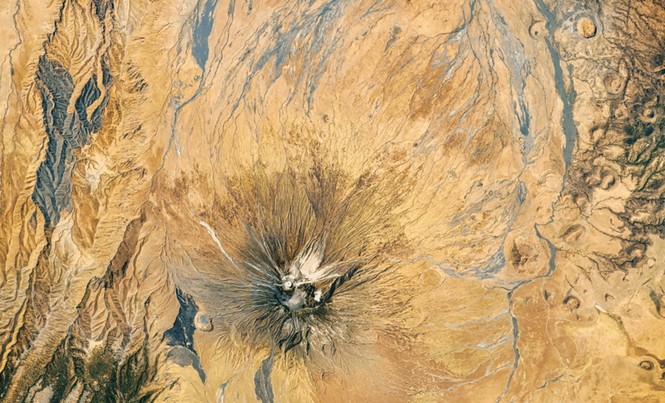
A rare volcano in Tanzania, Ol Doinyo Lengai, may hold the key to understanding the enigmatic bright pits known as “hollows” scattered across the surface of Mercury, according to a study recently published in Icarus. The volcano’s unusual carbon-rich lava offers a glimpse into how extreme planetary conditions might create surface features on the solar system’s innermost planet.
The Mountain Of God Reveals Unusual Lava
Ol Doinyo Lengai, revered as the Mountain of God by the Maasai and Sonjo peoples, produces carbonatite lava, an igneous rock composed of over half carbon. Unlike typical silicon-rich lava on Earth, carbonatites melt at temperatures roughly 100°C lower, making them among the coolest lavas on the planet. Researchers suggest that if Mercury has a carbon-rich subsurface, similar eruptions could explain the formation of its mysterious hollows.
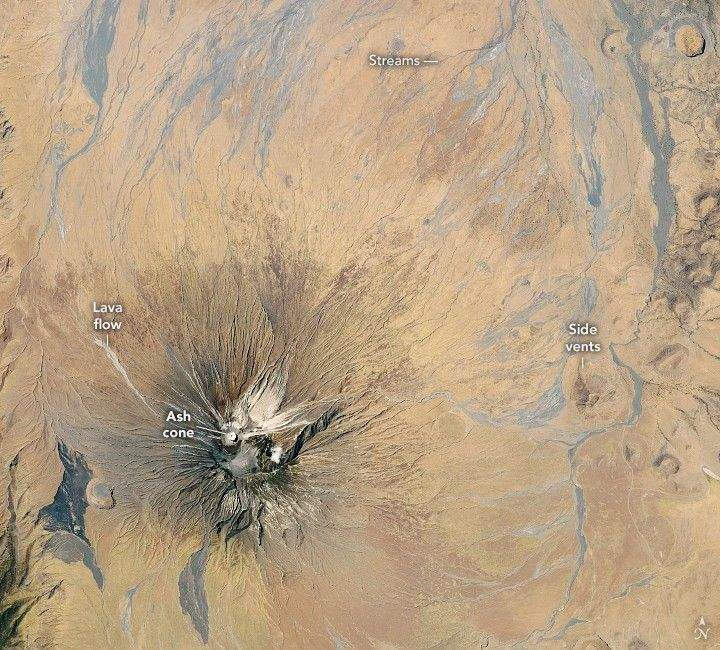
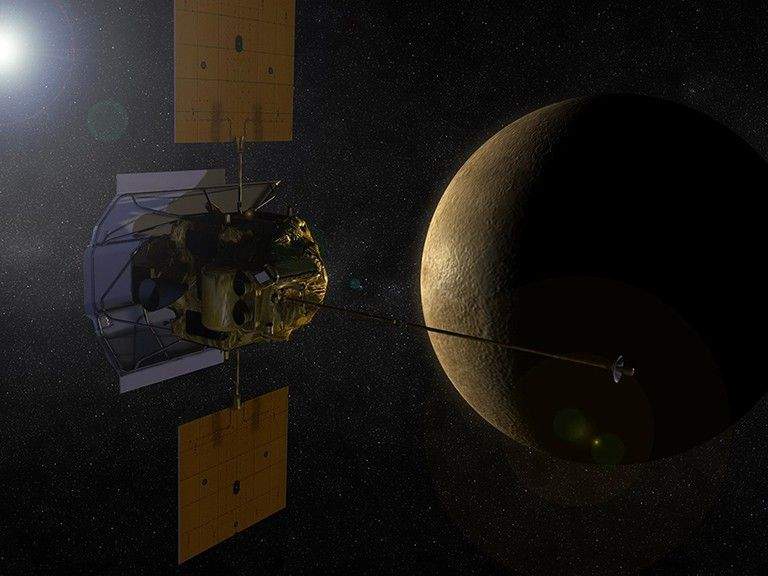
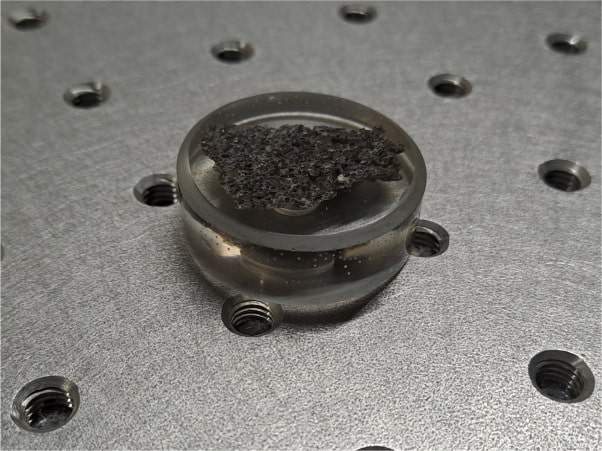
In laboratory experiments, samples of molten carbonatite were isolated to study their unaltered chemical and spectral properties. These findings could help scientists interpret infrared measurements taken by BepiColombo, the European-Japanese mission currently en route to Mercury. The ability to compare Earth-based carbonatites with extraterrestrial geology may finally illuminate the processes shaping the planet’s unusual surface features.
Why Mercury’s Hollows Remain a Puzzle
“Mercury looks like the Moon a little bit, so we don’t expect large volcanoes,” said Maximilian Paul Reitze, a planetologist at Universität Münster’s Institut für Planetologie and lead author of theIcarus study. Without volcanic conditions like those on Earth or Jupiter’s moon Io, Mercury should be largely dormant. Reitze added, “We need some volcanism under the conditions we expect on Mercury” to explain the hollows, which appear geologically young and may still be forming today.
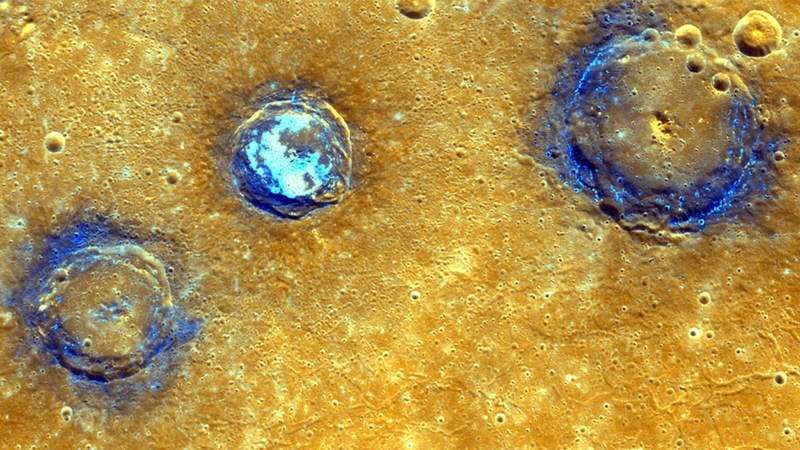
Despite extensive observations by NASA’s MESSENGER mission, which orbited Mercury from 2011 to 2015, the origin and chemical makeup of these hollows remain unknown. Researchers initially speculated that sulfides in Mercury’s crust could drive volcanic activity, but this theory faces challenges due to their stability at temperatures far exceeding what is required for explosive formation of hollows.
Carbonatite Lava As A Potential Explanation
The Icarus study proposes that meteorite impacts may heat carbon-rich magma beneath Mercury’s surface, triggering eruptions that leave behind hollows. The volcanoes on Earth, like Ol Doinyo Lengai, provide a natural laboratory to test how carbon-based lavas behave in extreme conditions. These eruptions may account for the scattered hollows found along crater slopes and central peaks.
“The problem with sulfides I see is that they’re stable up to 1,000°C or so, which cannot explain the explosive volcanism that’s needed to form those hollows,” Reitze noted. The carbonatite hypothesis could therefore provide a more viable explanation, though it remains subject to debate until Mercury is further studied by BepiColombo.
Skepticism And The Limits Of Current Data
Paul Byrne, a planetary scientist at Washington University in St. Louis not involved in the study, emphasized the uncertainties: “We know that there is carbon in [Mercury’s] crust, but the amount is very low.” He noted that areas with higher carbon concentrations do not match the distribution of hollows, implying that if carbon-based lava is responsible, Mercury’s crust may contain far more carbon than expected.
Byrne also described Mercury as “a molten ball bearing wrapped in a thin blanket of rock. One explanation is that early in the planet’s life, either one large or several smaller impacts stripped the outer portion away.” Even with these challenges, he remains cautiously open to the carbonatite explanation: “The carbonatite angle is an interesting one, and I certainly wouldn’t rule it out. Anytime people have been confident about anything in planetary science, [planets have] shown you wrong. I’m certainly open to it, but is it the only explanation for all of the hollows? I am skeptical of that.”