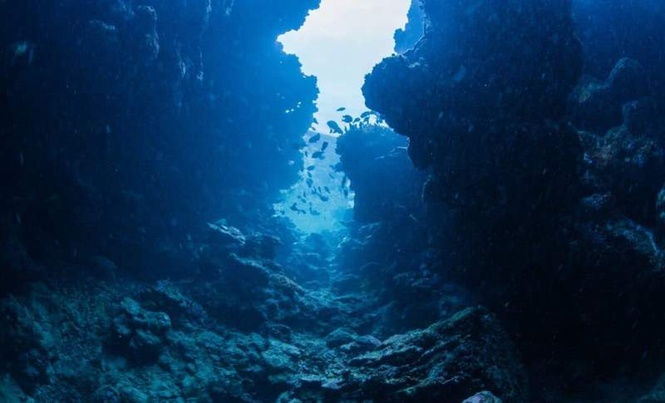
Scientists have identified previously unknown marine species during a two-week expedition off the coast of Brazil. Working hundreds of feet below the surface, the international team explored the ocean’s midwater using robotic vehicles and new imaging technologies that captured rarely seen animals in remarkable detail.
Alongside documenting new species, the researchers also tested a new generation of scientific tools designed to study fragile marine life with minimal disturbance.
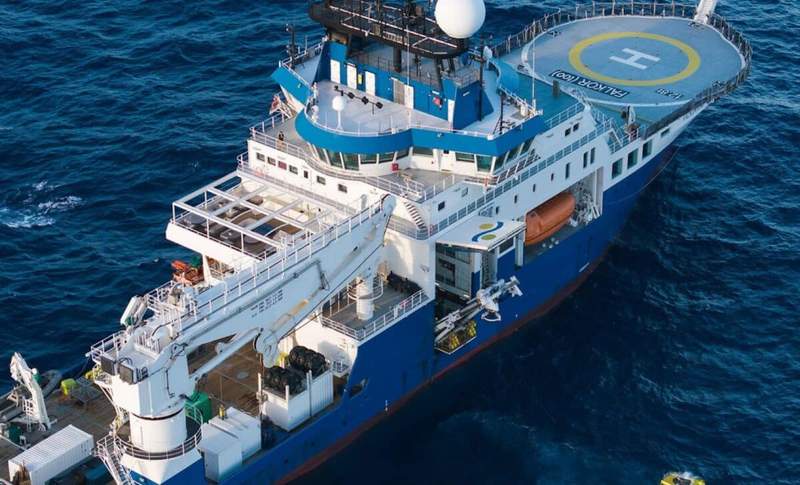
The expedition took place aboard the Schmidt Ocean Institute’s research vessel R/V Falkor (too). As reported by The Guardian, the mission focused on the midwater, a region located between the ocean’s surface and the seafloor at depths ranging from about 600 to 3,300 feet.
A Little-known Ecosystem Filled With Unexpected Life
During the expedition, scientists documented 31 species that had not been described before. Among them was a new Tomopteris gossamer worm, an animal that spends its entire life drifting through the water column. Researchers also observed a juvenile glass squid, larval fish, lobed comb jellies and several siphonophores.
One siphonophore stood out in particular. Based on images and measurements collected during the mission, Dhugal Lindsay, of the Japan Agency for Marine-Earth Science and Technology (JAMSTEC), believes the animal belongs to an undescribed genus and may even represent a new family of physonect siphonophores.
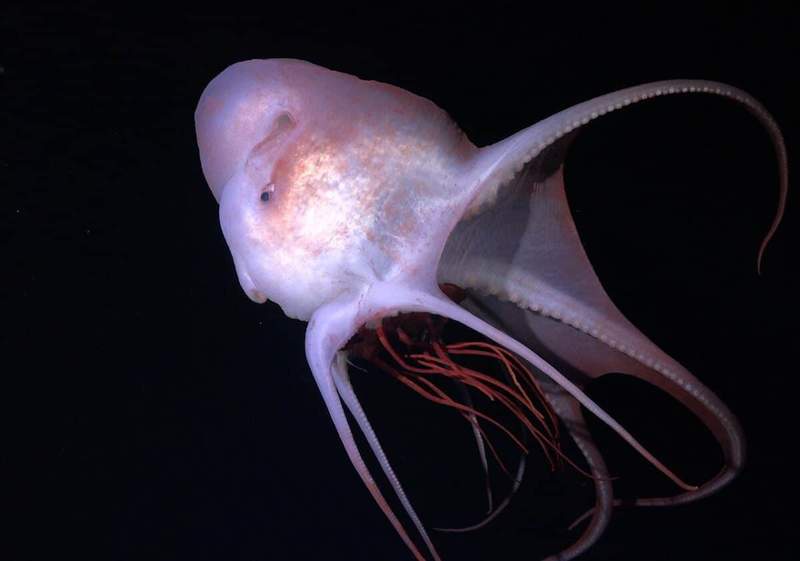
The team also recorded a female Haliphron atlanticus octopus feeding on a jellyfish at a depth of 800 meters. Researchers noted that females of the species can grow up to four meters long and weigh as much as 75 kilograms, while males reach only about 30 centimeters.
“The largest habitat on Earth, the midwater, is filled with incredible animals we are only just starting to understand,” said Karen Osborn, the expedition’s chief scientist. “I continue to be fascinated by the fantastic variety of solutions they have evolved to survive in this formidable environment, and that drives me to keep asking questions about our ocean.”
New Imaging Tools Revealed Life In Remarkable Detail
As explained by The Guardian, the expedition relied on several imaging systems that allowed researchers to observe delicate organisms more effectively. The remotely operated vehicle SuBastiancarried many of these instruments while exploring the deep ocean.
The press release published by Schmidt Ocean Institute said that one of the key technologies was Deep Particle Image Velocimetry (DeepPIV), a laser- and optics-based imaging system developed by the Monterey Bay Aquarium Research Institute (MBARI). The system creates detailed three-dimensional models of transparent marine animals while they remain in the water.
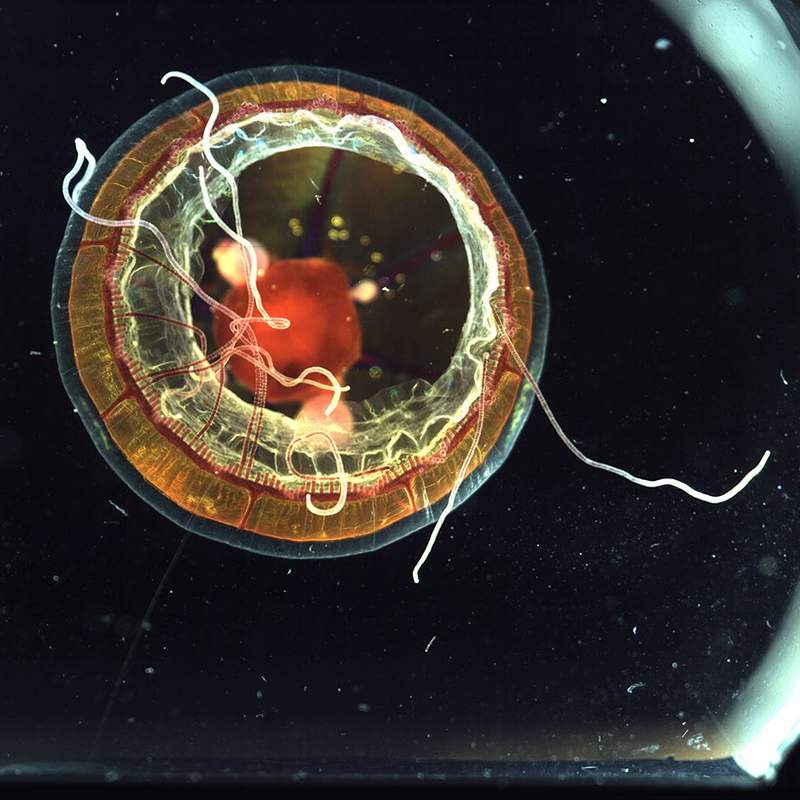
Researchers also used a prototype multiview macro camera system that photographed several species from three different angles immediately after collection. The approach preserved anatomical features, colors and body posture that can disappear within minutes or hours after an animal is brought aboard.
Other equipment included a gravity machine used to study microbes and a spinning-wheel confocal microscope nicknamed“the Squid,” which allowed scientists to image living cellular structures inside organisms for the first time.
A Closer Look At Species Beneath The Surface
The technologies tested during the expedition gave researchers the opportunity to collect detailed anatomical and genetic information while still at sea, making it possible to study entire organisms instead of relying only on preserved samples. In the same statement, Manu Prakash, a bioengineer at Stanford University, stated that:
“This opens a new door for researching deep-sea physiology, linking cellular architectures to organism function. We can now witness live internal processes within these extreme organisms adapted to withstand immense pressure and darkness.”
Jyotika Virmani, executive director of the Schmidt Ocean Institute, described the expedition as “a glimpse into the future of marine biological science.” She said the team hopes future researchers will be able to study marine species using the same techniques, including through virtual reality.