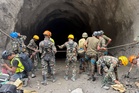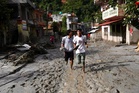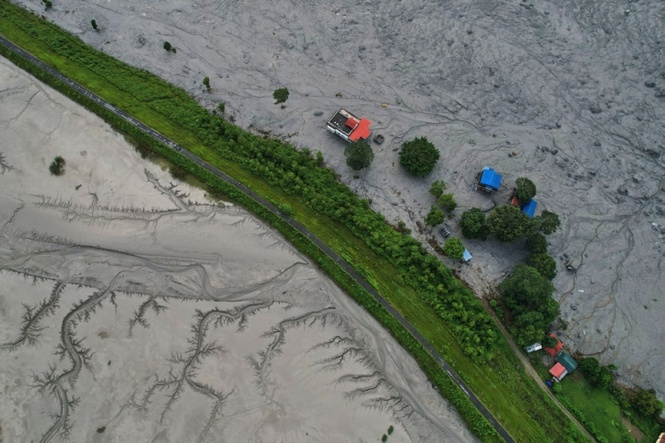
THE avalanche that tore down a mountainside in Nepal’s Rasuwa district on Aug. 26 was more than a Himalayan disaster. It was a warning about what happens when infrastructure and communities occupy mountain environments that are changing faster than the systems designed to protect them.
The event began at high altitude, where ice and rock broke loose from an unstable slope. The collapse transformed into a debris flow, reaching the Bhotekoshi River and sweeping through the valley below. Its suddenness exposed a critical weakness in disaster planning: not every mountain hazard announces itself through rising water, visible cracks or a developing storm.
“This was an unprecedented and unexpected disaster. There was simply no detection and no time to issue a warning,” said Farooq Azam, senior cryosphere specialist and intervention manager at the International Center for Integrated Mountain Development. “The event was a sudden-onset hazard that could not be captured by conventional warning systems.”
That limitation matters far beyond Nepal. Essential early warning systems are not a substitute for responsible land-use planning. A siren telling people to flee cannot stop a road, bridge, facility or settlement from being built in a hazardous corridor.
The Philippines must pay close attention. In the Sierra Madre, the country’s longest and most vital ecological shield — about 540 kilometers from Cagayan in the north down to Quezon in the south — risk is intensified by forest loss, watershed degradation and the expansion of roads, mining and settlements into vulnerable terrain.
But the underlying governance problem in both countries is similar. Both landscapes are being treated as though their past conditions can reliably predict their future behavior.
In the Himalayas, thawing permafrost, retreating glaciers and changing snow conditions can weaken formerly stable slopes. In the Sierra Madre, deforestation and canopy loss reduce the ability of hillsides and watersheds to absorb intense rainfall. When forests are cleared, rain runs off more quickly, soils erode more easily and rivers rise faster. No longer natural events, landslides and floods become disasters amplified by human decisions.
“Nepal’s mountains have been sending warnings for a decade: thinning glaciers, retreating snowlines, permafrost turning to slush under roads and hydropower plants we kept building anyway,” said Anjal Prakash, professor of public policy at FLAME University. “We didn’t lack the science... We lacked the political will to act on it.”
The real issue
That sentence could apply, with appropriate qualification, to any country that continues to permit development in environmentally sensitive mountain zones despite repeated evidence of rising risk. The Philippines has its own warnings: destructive floods, landslides, watershed degradation and communities exposed to hazards intensified by land-use decisions.
The issue is not whether development should stop. Mountain regions need roads, energy, communications, housing and livelihoods. The question is whether such development is designed for the landscape that exists now and the climate that is coming, not for the environment’s older, more stable version.
Nepal’s experience demonstrates that national boundaries are inadequate for managing interconnected mountain systems. Climate Trends Director Aarti Khosla called for “a shared approach — for building adaptation and resilience, early warning signals and transboundary monitoring.”
For the Philippines, the equivalent challenge is domestic but no less urgent: protecting the Sierra Madre as a connected ecological and hydrological system. Forests cannot be treated as isolated parcels, and rivers cannot be managed separately from the slopes and watersheds that feed them. Land-use decisions in one section of the range can increase risks far downstream.
This requires strict enforcement of environmental laws, protection of remaining forests, reforestation in degraded watersheds and hazard-sensitive planning for roads, settlements and other infrastructure. It requires listening to communities that have long observed changes in rainfall, rivers, slopes and forests.
The climate justice dimension is equally important. Communities living in exposed mountain areas often contribute least to global warming yet face the greatest consequences when ecosystems lose their ability to buffer extreme events. “Every villager who watched that valley disappear paid for emissions decisions made thousands of kilometers away,” Prakash said.
The Philippines cannot afford to regard Nepal’s disaster as a distant tragedy. Nepal’s mountains are being destabilized by the deterioration of ice, rock and frozen ground, while the Sierra Madre is weakened by deforestation, extraction and poorly planned development. Both cases show how environmental instability becomes catastrophic when governance fails to adapt, transferring the cost of inaction to communities.
The warning is clear: the Philippines can still protect the Sierra Madre, but only by replacing reactive disaster management with long-term mountain governance. The question is no longer whether the mountains are changing, but whether policies will change with them.
The author is the founder and chief strategic advisor of the Young Environmental Forum and a subject-matter expert at the Co-operative College of the Philippines. He completed a climate change and development course at the University of East Anglia (UK) and an executive program on sustainability leadership at Yale University (USA). Email him at ludwig.federigan@gmail.com.