
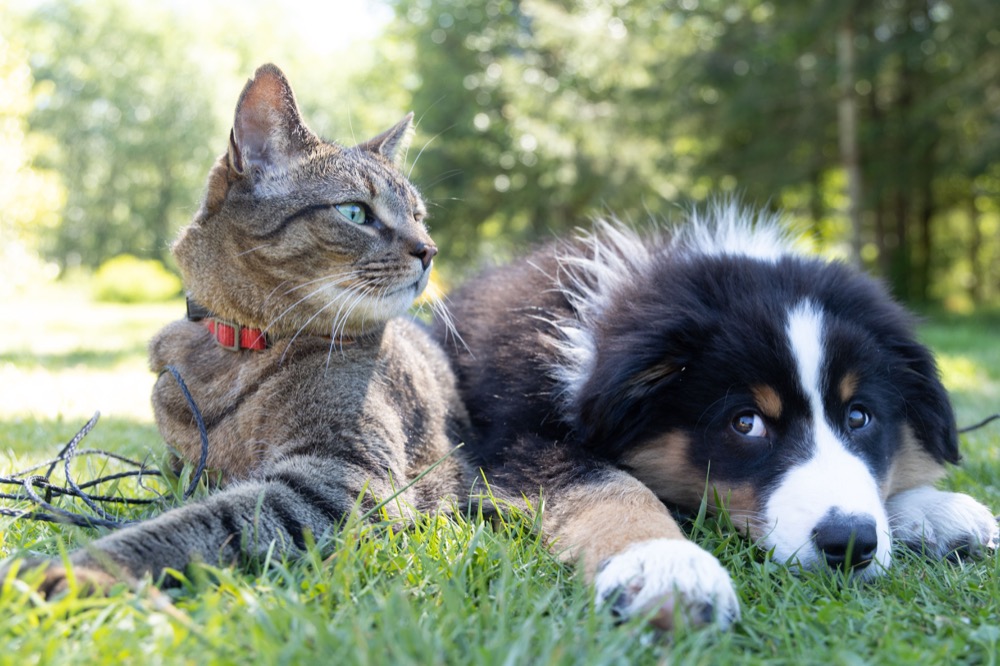
Cats rarely appear in structured stress-relief programs on university campuses. A newly published study suggests that the people who stand to benefit most from feline interaction are the very ones already seeking it. The research, published in the journal Anthrozoös, found that individuals with strong, highly reactive emotions express a clear preference for spending time with cats during animal-assisted interventions.
Researchers surveyed more than 1,400 university students and staff from over 20 institutions. They identified a link between the personality trait called emotionality and a heightened interest in cat visitation programs. Emotionality, a dimension within the Big Five personality model, captures how intensely a person experiences feelings and how readily they react to them.
“Emotionality is a pretty stable trait; it doesn’t fluctuate and is a quite consistent feature of our personalities,” said Patricia Pendry, a professor in Washington State University’s Department of Human Development and co-author of the study. “We found that people on the higher end of that scale were significantly more interested in interacting with cats on campus.”
Pendry and lead author Joni Delanoeije from KU Leuven in Belgium examined whether adding cats to campus stress reduction events would attract participation. More than 85 percent of existing programs feature only dogs. The team also asked whether university employees wanted access to these interactions, since staff members are often excluded, as detailed in the findings published by Washington State University.
Why Cats Calm Certain Personalities
The WSU findings sit alongside separate evidence on the physical effects of human-cat contact. The Cornell Feline Health Center has highlighted research showing that ten minutes of petting a cat or dog lowers cortisol, a stress hormone, in human saliva. College students, who face sustained high-pressure demands, were the subjects of that work.
A person who already feels emotions vividly may gain something immediate from an interaction that quiets stress chemistry. Quiet touch with a cat seems to function as both prevention and relief. The Cornell center frames the exchange in straightforward terms, describing it as a simple method to reduce stress with few downsides. The repetitive motion of stroking, the texture of fur, and the sound of purring combine to support fast emotional settling.
Personality Outweighs Role or Status
Interest in cat interactions cut across demographic lines. The researchers found no meaningful gap between students and university employees. Personality traits predicted interest far more reliably than whether someone was studying or working on campus.
“We think of college student populations as being unique, and in several ways they are,” Delanoeije said. “But when we looked at university employees, the results were very similar: Personality mattered more than being a student or employee.”
The connection between emotionality and openness to cat visits held after accounting for prior cat ownership, identifying as female, and openness to dog programs. Allergies and phobia dampened interest, as expected, but the personality pattern remained statistically significant.
Pendry noted that the results push back against a common assumption. “Anecdotally, we’ve always been told that cat people are different from dog people, and that most students are not interested in interacting with cats,” she said. “Our results revealed that students are interested in interacting with cats and that this interest may be driven by personality traits.”
What Frequent Cat Contact Reveals
A habit of seeking feline contact tells researchers something about individual psychology. People who pet cats often tend to score higher in emotional sensitivity and empathy. They gravitate toward calm, low-stimulation environments and prefer bonds that feel genuine rather than demanding.
The cat-human bond itself reinforces this preference. Cats offer affection sparingly and rarely demand constant attention. For someone who finds more effusive animals overstimulating, that selectivity can feel safer and more restorative than interactions carrying heavier social expectations. The relationship runs on mutual pacing: the cat approaches when it wants contact and steps away when it does not.
Brief daily sessions of petting a cat can serve as everyday emotional regulation. The predictability of quiet companionship creates a reliable anchor during moments of fatigue or tension. Physical touch, paired with the sensory calm of a purring animal, interrupts the body’s stress loop in a way that repeats easily. Contact also stimulates oxytocin, a hormone tied to attachment and calm, which may reinforce the behavior over time.
Closing the Dog-Centric Gap
Structured animal-assisted interventions rely heavily on dogs. A larger supply of trained canine therapy animals exists, and dogs carry a reputation for predictable sociability. Pendry addressed that perception directly.
“There’s a perception that dogs exist to please people,” she said. “While I may describe cats as ‘discerning,’ they are often perceived as unpredictable, aloof, or finicky, traits that can be difficult for some to be around.”
The data suggests that leaving cats out narrows the reach of stress-reduction work precisely among those who might respond to it most. Letting people choose between a cat, a dog, or both could pull in participants whose personality profiles make canine-only events a poor fit.
The Centers for Disease Control and Prevention offers practical guidance for anyone handling cats more often. The CDC recommends washing hands with soap and water after touching cats, their food and water dishes, or litter boxes. Cats can carry germs that pass to humans even when the animal looks healthy. These steps do not cancel out the emotional benefits. They provide a basic framework for safe, repeated contact.
Enjoyed this article? Subscribe to our free newsletter for engaging stories, exclusive content, and the latest news.