When President Lai Ching-te picked Acer founder Stan Shih to represent Taiwan at the Asia-Pacific Economic Cooperation (APEC) leaders' summit in Shenzhen, China, he chose a man who has quietly become one of the government's most relied-upon advisers on foreign policy, people familiar with Taiwan's diplomacy told Storm Media.
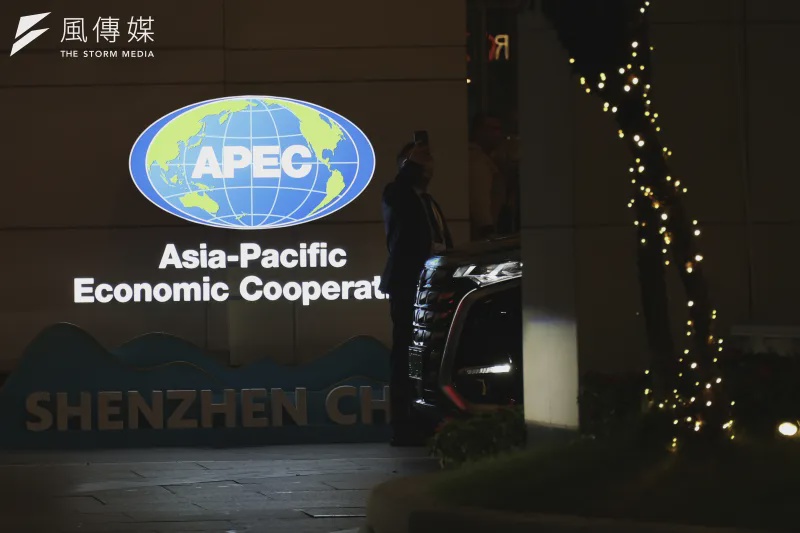
Shih, 81, will stand in for Lai at the APEC Economic Leaders' Meeting on November 18 and 19, as Taiwan's presidents cannot attend in person because of Beijing's objections. Taiwan takes part in APEC as a full member under the name "Chinese Taipei." Shih did the same job in 2007, and his return 19 years later comes with China, not Australia, as the host applying the pressure.
Officials from APEC's 21 member economies opened Leaders' Week in Shenzhen on November 13 with a session to draft the summit's outcome documents. Several Taiwanese teams were already in place by then, but the Presidential Office did not announce Shih as Taiwan's envoy until November 11, two days before the week began.
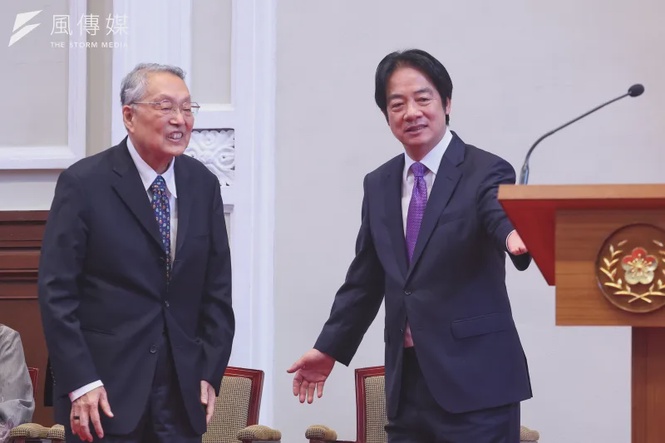
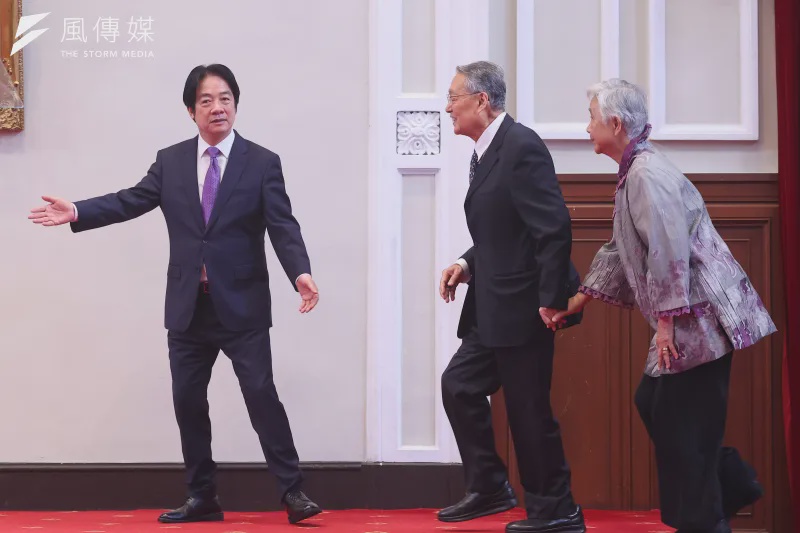
On the morning of November 12, Shih and his wife, Carolyn Yeh, met Lai at the Presidential Office in Taipei, where Lai entrusted him with three messages for APEC leaders and the international community. Lai wanted more than Shih's industry background and APEC experience, those people said. Behind the scenes, Shih has been shaping Taiwan's diplomacy for the past two years.
Taiwan's Foreign Minister Leans On Shih For Advice
Since Foreign Minister Lin Chia-lung took office in May 2024, his "integrated diplomacy" and "Diplomatic Allies Prosperity Project" have become fixtures of Taiwanese diplomats' talking points. Lin's approach calls for public and private partnership, with larger players lifting smaller ones, and many Taiwanese business leaders have joined his diplomatic work. Shih is one of the people he consults most.
Lin first outlined integrated diplomacy in a report to Taiwan's legislature on May 30, 2024. A little more than a month later, Shih publicly endorsed the prosperity project on social media. A person familiar with foreign affairs told Storm Media that Shih plays a significant part in Lin's thinking, and that Lin sought his views before several cooperation projects the foreign ministry has launched in recent years with Palau, a Pacific ally, and Eswatini, an African ally.
The two men also talk often in private, the person said. Lin has read several of Shih's books, and they regularly trade ideas on artificial intelligence (AI) and semiconductors, including how to train personalized AI models. Shih trained his own AI model first, the person said with a laugh, and Lin later built his own "A-Long AI."
From Acer Founder To Palau's Economic Adviser
Shih founded Acer in 1976 with Yeh and several partners, with capital of NT$1 million. He stepped down as chairman in 2005, then returned in 2013 as chairman and global president when the company ran into trouble. About six months later he gave up the chair again to become chief architect of Acer's Build Your Own Cloud (BYOC) business, which grew into its enterprise cloud services, artificial intelligence of things (AIoT), and hybrid cloud operations. Time magazine once hailed him as an "Asian hero."
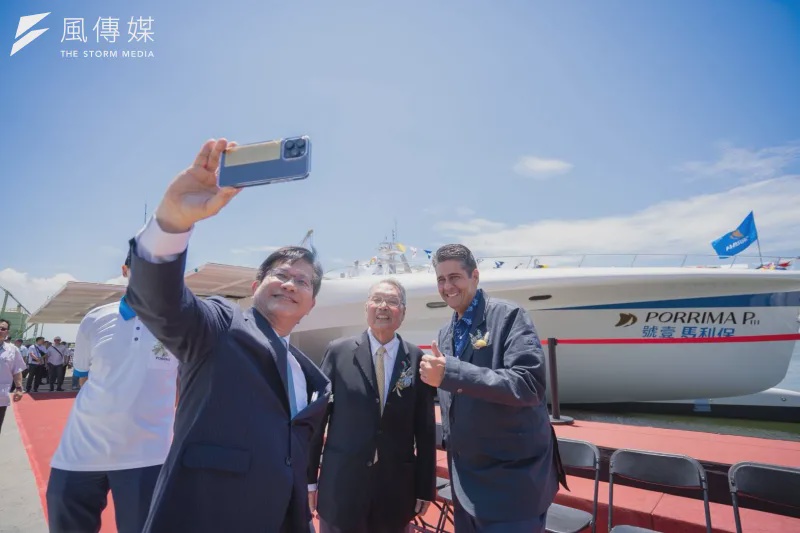
In 2023, Shih founded Porrima, a company focused on zero-emission vessels and new energy technology, which built what it calls the world's first zero-carbon ship for Palau's tourism industry. In March 2025, Palau President Surangel Whipps Jr. appointed Shih as a senior economic adviser to help develop the island nation's economy.
Shenzhen is also not Shih's first international gathering under Chinese pressure this year. In late August 2026, he joined Lin's delegation to Palau for events around the Pacific Islands Forum (PIF) leaders' meeting, appearing at a "Taiwan Night" and an exhibition on Pacific prosperity. Lin said afterward that China had sent people to monitor the events.
Shih Fits China's Three APEC Themes, Source Says
With China as host, Taipei had only a short list of people it could send, a person familiar with the decision said. The envoy needed enough stature, and also had to fit the three themes China set for APEC this year: openness, innovation, and cooperation. Beijing is also expected to use the summit to make its case on US-China AI competition and AI governance.
"He is someone who matches this year's three themes very well, and he is also representative and influential in industry," the person said.
Both the Presidential Office's November 11 announcement and Lai's remarks at a November 12 press conference stressed that Shih had represented Taiwan at the APEC leaders' meeting in September 2007, where he proposed the second phase of the APEC Digital Opportunity Center (ADOC 2.0).
Beijing Vetoed Taiwan's First Choice In 2007
China was a factor in Shih's first APEC mission too. Before then-President Chen Shui-bian announced Shih as his envoy in mid-August 2007, he had wanted to send Tsai Ing-wen, then vice premier and later Taiwan's president. China objected at APEC senior officials' meetings and elsewhere, and Australia, the host that year, turned her down under Chinese pressure.
Chen then approached Shih, who agreed, and Australia sent a special envoy to Taiwan to deliver the invitation. "We hope that, in keeping with the original intent, your government will also give fair treatment to the attendance of leader's representative Stan Shih," Chen said publicly at the time.
Officials Say Beijing Now Bends APEC's Own Rules
Nineteen years later, the political pressure from China as host is far greater than it was from Australia. Taiwan's foreign ministry, National Security Council, and other agencies have been meeting and running scenarios "all day long" ahead of the summit, Storm Media understands, and the Presidential Office held back Shih's name until the eve of Leaders' Week to avoid surprises.
A person familiar with Taiwan's APEC negotiations told Storm Media that China has kept up a stream of small, technical maneuvers that would not hold up to scrutiny, such as deliberately delaying the release of information. That raises Taiwan's costs and forces its officials to spend more time going back and forth with the Chinese side, the person said, and those exchanges have not gone smoothly.
An official familiar with how APEC works said that because Taiwan is a full member and APEC is a forum whose declarations, initiatives, and joint statements do not bind its members, Taiwan was rarely obstructed by China on matters governed by clear rules. "But you will notice the Chinese Communists have become truly outrageous these past few years," the official said. "Now, even on the things that are supposed to follow the rules of the game, they find every possible way to suppress you."
Shih Vows To Steer Clear Of Politics, As In 2007
Asked by reporters in Taiwan on November 13 whether he was prepared for possible Chinese obstruction, Shih said: "I think APEC is an economic forum, so in any case I personally won't talk about politics, because political problems are endless." Shih also told reporters that day that the press conference Taiwan's envoy usually holds during the summit may not take place this year, Japan's Kyodo News reported.
He struck a similar note in September 2007. "I think APEC is an international occasion, and I will not take the initiative to raise political issues," he said at his pre-departure press conference. But in Sydney, asked by The Australian about the referendum then planned in Taiwan on joining the United Nations, he said: "Taiwan is an independent, sovereign country and has the right to join the United Nations."
Shih's ties to Taiwan's presidents have drawn Beijing's ire before. Appointed a national policy adviser in the Presidential Office under former President Lee Teng-hui, he stayed on in that role in 2000 when Chen came to power, prompting China to brand him a "green Taiwanese businessman," a reference to the color of Chen's Democratic Progressive Party. A Chinese state newspaper warned on its front page that anyone who pushed for Taiwan independence would have their business shut down. Shih declined to serve another term as adviser in 2005, after Chen's reelection, but quickly accepted when Chen asked him to go to APEC two years later, and laid out the Chen government's positions in Australia.
The setting in Shenzhen is very different: the geopolitics, the global rivalry, and the host itself have all changed since 2007. How the same Stan Shih represents Taiwan this time will test both his judgment and his country's.
You've read it. Now join the conversation — follow us on X, Facebook and IG. Editor: Penny Wang