
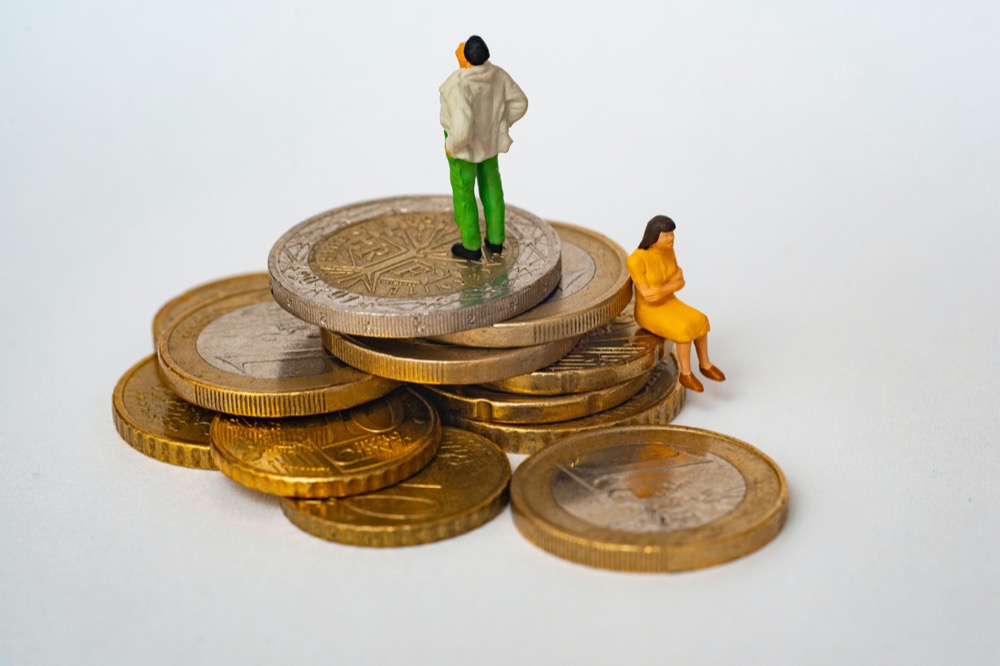
KULAI: Muhammad Adi wishes he could install solar panels on the roof of his house to save money on his electricity bill, to offset the fallout from the on-again, off-again conflict in the Strait of Hormuz in West Asia.
But solar energy is not in the cards for now, even with the Super El Nino – with its extreme heat and severe weather – worsening the energy crunch.
“It’s expensive. The cost of installing solar… not a small amount of money,” the 30-year-old told Bernama outside his mother’s eatery, which he helps run, in Felda Bukit Batu in Kulai district, Johor.
Instead, he chose the next best thing: getting energy-efficient appliances. The savings on his home electricity bills since then, he said, have been remarkable, especially when compared with the eatery’s power bills.
His monthly household electricity bill has remained the same at about RM100, even after installing an air conditioner recently, while the electricity bill for his restaurant has risen from RM400 to RM600.
Due to the global supply crisis and Super El Nino, energy bills have been going up in Malaysia and elsewhere. Southeast Asia and certain nations in Asia, in particular, have been hit hard, with countries like Cambodia, Pakistan and Bangladesh dimming their lights in order to conserve energy, according to a Bloomberg report.
As a result, there is a clean energy boom as more households switch to solar energy, but low-income households like Muhammad’s cannot afford the steep price of transitioning to renewable energy. Despite government programmes like Solar ATAP (Accelerated Transition Action Programme) – which lets homeowners and businesses install rooftop solar panels, use the power and export any surplus to the grid – and SARE (Supply Agreement with Renewable Energy), which allows households to buy solar energy from approved companies that do the solar panel installation, many do not feel they need to or should make the switch.
They are not alone in feeling this way. While renewable energy may be the government’s ultimate aim, not everyone can make the transition. Even energy experts think households without exorbitant electricity bills need not transition to renewable energy, saying their best bet is to go the energy-efficient route, with assistance from the government available.
Usually, low-income households’ electricity bills or consumption are not that high, which explains why many of them do not feel like they need to make the switch to renewable energy (RE).
“If your electricity bill is not high, then you might not find solar ATAP something of interest,” said Koh Keng Sen, chief operating officer of Sustainable Energy Development Authority (Seda), in an interview with Bernama in Putrajaya.
“But if you have reached a certain threshold of consumption, then you might look at Solar ATAP, okay, maybe you should participate.”Although their electricity bills and usage may be low, poorer households also tend to spend a higher percentage of their income on their electricity bills, according to data from Khazanah Research Institute (KRI) and the Department of Statistics Malaysia (DOSM). Energy-efficient appliances could provide big savings, provided financially strapped families could afford these items in the first place.
Muhammad’s uncle Shamsul Ariffin knows all too well how much electricity his single-income household – consisting of him, his wife and four children – has been consuming and how much goes into paying those bills.
Shamsul, who lives in Pekan Kelapa Sawit, more than four kilometres away from Felda Bukit Batu, told Bernama he spends about 10 percent of his income on electricity these days.
As a lorry driver, he makes between RM2,000 and RM3,000 monthly, putting him in the lower tier of the B40 group. Malaysia classifies households earning under RM5,351 per month as B40. Johor’s median monthly income is RM7,712, according to the latest data from DOSM.
Malaysia’s green energy strategy for the people consists of two prongs. One is to get them to adopt renewable energy, like solar, to power their homes. The other one is to get them to be more energy efficient.
“Energy efficiency and solar and RE will have to go hand in hand. You cannot go for one without the other if you want to go really net-zero. But if you want to, say in terms of entry level, definitely energy efficiency is good,” said Koh.
He said the government has an ongoing programme called NUR@PETRA that gives a RM200 rebate to Malaysians who buy five-star or four-star energy-efficient appliances.
Independent energy analyst Ganesha Pillai said only people with landed property should consider getting solar panels for their homes.
“A basic requirement for a common person to consider (is) energy efficiency (when) buying appliances, which (in general) consume a lot of electricity. Getting a more (energy) efficient air conditioner (for example) actually helps reduce your electricity cost,” he said.
Prices of energy-efficient appliances can be costly initially as the value is in their long-term use. If the price is high, consumers will usually go for a cheaper and less efficient appliance, according to research done on shoppers’ attitudes.
As for the NUR@PETRA programme, there is a limit to the rebates offered for energy-efficient appliances.
Seda told Bernama that 42,072 rebate units worth RM200 each have been claimed by consumers as of July 27, leaving 117,928 units left. The programme features a total allocation of RM32 million for 160,000 rebate units, distributed on a first-come, first-served basis.
To qualify, consumers need to bring their electricity bill and their identity card to the store selling the appliance. The programme also applies to online purchases via official SEDA partners’ platforms.
A salesman at a home appliance store in Kuala Lumpur told Bernama that only refrigerators and air-conditioners are included in the NUR@PETRA programme currently. He added that the programme was very popular and that the rebate units were usually taken up within a few days every month.
While the NUR@PETRA programme may sound like a perfect solution for people like Shamsul, many who would benefit the most from such initiatives told Bernama they were not aware that such a rebate was available. SEDA does not have data on the socioeconomic status of the consumers who got the rebates.
A housewife who asked to be referred to as Fatimah said she first saw mention of the programme on Facebook and ignored it.
“I was afraid it might be a scam. I found it difficult to believe… I did not have the courage to click on the link,” she said, laughing.
When asked what would help her believe in advertisements or announcements of government programmes, she said she would only believe it if she found out about it from a government official or someone authoritative that she knows.
She added that she would also trust the administrators of her local community’s Facebook page if they posted about it.
Climate, environment and energy researcher at the Institute of Strategic and International Studies (ISIS) Zayana Zaikariah was not surprised. She told Bernama via Google Meet that her research showed that in this day and age of online scams and malicious links, people would usually only trust announcements concerning cashback or discounts if they come from people they knew in real life.
“I think in terms of sending out (such) information, going through the ketua kampung (village headman) is always useful,” she said.
Koh said Seda officers often go down on the ground to inform and educate Malaysians of various programmes and ways to help reduce energy waste.
Rather than renewable energy, Ganesha said everyone would benefit from practicing good energy hygiene.
“Imagine the energy pyramid. Basically, the bottom part is (understanding) your consumption, whether you’re using or wasting electricity,” he said.
“Number two is your efficiency, where you come up with best practices (like) switching off your lights, switching off your appliances when you’re not using them or getting more advanced electricity appliances which are a lot more efficient. And then (the) tip of the iceberg is your renewable energy source.”For Muhammad, this advice is nothing new. He ticks two out of the three points Ganesha forwarded. He has found the best way to keep his electricity bills low is to use power wisely and limit the use of high-energy appliances.
“I use an inverter air cond. It’s a bit okay. But I rarely use it. Only when it is really hot, I switch it on,” he said.
