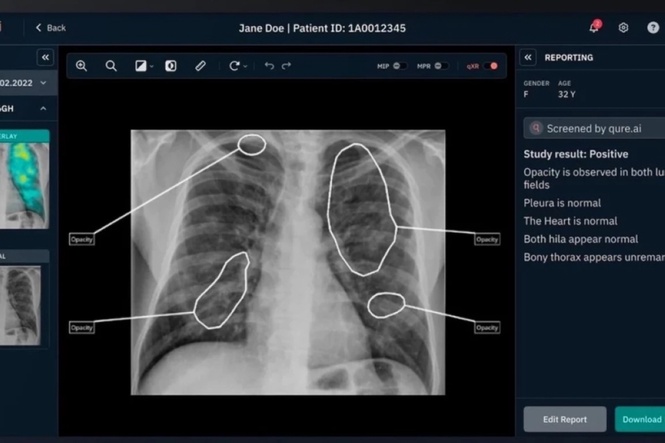
ARTIFICIAL intelligence-assisted chest X-ray interpretation could help rural health units detect more tuberculosis cases while reducing screening costs, according to a study by Ateneo de Manila University researchers.
The study, published Aug. 26 in BMC Health Services Research, found that AI-assisted interpretation could cost an estimated P877,330 annually for every 1,000 patients screened, compared with P1.14 million under conventional manual interpretation.
The researchers, Harold Henrison Chiu, Bryan Christopher Lao and Gloanne Adolor, used a decision-tree model to compare the two approaches in rural health units, where access to radiologists and teleradiology services can be limited.
Their analysis projected that AI-assisted interpretation would correctly identify 90.22 tuberculosis cases per 1,000 patients screened, compared with 88.72 under manual interpretation. The model also estimated fewer false-positive X-ray results, potentially reducing unnecessary confirmatory testing.
The findings are significant for the Philippines, which accounted for an estimated 6.8 percent of the 10.7 million tuberculosis cases worldwide in 2024, according to the World Health Organization.
Chest X-rays are used to screen patients for abnormalities that may indicate tuberculosis. However, obtaining an image does not necessarily complete the screening process. The results must be interpreted, and patients with findings suggestive of the disease may need further testing, including GeneXpert molecular tests.
In rural and geographically isolated communities, limited access to specialist readers can delay this process. Patients may have to return to health facilities, incur additional transportation costs or miss follow-up appointments.
AI-assisted systems analyze chest X-rays and flag findings that may warrant further investigation. The technology could help health workers assess images where radiologists are not readily available, although it does not replace confirmatory testing or eliminate the need for clinical oversight.
The Ateneo researchers assessed costs and outcomes over five years using a hypothetical annual cohort of 1,000 patients with presumptive tuberculosis. Their model incorporated expenses associated with AI software and operations, radiologist reading fees and confirmatory testing.
The estimated savings largely came from reducing unnecessary GeneXpert tests following false-positive X-ray interpretations. Under the baseline assumptions, the researchers projected discounted savings of P946,878 over five years, alongside 6.49 additional correctly detected tuberculosis cases compared with manual interpretation.
However, the economic advantage depended on local conditions. When the researchers used a lower manual or teleradiology reading fee of P300 per scan, or alternative diagnostic-performance estimates based on a Philippine scenario, AI-assisted screening remained more effective but was no longer cost-saving.
The findings are based on a decision-analytic model rather than a clinical trial or an actual deployment across rural health units. The researchers said pilot implementation in high-burden, underserved areas should be accompanied by local validation of diagnostic performance, quality assurance, implementation monitoring and budget-impact assessments.
They also emphasized the need to determine whether AI-assisted screening can extend diagnostic support to communities where medical expertise is scarce in a way that is affordable, sustainable and equitable.
The study suggests that AI could help improve the efficiency of tuberculosis screening, but its broader value will depend on whether health facilities can integrate the technology into existing programs and ensure that patients who need further testing receive it.
The researchers cautioned against immediate nationwide adoption without further evaluation, noting that local diagnostic accuracy and operating costs could influence the results.
The study was self-funded, according to the authors’ disclosure.