If you run a stall or a small shop selling food in Malaysia, the poster outside is doing one of two things. Making someone hungry, or making them walk past. AI food photos are increasingly doing the second, and at the Kuching Food Festival this month one visitor reckoned roughly four stalls in five were advertising with them.
An AI food photo is a picture of a dish an AI tool invented from a text prompt, rather than a photo of food you cooked. They cost nothing and take a minute, and in Malaysia they are quietly losing owners the sale. Customers are not rejecting AI. They are reacting to a picture that stopped working as evidence.
A visitor posted festival photos to r/Bolehland on 17 August and reckoned "at least 80% of the stalls there proudly use AI slop to advertise their products". The thread passed 1,100 upvotes in five days, and most of the argument under it is not about art.
Why AI food photos in Malaysia read as low confidence in your food
The top comment, at over 300 upvotes, is the whole finding:
"The generated pics looks so disgusting. I take a look at it also don't feel like eating already. At least make it look like real food la.. shouldn't be hard? Cook something, take a photo ask AI to touch up the background or whatever.."
Appetite is not an opinion. It arrives before anybody works out how the picture was made. Then the customer looks for a reason, and the reason they settle on is you. "If you're a food store and you're using ai pics for your food, I'm going to assume you don't have much confidence in your food to begin with," one wrote.
Food is unlike anything else you can advertise. For most products the photo is a claim about the product. For food the photo is the product, sampled. It is the only stand-in for taste and smell before money changes hands, and a generated one shows a dish that has never existed.
It spreads, too. At a Bon Odori at Lalaport, one person said the AI posters "ruined my appetite completely so bad to buy from even the shops that don't use it". Another bought only from stalls with real photos and said those "were unironically the best ones". Your poster spends the neighbouring stall's money.
Are AI food photos bad for a restaurant menu?
Not all of them. What matters is whether the AI invented the food.
| Give this to the AI | Never give this to the AI |
|---|---|
| Cleaning the background behind a plate you shot | Generating the dish from a text prompt |
| The banner, the price list, the opening hours | Prawns, toppings or portions you do not serve |
| A Bahasa Malaysia and a Chinese version | A dish on the menu that was never cooked |
| Resizing one photo for signboard, flyer, Instagram | "Fixing" food until it stops looking like yours |
One reading most owners miss, at over 200 upvotes: "These days I feel happy when I see simple food menus / posters made by Words / Powerpoint. Feels authentic." The bar moved. Plain and real now reads as honest where it used to read as broke.
How to use AI food images without misleading your customers
Shoot it first, then let AI finish it. The fix sits inside the same comment that started the complaint, and it is one evening's work.
- Cook one plate of your best seller, plated the way you actually plate it.
- Shoot it on your phone by a window at mid-morning. Plain table, twenty frames, a few angles.
- Hand the AI your photo, not a prompt. Background, lighting, crop, cleanup.
- Let it do the multiplication: layout, language versions, and the sizes for a signboard, a flyer and Instagram.
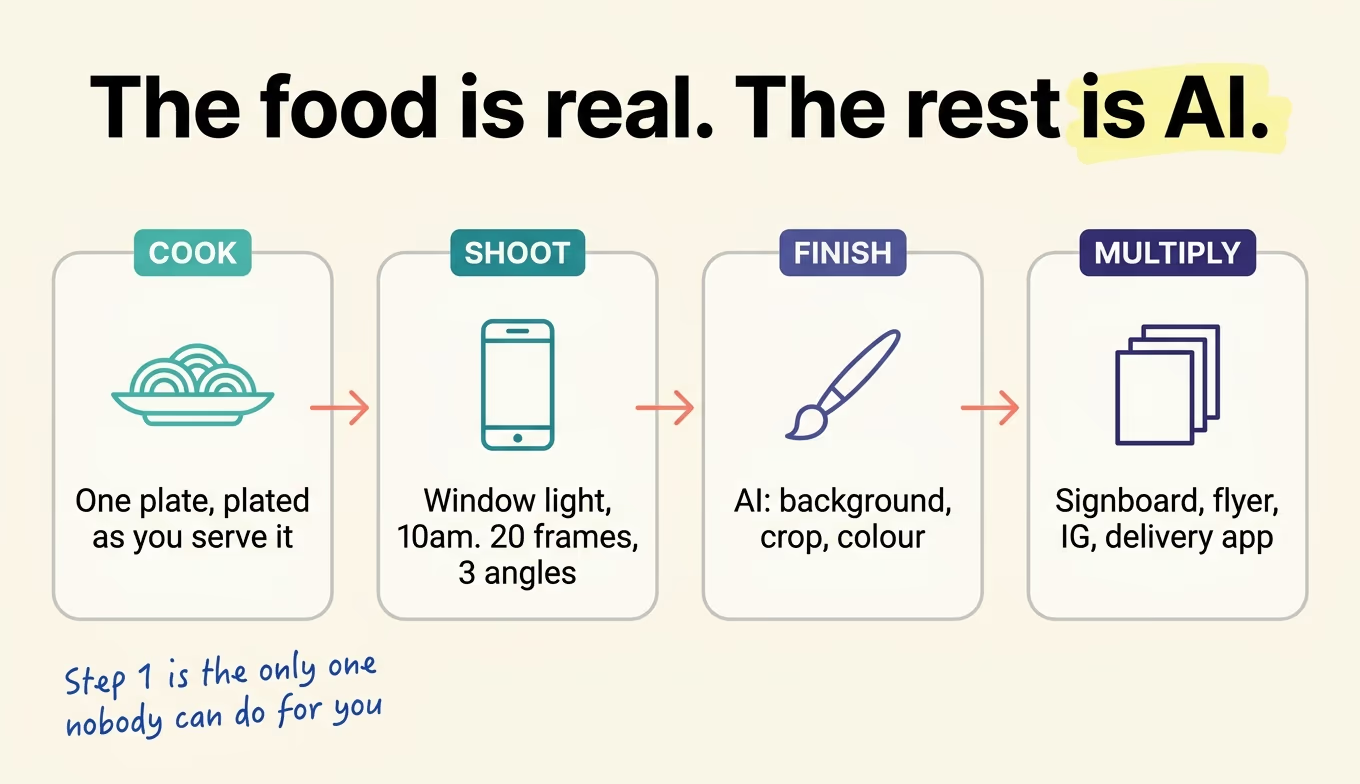 The AI joins at step three.
We should mark our own homework here, because Gotchaa Lab sells AI photography. On a food poster its strong half is everything that is not the food: background, setting, layout, language versions, fifteen sizes. The weak half is the food, because that is the thing going in someone's mouth. Where those threads call the output ugly, it was ugly, and "the models are improving" does not answer a plate of noodles nobody wants to eat. Same point we made about AI portraits in July. Generating is cheap. Knowing what to throw away is not.
One comment at 33 upvotes splits the blame usefully. An owner making his own graphics to save money is one case. An owner who paid a studio and got this back is another, and that is a supplier who never opened the file.
Elsewhere there are rules: size decides who gets forgiven on an ad campaign, and Shopee makes you label AI on a listing. Outside a stall there is no policy. There is only the plate, and someone deciding in about two seconds whether they are hungry.
Do not go and redo your branding. Tonight, cook one plate of your best seller, set it near a window, and take twenty photos on your phone. That half hour is the only part of the poster nobody else can do for you.
Wondering whether AI food photos are worth it for your shop? Let's chat for an honest read, including the times the answer is your own phone.