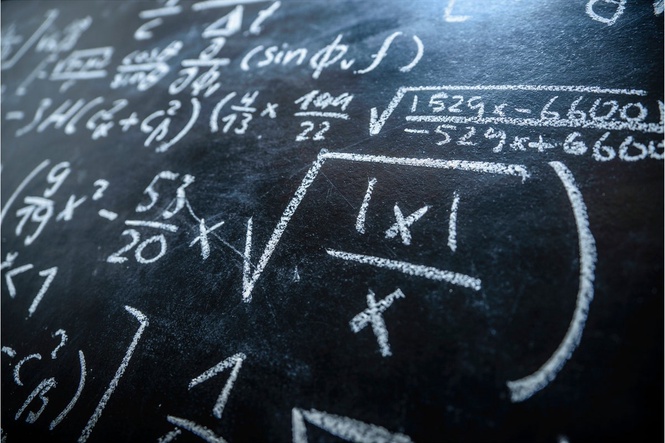
On 8 September, OpenAI announced that 10,000 of its AI agents had solved a 90-year-old mathematics problem in less than 90 hours. The Navier-Stokes equations, which describe the motion of fluids, is one of seven Millennium Prize Problems that offer a $1 million reward for a solution.
Less than a month later, OpenAI published more than 700 mathematical papers of new findings on long-standing mathematical problems. Unlike the previous breakthrough, the latest release was achieved by a single experimental model working from just one prompt per problem.
The speed and scale is unprecedented, with American computer scientist Scott Aaronson has calling it the “Mathocalypse”. He described OpenAI’s latest windfall of results as “surely one of the biggest days in mathematical history”.
In a blog post, OpenAI said it hoped the findings would “push the frontier of human knowledge and enable further progress in mathematics.” But some are warning that the rapid advances in artificial intelligence could threaten the foundations of the entire internet.
Cryptography crisis
For decades, the security of the internet has relied on cryptography to encrypt sensitive data and ensure that it remains private as it travels across public networks.
The technology depends on mathematical problems that are currently too difficult to solve efficiently. The accelerating advances could potentially lead to new algorithms capable of cracking them.
“I think we might lose public key cryptography,” said Matthew Green, who teaches cryptography at Johns Hopkins University in the US. “Well, encryption specifically.”
Public-key cryptography is used to establish secure communications in technologies like web browsers, secure messaging and online banking.
There is no evidence that OpenAI’s mathematical discoveries have even come close to producing something capable of defeating the cryptographic systems protecting the internet.
But the concern is that AI will accelerate the search for such breakthroughs, reducing the amount of time available to develop adequate protections.
‘Bunker mode’
Cryptography is also the core technology behind cryptocurrencies like bitcoin and ethereum.
On Wednesday, one researcher urged the blockchain industry to prepare for “bunker mode” in the event of AI testing current cryptography standards.
“OpenAI drop made it clear that mathematical superintelligence is upon us,” wrote Ethereum researcher Justin Drake. “They say there are weeks where decades happen. We are about to live through weeks where centuries of mathematical progress happen.”
Responding to the post, Ethereum co-founder Vitalik warned that AI advances could be more of a threat to cryptocurrency than the advent of quantum computers, which have long been considered one of the main threats to the technology.
The industry has been developing and adopting “post-quantum” systems in preparation for next-generation quantum computers, using mathematical structures like lattices that are resistant to known attacks.
“If AI will bring us 50 years of math in 2 years, then that 50 years of math may very plausibly include a... level of improvement to our ability to break lattices,” Buterin wrote in a lengthy post to X outlining his concerns.
“In that world, lattices will still exist, but they will have to be significantly bigger to guarantee the same level of safety.”
The crypto pioneer urged people to store funds in addresses that have not yet been used to make a transaction, as that way the public key is yet to be exposed.
Accelerating discoveries
Others warn that OpenAI’s proposed solutions, even for the Navier-Stokes problem, are yet to be verified.
“OpenAI is flooding us with claimed revolutionary breakthroughs,” said Valerio Capraro, an associate professor at the University of Milan. “Yet nobody knows whether the proofs are correct or whether they prove what they claim to be proving.”
Formal verification could take months, by which time new AI-powered proofs and other mathematical advances will likely have already been made.
The rate at which AI makes breakthroughs may soon exceed the rate at which humans can properly understand them. And if mathematical progress begins to move faster than humans can verify, the consequences will extend far beyond mathematics.
Read MoreScientists find signal that suggests AI is about to go rogue
Google finds 240,000 years’ worth of AI music with new detector tool