
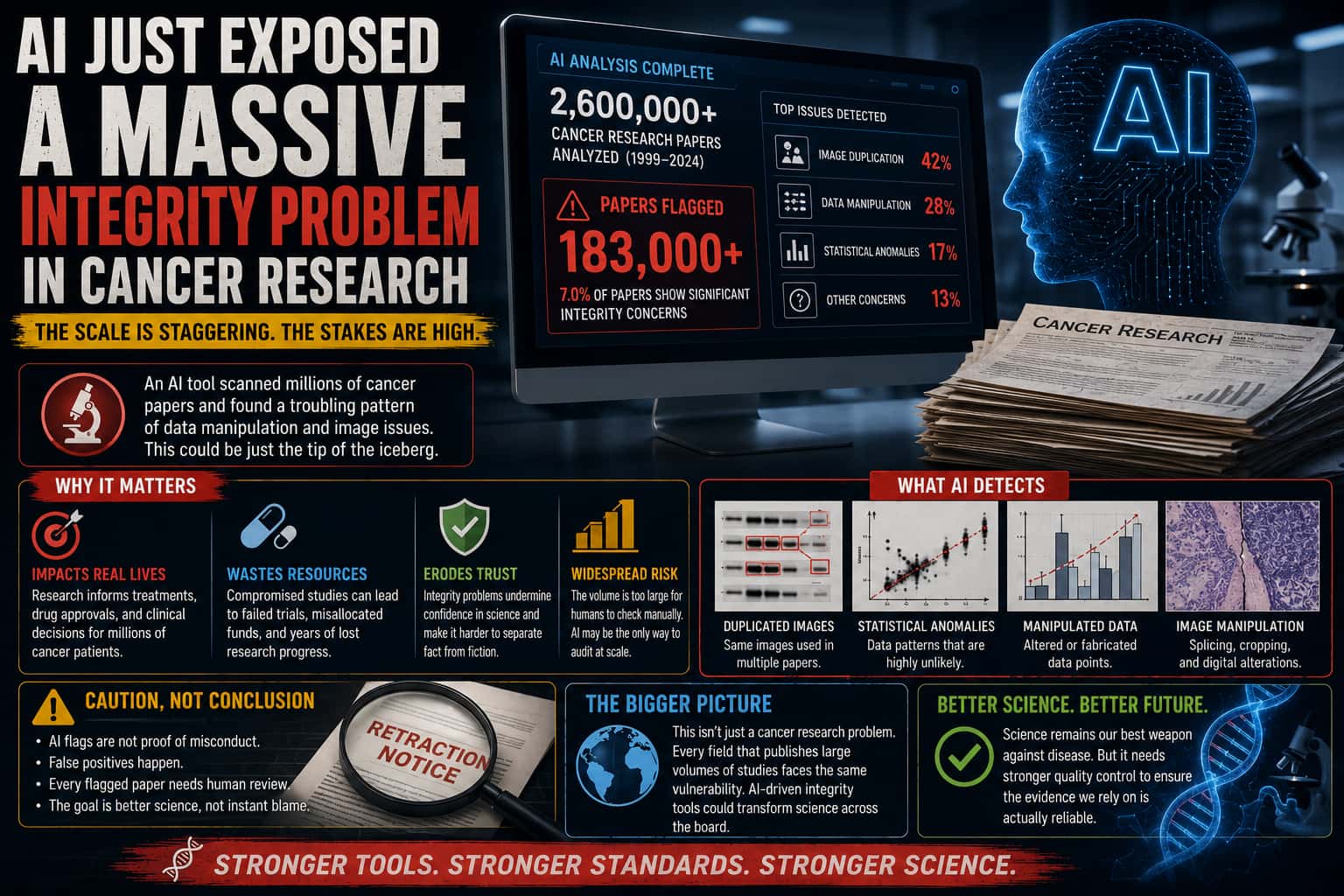
Scientific research is supposed to be self-correcting. Mistakes get caught, retracted, and fixed over time. But what happens when the volume of published research is so large that nobody can check it all? A new AI tool tried to answer that question by scanning 2.6 million cancer research papers published between 1999 and 2024. What it found was alarming.
The tool, developed by researchers focused on scientific integrity, flagged a significant number of papers with signs of data manipulation, image duplication, and statistical anomalies. The scale of the findings suggests that integrity issues in cancer research may be far more widespread than the field has acknowledged.
This does not mean all or even most of those papers are fraudulent. Some of the flagged issues may be honest errors, sloppy record-keeping, or formatting artifacts. But the sheer volume of papers with red flags raises serious questions about the reliability of a body of literature that informs treatment decisions, drug development, and public health policy.
Cancer research is high-stakes science. Results from published papers influence which treatments get funding, which drugs move into clinical trials, and which therapies doctors recommend to patients. If a meaningful percentage of that evidence base is compromised, the downstream effects are enormous.
The problem is not new. High-profile retractions and fraud cases have surfaced regularly in cancer research over the past decade. But those cases were typically discovered one at a time, through painstaking manual review. What AI brings to the table is speed and scale. A tool that can scan millions of papers in weeks can surface patterns that would take human reviewers years to find.
The tool uncovered patterns that would take human reviewers years to find manually. The response from the scientific community has been mixed. Some researchers have welcomed the tool as a necessary audit mechanism. Others have raised concerns about false positives and the risk of unfairly damaging reputations based on algorithmic flags rather than thorough investigation.
Both sides have a point. AI detection is powerful but imperfect. A flagged paper still needs human review before any conclusions are drawn. But the alternative, continuing to trust a research base that nobody has the capacity to check manually, is arguably worse.
The broader issue extends beyond cancer research. Every field that relies on large volumes of published studies faces similar vulnerabilities. Psychology, economics, and nutrition science have all dealt with replication crises in recent years. AI-driven integrity tools could eventually become standard audit infrastructure across all scientific publishing.
For patients and the public, the takeaway is not to panic but to pay attention. Science remains the best tool we have for understanding disease. But the institutions that produce and publish that science need better quality control, and AI might be the only way to achieve it at the scale required.
Ronny M (ronny76netstuff@gmail.com) is a content creator under the Newswav Creator programme, where you get to express yourself, be a citizen journalist, and at the same time monetize your content & reach millions of users on Newswav. Log in to creator.newswav.com and become a Newswav Creator now!
The User Content (as defined on Newswav Terms of Use) above including the views expressed and media (pictures, videos, citations etc) were submitted & posted by the author. Newswav is solely an aggregation platform that hosts the User Content. If you have any questions about the content, copyright or other issues of the work, please contact creator@newswav.com.