Nearly 20,000 people have gathered in Bangkok for the annual meetings of the World Bank and International Monetary Fund (IMF), amid mounting economic pressures on the world's poorest countries and growing uncertainty over how to finance their development.
The mood on the ground has been far from buoyant. The US war in the Middle East - and subsequent economic shock from the closure of the Strait of Hormuz - continues to have a disproportionately large economic impact on the world’s poorest nations. This year’s “super” El Nino climate event is also set to devastate harvests across much of the Global South, and plunge tens of millions into hunger.
Much of the discussion at the meetings has centred on how institutions such as the World Bank can mobilising private investors to help plug the development funding gap, at a time when expanding public lending is increasingly difficult and many countries are wary of taking on more public debt.
But for the world's most fragile countries, that strategy offers little relief.
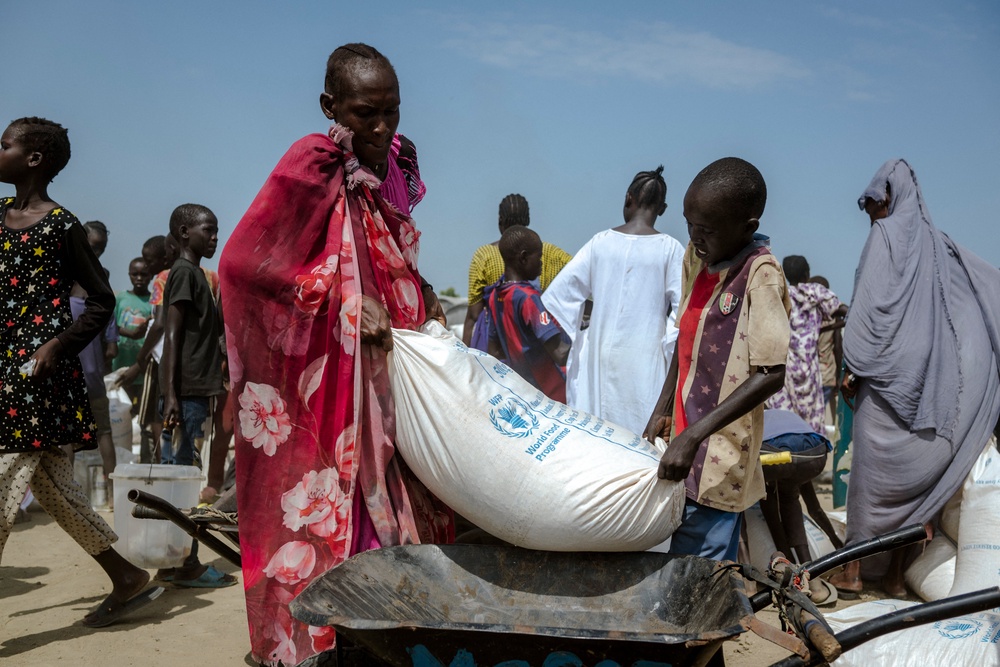
For these countries, attracting private capital is a near-impossible prospect. For them, grant-based foreign aid remains a vital lifeline to keep economies afloat, as economic instability and political uncertainty leave investors reluctant to commit money, and means that they often receive almost no foreign direct investment each year.
Cuts by major aid donors like the US and the UK over the past two years remains the most significant economic crisis for these fragile countries - and it is a situation which has few easy solutions.
“Our economic reality means that we are unable to borrow money, because of our economic situation - and at the same time, grant-based finance is not happening right now because of aid cuts,” one government figure from a least developed country told The Independent.
“This means that we are really only here as a matter of course: we have no real hope that the situation will improve. Finding ways to generate more development finance is really about international cooperation, and that is unfortunately in short supply right now.”
Speaking to The Independent from Bangkok, Clemence Landers, vice president at the Center for Global Development, agrees that it is “not a glorious time for multilateralism”. At the heart of the problem is the United States - “the 900 pound elephant in the room”, according to Landers - which is a currently a major obstacle to any attempts increase the World Bank’s lending capability.
If the amount of money available cannot be increased, Landers says, the next best thing is capital enhancement measures that increase the financial efficiency of lending via a range of technical measures, including those that will allow the World Bank to leverage more private capital to flow alongside its investments. “These measures increase how much the multilateral financial system can support, but they do not make its lending cheaper,” she says - pointing out that high interest rates mean that even lending from development finance institutes is pretty expensive at the moment.
But for the world’s war-torn and fragile nations - which include the likes of Somalia, Chad, South Sudan, and Burundi among their number - the current financing dynamic leaves few options.
“Most fragile states and low income countries are heavily reliant on donor funding, with foreign aid often the largest flow of money into the country,” Landers says. “No amount of financial engineering can be done to create more grants for these countries. The only way is for donors to fork up more money.”
One glimmer of hope at the meetings has been an announcement from the UK - which is poised to take on the presidency of the G20 this year - promising to use the UK’s diplomatic clout to push for a “new deal” on developing country debt. The announcement - which was made in person by foreign secretary Ed Miliband - comes after many months of intense lobbying from civil society, including in this newspaper.
“The short-term repayments are crippling, and while many are not defaulting on their payments they are being forced, if you like, to default on the lives and prospects of future generations,” he said.
“So we need a new deal on debt, a deal that supports countries to repay over longer time horizons and, crucially, refinancing with better rates to give developing countries precious fiscal space.”
Miliband’s comments come as servicing costs for ballooning public debt in developing countries hit a 25-year-high - with many forced to pay significantly more servicing debt than on health and education. The cost of dealing with climate impacts is also increasingly putting pressure on public finances.
"The UK's commitment to multilateral action is real and stands in contrast to the US approach,” said Ian Mitchell, co-director of the Europe Programme at the Center for Global Development.
“Even so, the UK is heading for its smallest international aid spend of all time as a share of its income, so the Foreign Secretary will need to persuade his Chancellor that averting that low will be valuable in economic, reputational and security terms."
The Independent has previously reported how the Treasury has indeed been the key blocker of UK-led action on developing country debt.
This article has been produced as part of The Independent’s Rethinking Global Aid project
Read MoreEl Nino is now hottest ever recorded and still growing in strength, announces Japan
Indonesian haze makes Singapore the most polluted city in the world
Yemen’s pregnant women face double toll of conflict and extreme heat
Vibrant but unpredictable autumn colour on way after drought – National Trust
Dog that hunts invasive ‘sea vomit’ creature named animal of the year
‘Gut punch’ image of elephant with dead calf wins Wildlife Photographer contest