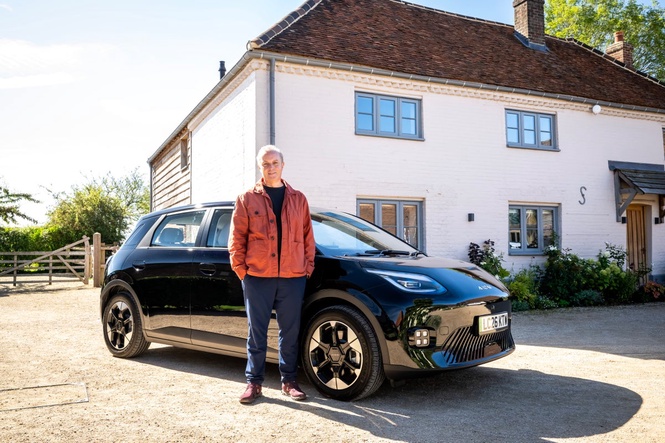
The Aion name probably means little to you, but its parent company is much larger than the unfamiliar badge suggests. GAC is China’s fifth-largest car company, having produced buses in the 1950s, before moving into cars – including joint ventures with Toyota and Honda – and now overseeing a portfolio of vehicle brands.
In fact, the first-generation Honda Jazz was built by GAC, and today the company produces almost two million vehicles per year, and employs around 82,000 people globally, including 6,000 in research and development. GAC says it invests more than $6.5 billion (£4.8 billion) in R&D each year, while the Aion brand itself sold more than 300,000 electric cars in China in 2025. So, while Aion is a very new badge on British roads, this is far from a start-up having its first go at building cars.
The Aion UT may sound like a medical condition, but it’s the brand’s second UK model after the V SUV, which the company positions as an upper-mainstream – even premium – offering. The UT is what industry-folk call a B-segment hatchback, but you and I would call a supermini. And, just like the V, the UT a pretty big thing in its class; it’s generously proportioned for a supermini at 4,270mm long, 1,850mm wide and 1,575mm tall, with a substantial 2,750mm wheelbase. For context, the current five-door Mini Cooper is 4,036mm long, 1,744mm wide and 1,452mm tall, with a wheelbase of 2,567mm.
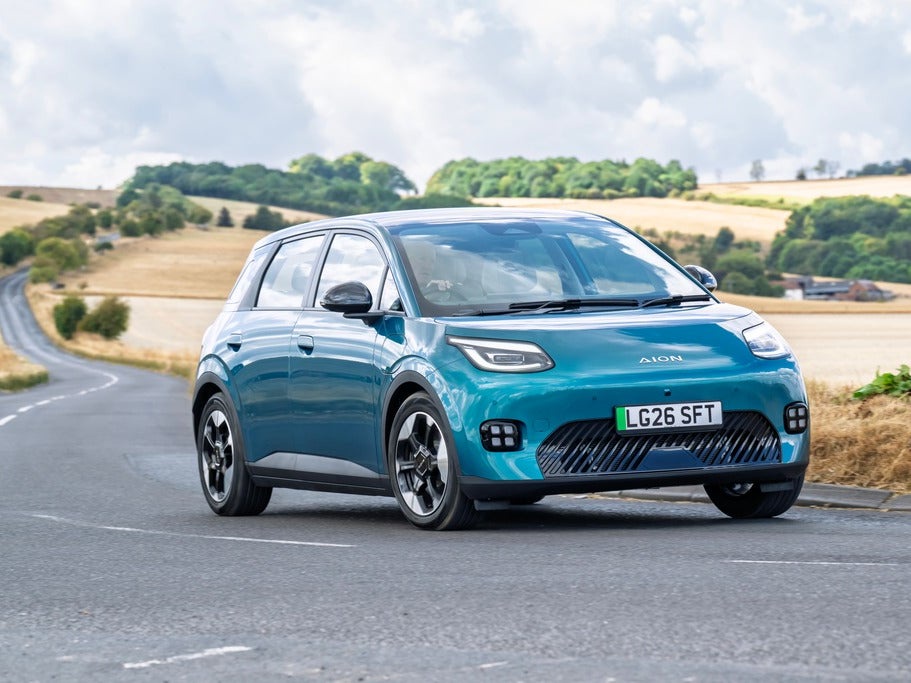
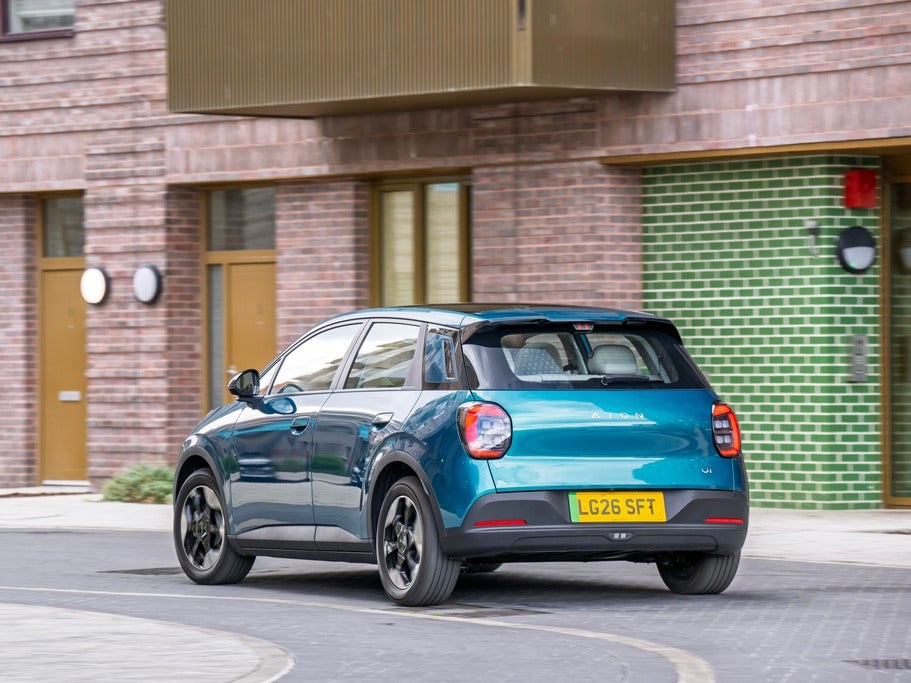
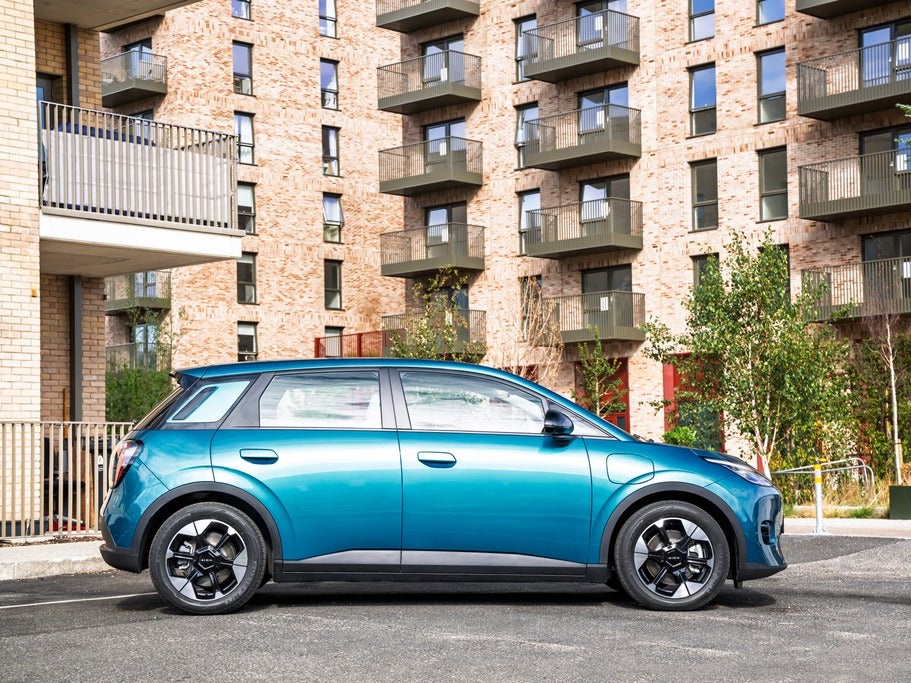
The UT was designed in Milan and Aion describes it as the most global GAC model yet. I think it’s an attractive-looking thing, inside and out, with a clean shape, flush door handles, two-tone 17-inch alloy wheels and enough detail in the lights to give it some personality. Aion calls the headlights owl-eye inspired, while the pixel-style daytime running lights and textured lower bumper stop the front looking too anonymous. A drag coefficient of 0.32 helps aero efficiency, too.
Underneath is a 60kWh battery giving a maximum claimed range of 268 miles and a front-mounted motor producing 201bhp and 210Nm of torque. It’s good for 0-62mph in 7.3 seconds and 99mph, so there’s plenty of performance for the sort of job this car will be doing.
Aion is aiming the UT squarely at people who want a spacious supermini, with the Renault 5, MG 4 Urban and BYD Dolphin among the obvious rivals. Prices start at £28,950 and there’s just one main specification, with a £1,200 Premium Pack option taking the price to £30,150. And, as I discovered, ticking that box adds some of the bits I liked most.
There’s plenty more coming from Aion, too. The company says five new model lines are planned over the next 18 months, and it wants a total of eight by the end of the decade. The GS7 D-segment Range Rover lookalike is among the future cars (an approach that’s worked for Jaecoo!) plus plug-in hybrid, hybrid and range-extender technology is all on the way. Aion is aiming for 100 UK dealers by 2030 as well. So, the UT might only be Aion number two for Britain, but it certainly won’t be the last.
How I tested
I drove the Aion UT extensively on familiar roads around my Buckinghamshire home, covering town, motorway and country routes while assessing comfort, handling, refinement, technology, practicality, quality, safety and usability. Plus my usual test in a supermarket car park to see how easy it’ll be to live with in the real world.
Aion UT: From £28,950, Aionauto.co.uk
Independent rating: 6/10
- Pros: Spacious cabin and boot, range, generous standard kit, attractive design, nicely weighted steering, exceptional ownership package
- Cons: Ride is too firm, intrusive lane-keeping assistance, looks premium but feels cheap, tyres struggle for grip, some controls take too much working out
- Price from: £28,950
- Battery size: 60kWh
- Maximum claimed range: 268 miles
- Maximum charging rate: 87kW DC, 30 to 80 per cent in 24 minutes
Battery, range, charging, performance and drive
The basic electric-car numbers are pretty strong. There’s a 60kWh LFP battery giving that 268-mile maximum claimed range, while Aion quotes energy consumption equivalent to around 3.8 miles/kWh. The single front motor produces 201bhp and 210Nm, which is the same basic power output as the Aion V, and gives the UT rather more shove than you might expect from a family supermini. 0-62mph takes just 7.3 seconds – that was hot hatch performance just a generation ago.
Charging is less spectacular, with a maximum DC rate of just 87kW. Aion says a 10 to 80 per cent charge takes 32 minutes, while the onboard 11kW AC charger fills the battery from 0 to 100 per cent in six hours and 50 minutes. A four-stage 10kW heat pump is fitted as standard.
The battery was developed with CATL and uses GAC’s Magazine Battery 2.0 construction. The cells sit in separate heat-resistant compartments with multi-layer insulation, while active cooling can increase heat dissipation by 30 per cent. Aion says the system is the first battery technology to pass both impact and nail-penetration tests without ignition, open flame or thermal runaway.
There’s 3.3kW vehicle-to-load capability, but you’ll need to buy an adaptor from your local dealer to turn the charging socket into a domestic-style three-pin outlet.
Aion has strived to make the UT drive the way European buyers expect. Springs, dampers, bump stops, the front anti-roll bar, steering and stability control calibration have all been changed to suit local tastes, with development work shared between the Chinese R&D team and Aion UK. The stated aim was to make the car feel properly connected to the road.
Some of that work has paid off. The steering is nicely judged, with enough weight to give you some confidence without becoming heavy around town, and the body control is good – you’re not going to find yourself leaning through corners like you’ve found yourself in a yacht race. Visibility is excellent, too, with a deep windscreen, good views around the rest of the car and an effective 360-degree camera system that makes parking easy.
Unfortunately, I found the ride too firm, and I suspect plenty of families will feel the same. On smooth roads it’s fine, but the rest of the time there’s a constant jiggle coming through into the cabin and passengers. Keeping the body under such tight control has clearly brought a trade-off, and on the roads around my Buckinghamshire home it was an issue I noticed pretty much all the time. That’s a shame, because softening that edge would make the UT a much nicer car to live with.
There are Comfort, Sport and Power Save driving modes. Sport releases the full torque and sharpens the accelerator, while Power Save calms the responses and adjusts the climate system to squeeze more from the battery. Comfort, as you might expect, sits between the two. There are also two regenerative-braking settings, although neither gives you much of the retardation I like in an EV and there’s no proper one-pedal driving. I’d definitely like more choice there.
The Chao Yang tyres didn’t impress me, either. Pull briskly away from a junction and they can struggle for grip, which feels unnecessary in a front-wheel-drive family hatch with this amount of power. And that was on a dry, warm day…
Then there’s the lane-keeping assistance. At times I felt I was fighting the system to keep the car where I wanted it, with the steering corrections turning an ordinary drive into an impression of a rally driver wrestling with a car down a special stage. That needs calming down.
The adaptive cruise control has another odd quirk. Set it to 70mph and one click down on the steering-wheel scroll control drops it to 68mph. Click once upwards to return to 70mph and it will jump to 71mph instead. Apparently, it’s because the system works in 5km/h steps, which convert alternately to roughly two or three mph. The car will probably still be doing a genuine 70mph, but it’s a bit naughty and an obvious candidate for a software update.
Interior, practicality and boot space
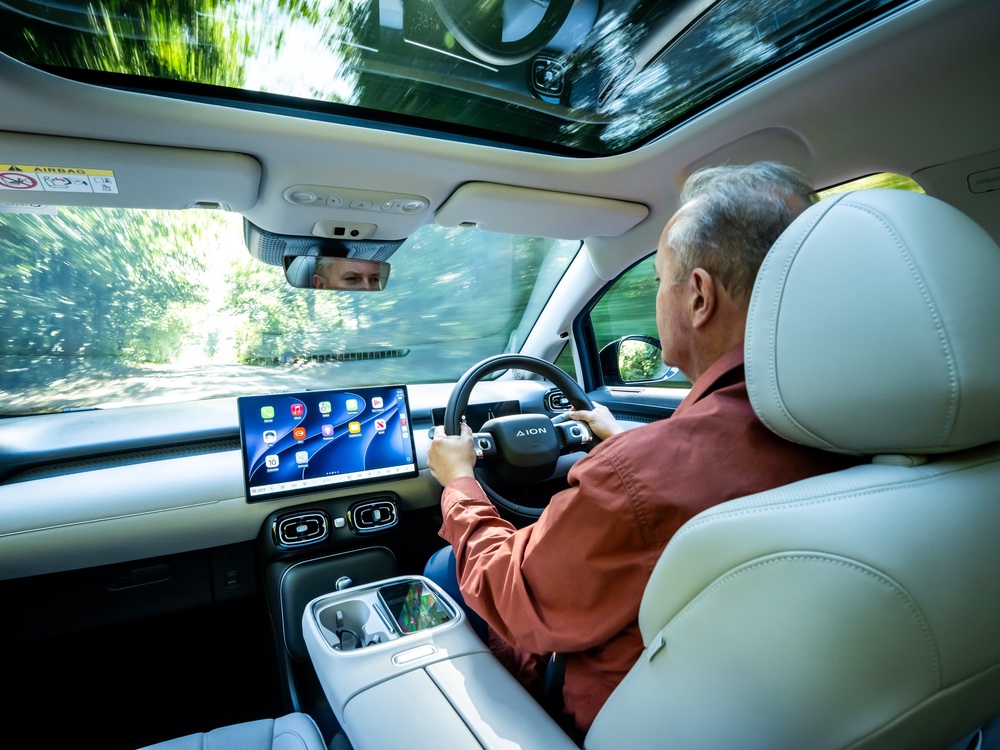
The first impression when you climb into the UT is a good one. I really like the way the interior looks and, just as with the Aion V, it gives the impression that you’ve wandered into something rather more expensive with textured surfaces and stitching on the door tops. The design is clean, the bright metal trim lifts things nicely and the whole cabin has far more character than plenty of new electric cars.
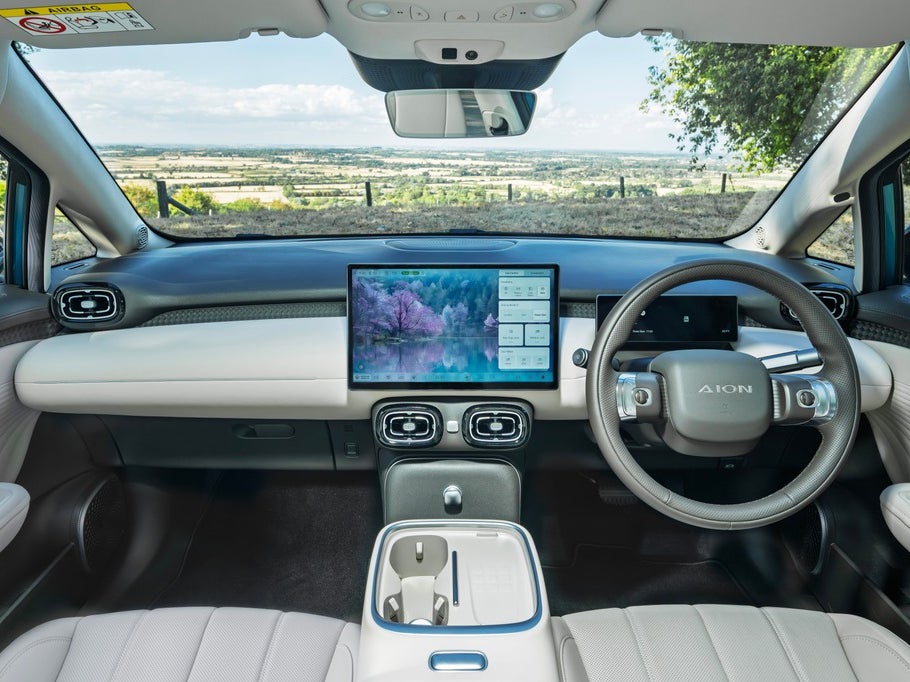
Then you start touching it. Most of the plastics are hard and don’t quite live up to the way the cabin looks or the brand’s premium promise, while that stitching on the doors is just an effect in hard plastic – it all looks way better than it feels.
There are soft-touch sections across the middle of the dashboard, where your arms rest on the doors, and on the centre-console armrests, but elsewhere your fingers generally find something much less plush. It’s a shame because the overall design is genuinely smart.
There are some nice details, though. The air vents are great fun, which isn’t something I find myself writing very often. They’re slightly over-engineered in the way Saab vents used to be, with an almost unnecessary amount of mechanical satisfaction in something whose main job is simply to point some air at you. I like that sort of unnecessary theatre.
There’s also a useful, lidded storage space low down in the dashboard, although whoever designed the little silver knob that opens it obviously had stronger fingers than me, because it could be awkward to twist to get the lid open. Overall storage is excellent, though, with 24 separate compartments and cubbies around the cabin, including shoe-storage in the boot.
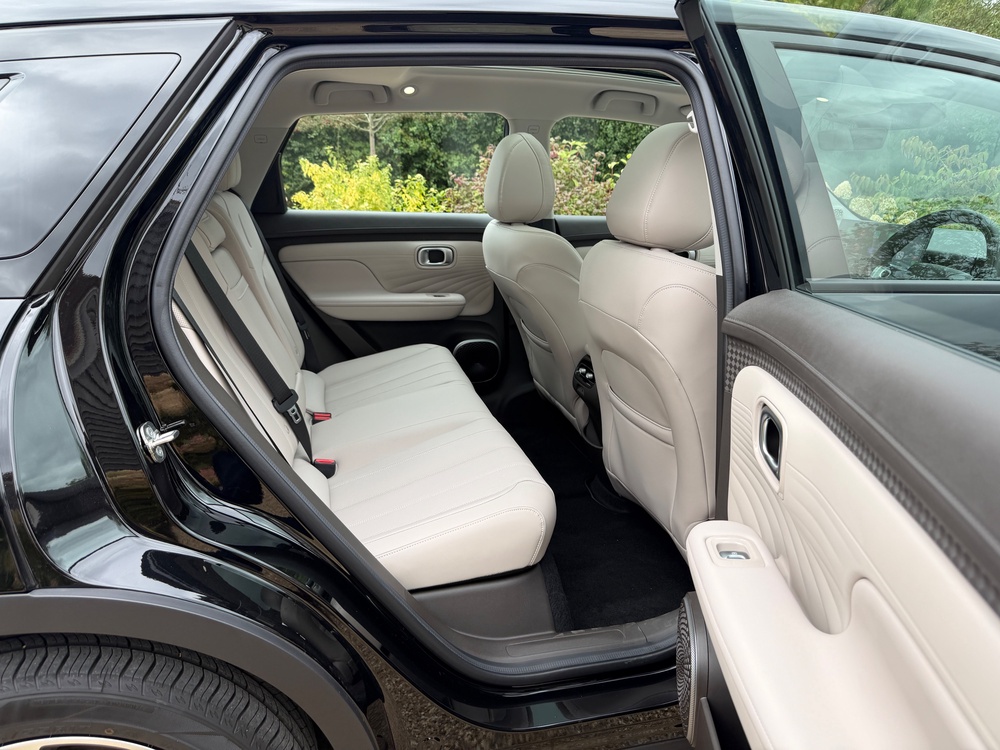
The seats look good and both front chairs get electric adjustment as standard – six ways for the driver and four for the passenger – along with three-stage heating, while the steering wheel is heated, too. The rear seatbacks can recline to 103 degrees, and getting into them is particularly easy because the rear doors open to almost 90 degrees. Once you’re there, there’s plenty of space, helped by that long 2,750mm wheelbase, while the view out is good as well.
The Premium Pack adds several of my favourite bits. I loved the huge panoramic glass roof, which comes with a powered full-length sunshade, and the powered tailgate is the sort of feature you don’t always expect on a supermini. The driver’s seat also gains three-stage ventilation – handy on a hot day, while you get electrically folding door mirrors, an auto-dimming rear-view mirror, wireless phone charging (shame that isn’t included as standard) and another USB-A port in the rear. I’d be tempted by the pack simply because those additions make an already well-equipped car feel quite special.
Boot space is another UT strong point. There are up to 440 litres with the adjustable floor in its lower position and luggage loaded to the roof, rising to 1,600 litres with the 60:40 rear seats folded. The boot floor can sit low for maximum capacity or higher up to create a level loading area, leaving a useful hidden space beneath it. There’s a deeper well for the charging cable and tyre-inflation kit, too.
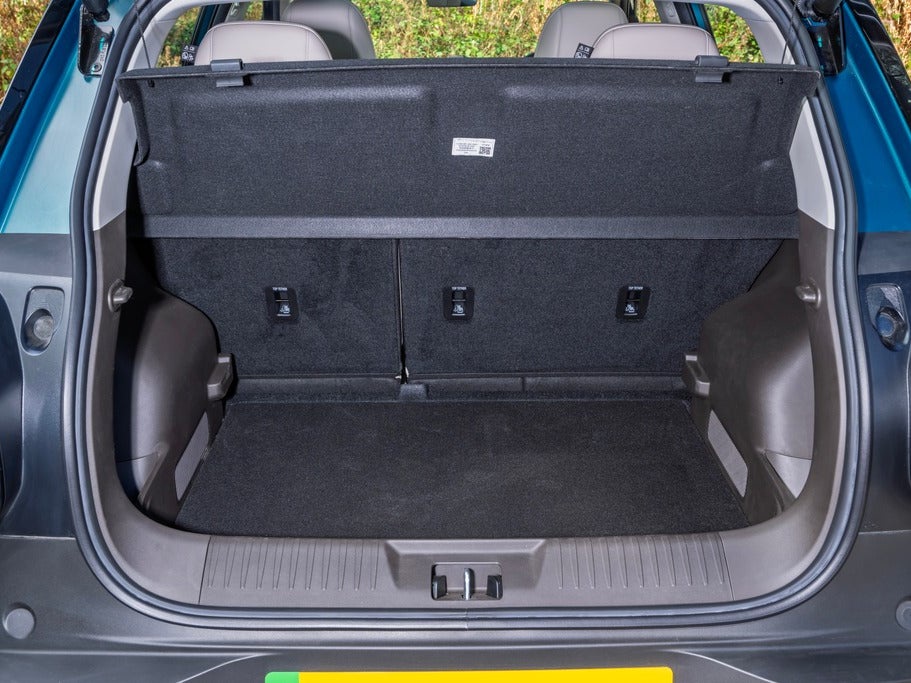
There are Isofix mountings on both outer rear seats, a 50kg maximum roof load and seven airbags, including a centre airbag between the two front occupants. The UT has achieved a five-star Euro NCAP rating under the latest, toughest test regime.
Noir is the standard interior colour, while the Premium Pack lets you choose French Cream for another £195. The latter certainly fits the car’s slightly more upmarket ambitions, although whichever colour you choose, I’d still like a few more soft materials to help the feel match the look.
Technology, stereo and infotainment
Aion hasn’t been shy with the screens. There’s a 14.6-inch central touchscreen and an 8.88-inch driver display, and here’s one thing I particularly appreciated: at last, somebody has put a nice big speed readout directly in front of the driver. It really shouldn’t feel like such a luxury in 2026, but after driving cars that make you hunt around for one of the most crucial pieces of information, I was grateful for it.
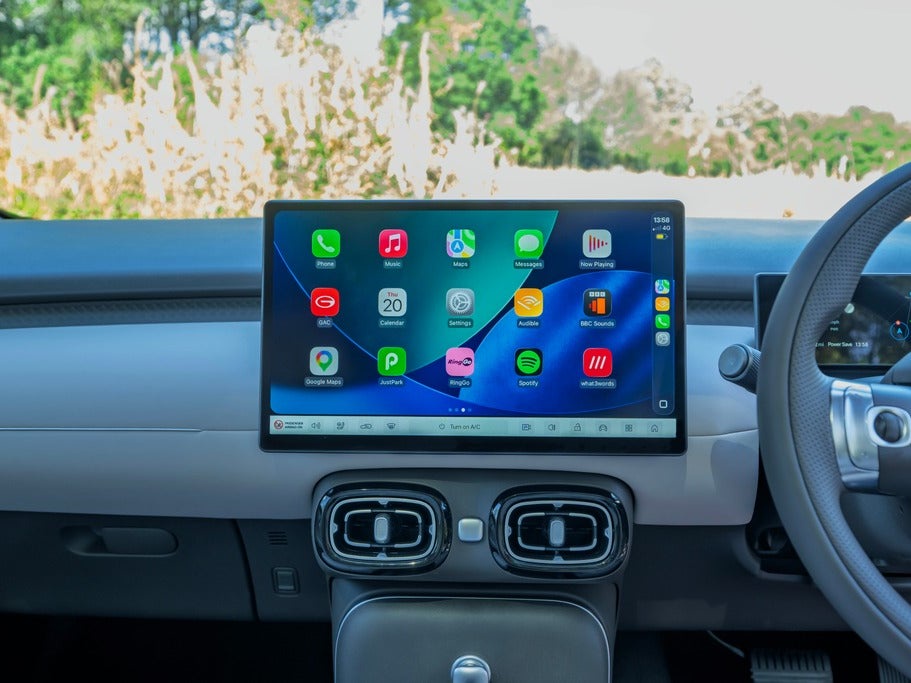
The central infotainment system uses GAC’s ADiGO operating system and wireless Apple CarPlay and Android Auto are standard, along with online navigation, music streaming, Bluetooth and a WiFi hotspot.
I found the system reasonably easy to use once I’d spent a bit of time with it, although some rivals make things more obvious. Permanent shortcut keys along the bottom of the display help with climate control, seat heating, volume, the heated rear window, door locks and the 360-degree cameras, while the Premium Pack also adds quick access to its electric roof blind and seat ventilation. Those shortcuts quickly become useful because quite a lot of the car’s controls still live inside that big screen.
You can personalise the home screen with widgets, choose light or dark display themes and even load your own pictures as a background or scrolling photo album. There’s a similar bit of attention to detail in the My Aion phone app, where the virtual picture of your UT even appears in the colour of the actual car you’ve bought. Entirely unnecessary, of course, but I like it.
The app does more useful things as well. It can show battery charge, control charging, schedule charging for cheaper electricity periods, remotely lock and unlock the car, flash the lights, sound the horn and pre-condition the cabin. You can plan a route on your phone and send it to the car, too.
The App’s Book a Trip feature goes a step further, letting you tell the UT when you’re going somewhere so it can have the cabin, heated seats and battery ready before you leave. You can programme up to five journeys, either as one-offs or repeating schedules, which could be handy for a regular commute or school run.
Inside the car, the two-zone voice control lets the driver or passenger operate things such as climate settings, windows and the audio system, while standard USB-A and USB-C connections sit at the front. There are 12-volt sockets in both the cabin and boot, with the Premium Pack adding a cooled wireless charging pad and a rear USB-A connection.
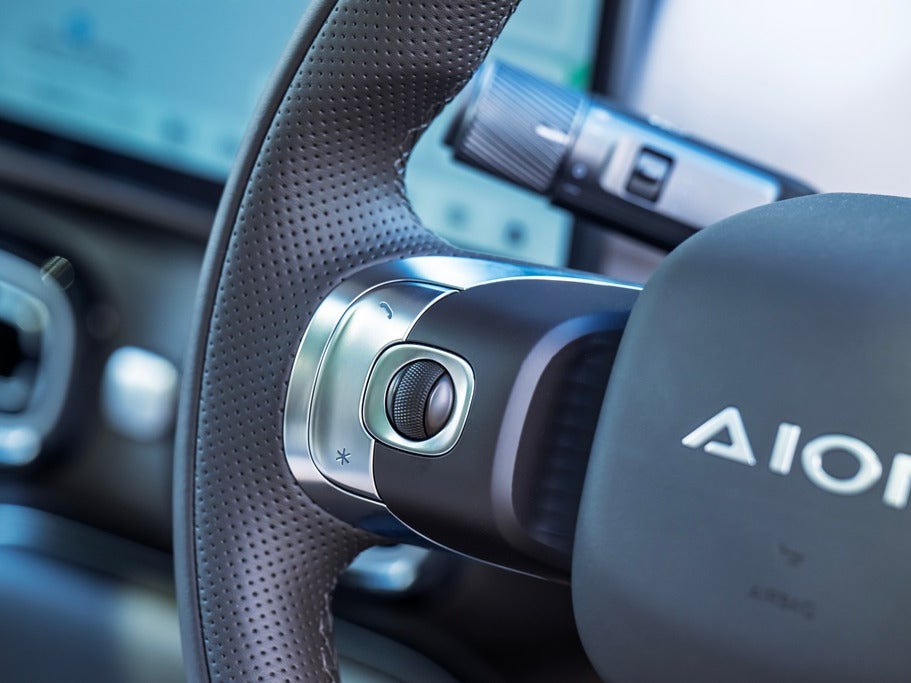
The steering-wheel controls could do with a rethink, since it isn’t initially clear what each button actually does. You eventually discover that the right-hand scroller operates the adaptive cruise control while the left-hand one handles the audio, but I shouldn’t have to conduct quite so much detective work.
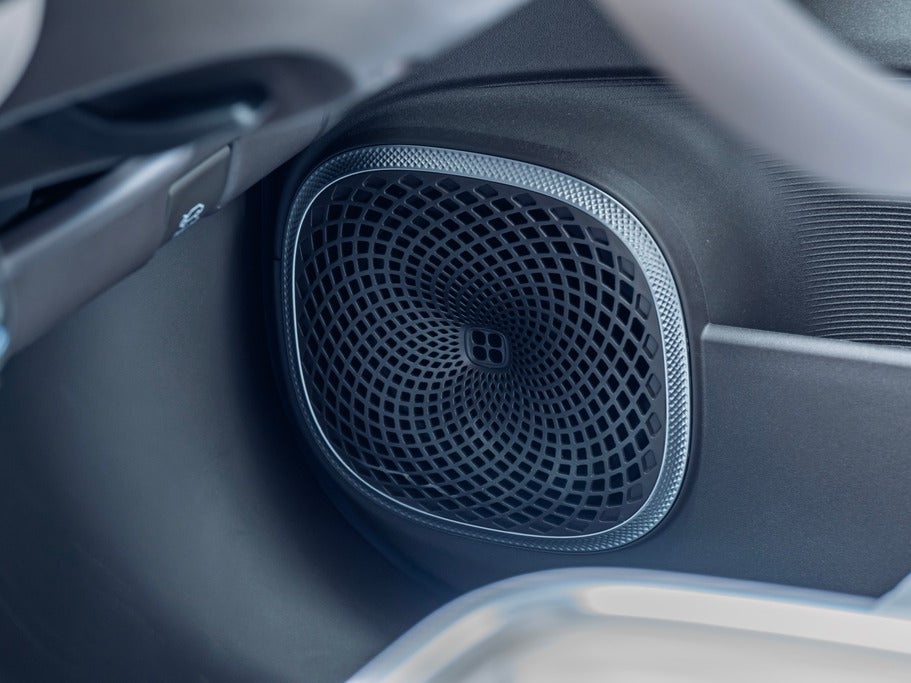
The six-speaker, 140-watt audio system isn’t branded with a fashionable hi-fi name, but it’s actually pretty decent. There’s good bass and plenty of clarity at the top end, although I’d like a little more substance through the middle. You can alter the focus of the sound and access different equaliser settings. The problem is finding them: the sound controls are buried more deeply in the touchscreen menus than they should be.
There’s a lengthy safety list, too, including adaptive cruise control, Integrated Cruise Assistance, autonomous emergency braking, forward and rear collision warnings, blind-spot monitoring, rear cross-traffic alert, traffic-sign recognition, driver monitoring, intelligent high-beam control and door-opening warnings. Lane-departure warning, lane-departure prevention and emergency lane keeping are all included as well, although my experience of the lane assistance shows that having plenty of systems on a specification sheet and getting their calibration spot-on are two rather different things.
Prices and running costs
Aion has kept the UT range refreshingly simple. There’s one main model at £28,950, with the Premium Pack adding £1,200 and taking the potential total to £30,150 before any paint or interior upgrades. And even without the pack, you really can’t argue with the amount of equipment included.
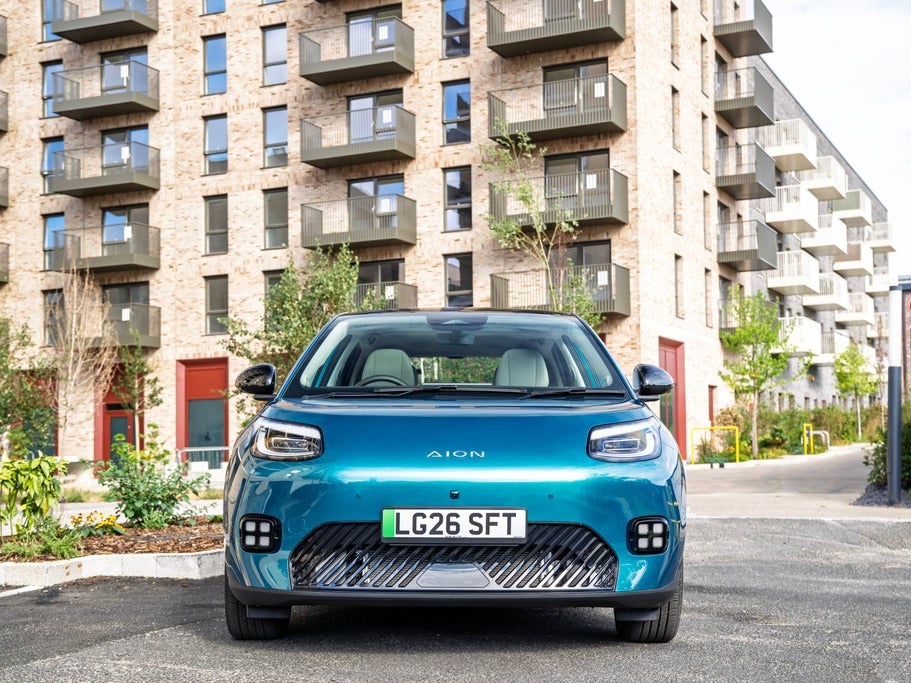
Standard kit includes 17-inch alloys, automatic LED headlights, heated and electrically adjustable door mirrors, automatic wipers, the 14.6-inch touchscreen and 8.88-inch driver display, wireless Apple CarPlay and Android Auto, online navigation, the six-speaker audio system, connected app, heated steering wheel, electrically adjustable and heated front seats, heat pump, rear air vents, front and rear parking sensors and the 360-degree camera, as well as that long list of safety technology.
The £1,200 Premium Pack adds the panoramic glass roof and electric blind, electrically folding mirrors, ventilated driver’s seat, auto-dimming rear-view mirror, powered tailgate, wireless phone charger and a rear USB-A port. Given how much I liked the roof, ventilated seats and tailgate, I’d probably try and find the extra cash for that pack.
Rocco White and Titian Red are the standard exterior colours. Jade Green and Night Shadow Black cost £595, while Seine Silver is also £595 but is only available with the Premium Pack. Noir is standard inside, with French Cream adding £195 on Premium Pack cars.
At the time of writing, Aion is offering a zero per cent finance deal at £349 a month with a £1,949 deposit over four years and a 6,000-mile annual allowance, along with a £500 test-drive offer.
Then there’s the Great 8 package, which is probably one of the strongest parts of the proposition. Every Aion comes with an eight-year/100,000-mile vehicle warranty and a separate eight-year/125,000-mile battery warranty, plus eight years of servicing, eight years of roadside assistance and MOT test fees until the car reaches eight years old. Better still, the package is tied to the car rather than the first owner, so it transfers when the UT is sold and remains with it however many times ownership changes.
Aion is also working hard to answer the obvious questions buyers have about a new brand – like where to get it serviced and repaired. The company has partnered with the AA, which provides roadside and home-start cover as well as access to its Prestige garage network and 140 mobile technicians who can carry out servicing, maintenance and warranty work at a customer’s home or workplace.
Spare parts are handled by DHL from a dedicated Bury St Edmunds warehouse stocking more than 1,250 lines, with nationwide next-day tracked delivery to dealers and additional support from a European hub in Rotterdam. Jumptech, meanwhile, connects customers with home-charger manufacturers, installers and electricity providers without tying Aion to one particular charger or energy company.
The verdict: Aion UT
The Aion UT has many of the attributes needed to be a success. It’s roomy, attractive and loaded with kit. However, it falls just short of greatness thanks to a firm ride – surprising given it was specially tuned for the UK – and the usual Chinese trait of intrusive lane assistance. Fix those via software updates and this could be a contender, especially if Aion swaps the cheap Chinese tyres for something a bit better, too.
Aion UT rivals:
FAQs
How long does it take to charge?
The Aion UT can charge its 60kWh battery from 30 to 80 per cent in 24 minutes using a suitable rapid charger, with a maximum DC charging rate of 87kW – far from the best these days. A 10 to 80 per cent charge takes 32 minutes. Its 11kW onboard AC charger can take the battery from empty to full in around six hours and 50 minutes.
How much does it cost – is it worth it?
The Aion UT costs £28,950, rising to £30,150 with the £1,200 Premium Pack. You certainly get plenty for the money, with a 268-mile maximum claimed range, lots of standard equipment, a spacious cabin, a 440-litre boot and the unusually comprehensive Great 8 ownership package. I particularly liked the design, space, steering and Premium Pack features, but the firm ride, intrusive lane-keeping assistance, lack of stronger regenerative braking, low-grip tyres and hard cabin plastics stop it feeling as polished as it looks.
Does Aion replace batteries for free?
The UT’s battery has an eight-year/125,000-mile warranty, while the car itself is covered for eight years or 100,000 miles.
Why trust us
Our team of motoring experts have decades of experience driving, reviewing and reporting on the latest EV cars, and our verdicts are reached with every kind of driver in mind. We thoroughly test drive every car we recommend, so you can be sure our verdicts are honest, unbiased and authentic.
With more than 30 years of experience, Steve Fowler is one of the UK’s best-known automative journalists. Steve has interviewed key industry figures, from Tesla’s Elon Musk to Ford’s Jim Farley, and is a judge for both Germany’s and India’s Car of the Year Awards, as well as being chair of World Car of the Year. When it comes to electric vehicles, Steve reviews all the latest models for The Independent as they launch, from Abarth to
Read MoreBest used electric cars 2026: Top 10 second-hand EVs recommended by our EV Editor
Best electric cars 2026: Top 13 EVs to buy
Best plug-in hybrid cars 2026: the top PHEVs to buy in the UK
New Skoda Epiq is a small SUV with the spirit of the Skoda Yeti
Big Chinese BYD Ti7 seven-seat SUV rivals Land Rover
These service robots could be coming to car showrooms – and I met them
Renault 5 jumps to top of EV sales chart as electric car interest soars
These two new SUVs are set to be next Chinese Chery brands in the UK