
JULY 25 — Malaysia faces many genuine challenges.
One of the most pressing is that it must become a high-income nation before it becomes an aged society.
More than 60 per cent of Malaysians cannot immediately raise RM1,000 to meet an unexpected emergency.
At the same time, wars affecting the Strait of Hormuz, the Red Sea, and the continuing conflict between Russia and Ukraine have exposed Malaysia to unprecedented geopolitical and geo-economic pressures.
Rising living costs, stagnant wages, education reform, technological disruption and global economic uncertainty all demand the full attention of policymakers.
One issue that should never be manufactured for electoral gain, however, is the claim that Malays are somehow becoming strangers in their own country.
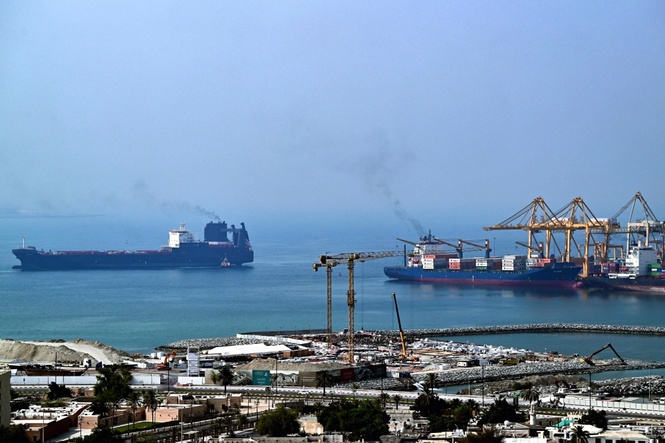
Ships are docked along a pier at the Khor Fakkan Container Terminal, the only natural deep-sea port in the region and one of the major container ports in Sharjah Emirate, along the Gulf of Oman on July 14, 2026. — AFP picRecent remarks by PAS leader Muhammad Sanusi Mohammad Nor—that “Chinese have China, Indians have India, Thais have Siam, Cambodians have Cambodia, while Malays only have Tanah Melayu”—are not merely provocative campaign rhetoric.
They create the false impression that Malaysians of Chinese and Indian descent are somehow less Malaysian than everyone else.
Unsurprisingly, the remarks have drawn criticism from across the political spectrum, including leaders from MIC and MIPP, who rightly argued that such statements undermine national unity and cast unnecessary doubt on the loyalty of fellow citizens.
This narrative deserves to be challenged, especially by Malays themselves.
The Federal Constitution does not marginalise Malays.
Quite the contrary.
It explicitly safeguards the special position of the Malays and the natives of Sabah and Sarawak while simultaneously protecting the legitimate interests of other communities.
The institution of the Malay Rulers is constitutionally entrenched.
Islam is the religion of the Federation.
Bahasa Melayu is the national language, and Malay customs and institutions remain protected.
More importantly, throughout much of Islamic civilisation, Islam has served not merely as a religion of personal faith but as a civilisational force that protected and united diverse societies under its governance.
Its enduring principles of justice (adl), compassion (rahmah) and inclusivity enabled multicultural communities to coexist while preserving their respective identities.
Malaysia’s constitutional framework reflects this long-standing tradition, where Islam provides moral guidance while safeguarding the dignity and citizenship of all Malaysians regardless of race or religion.
None of these constitutional guarantees has disappeared, nor is there any credible evidence that they are about to disappear.
Indeed, Malays remain the majority community in Malaysia, while Bumiputera collectively constitute an even larger majority.
To repeatedly tell Malays that they are under existential threat despite these constitutional safeguards risks creating unnecessary anxiety rather than strengthening confidence.
A confident community does not require constant reminders that everyone else is a danger.
A secure majority should not be persuaded to behave like an insecure minority.
Equally troubling is the message directed towards non-Malay Malaysians.
When politicians declare that Chinese have China and Indians have India, they ignore a simple reality.
Millions of Malaysian Chinese and Malaysian Indians were born, educated, employed and have raised families in Malaysia.
Their loyalty is to Malaysia because it is the only home they have ever known.
Suggesting otherwise places an unjust and permanent question mark over their citizenship and patriotism.
That is neither fair nor consistent with the spirit of nation- building since Merdeka.
Malaysia achieved independence through cooperation among Malays, Chinese, Indians and the peoples of Sabah and Sarawak.
Successive generations have defended, developed and modernised the country together.
Prime Minister Anwar Ibrahim has repeatedly reminded Malaysians that the nation’s greatest strength lies in the contribution of every community to national development.
That principle remains as relevant today as it was in 1957 and again in 1963.
None of this means Malay concerns should be dismissed.
Every community has legitimate concerns about education, economic mobility, employment opportunities and cultural identity.
These deserve serious policy responses.
Responsible politics, however, distinguishes between addressing genuine concerns and manufacturing existential fears.
The former strengthens democracy; the latter weakens it.
It is also worth remembering that the greatest challenges facing Malays today are not fellow Malaysians of different ethnic backgrounds.
The real challenges are economic competitiveness, educational quality, technological disruption, corruption, governance failures and declining productivity.
Artificial intelligence, global competition and climate change recognise neither race nor ethnicity.
Malaysia will prosper only when all Malaysians prosper together.
That is why Malays, above all, should reject narratives portraying themselves as victims of an impending national dispossession.
Doing so does not weaken Malay rights.
It strengthens Malay confidence.
It demonstrates faith in the Federal Constitution rather than fear that it is somehow collapsing.
More importantly, it reflects the true spirit of Islam itself.
Islamic history demonstrates that stable and prosperous Muslim societies were built not by cultivating perpetual suspicion of minorities, but by upholding justice, protecting the vulnerable and ensuring fairness for all who lived under their care.
Confidence, not insecurity, has always been the hallmark of strong Muslim civilisations.
Patriotism, therefore, need not depend upon creating suspicion towards fellow citizens.
Malaysia has always been strongest when constitutional guarantees coexist with mutual trust.
It has always been weakest when politicians convince one community that another is secretly plotting against it.
The Federal Constitution already provides the necessary constitutional balance.
What Malaysia requires today is not louder racial rhetoric but stronger national confidence.
That confidence begins when Malays, together with every other Malaysian, affirm clearly and unequivocally that our future will be secured not by fear, but by constitutional fidelity, mutual respect and a shared commitment to one nation.
In the final analysis, Malaysia belongs to all its citizens.
The Constitution protects the special position of the Malays and Bumiputera while recognising the legitimate rights of every Malaysian.
That constitutional equilibrium should be defended—not distorted into a narrative of perpetual siege for short-term political advantage.
The stronger Malaysia becomes, the more confident Malays should feel.
And the more confident Malays become, the easier it will be to build a nation where every citizen, regardless of ethnicity or religion, can confidently say that Malaysia is, and will always remain, our common home.
* Phar Kim Beng, PhD is the Professor of Asean Studies at International Islamic University of Malaysia and Director of Institute of International and Asean Studies (IINTAS). Lutfy Hamzah is a research fellow at IITAS.
** This is the personal opinion of the writer or publication and does not necessarily represent the views of Malay Mail.