
The Hyundai Elantra is now in its 8th generation and comes with more tech than ever, but will it work in Malaysia?
Hyundai has officially taken the wraps off the all-new eighth-generation Hyundai Elantra (alongside the next-generation Elantra Hybrid) at AutoMobility LA 2026, radically reimagining one of its longest-running global nameplates with retro-futuristic proportions and D-segment rivalling rear cabin space.
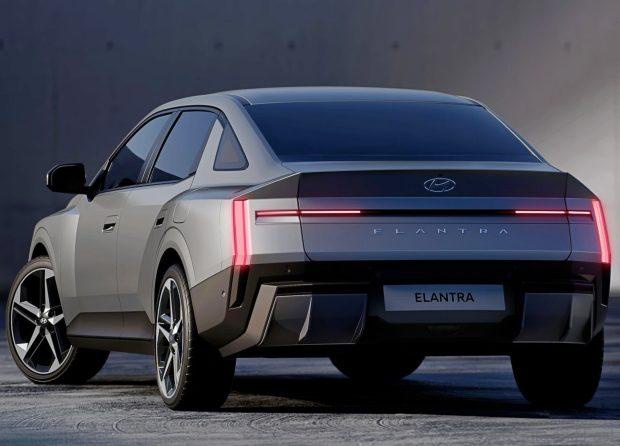
While the debut marks the North American reveal following its initial Korean premiere earlier this year, the bigger question for local enthusiasts and industry watchers is straightforward: once right-hand-drive (RHD) production comes online, is the all-new Elantra actually viable for Malaysia?
Art of Steel Styling and Near-Midsize Dimensions
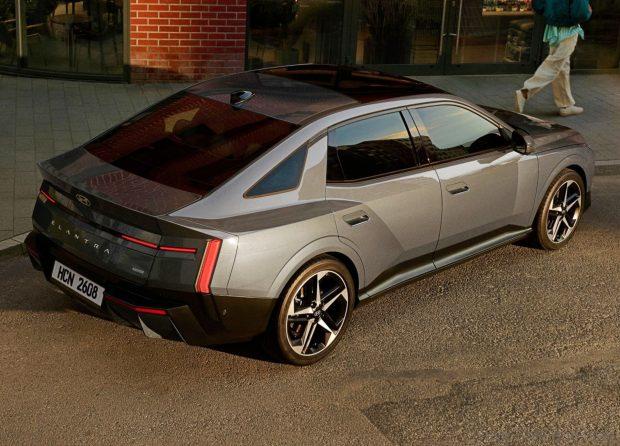
Penned under Hyundai’s new Art of Steel design language, the eighth-generation Elantra abandons the sharp, heavily creased origami surfaces of the outgoing CN7 model in favor of clean, muscular three-box sedan proportions and a low 0.26 drag coefficient.
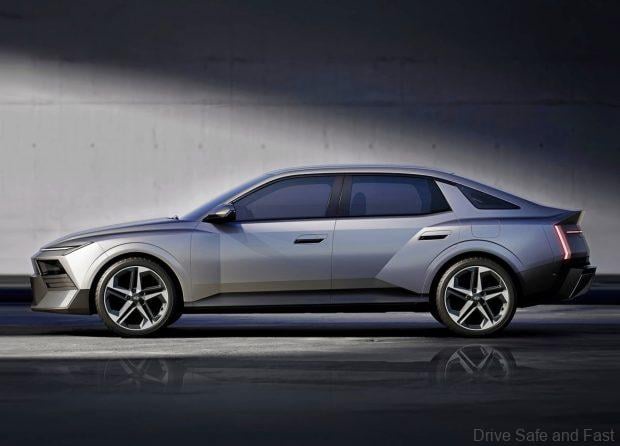
More importantly, the sedan has grown substantially across every dimension:
- Length / Width / Height: 4,796 mm (+86 mm) / 1,854 mm (+30 mm) / 1,425 mm
- Wheelbase: 2,751 mm (+30 mm)
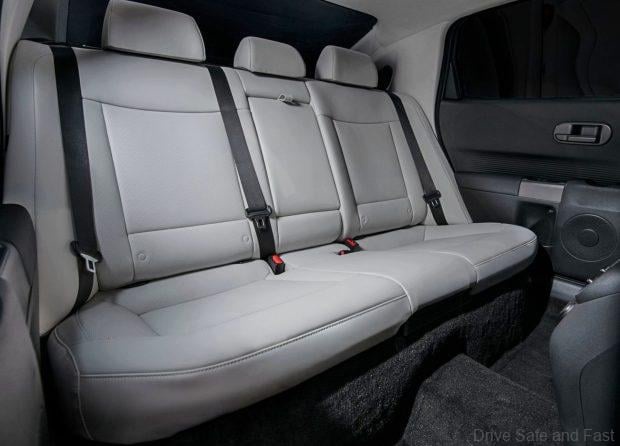
- Rear Cabin Space: Rear legroom stretches to 993 mm (39.1 inches) alongside 958 mm of headroom and 1,435 mm of shoulder room—putting passenger accommodations squarely into D-segment territory while retaining a compact footprint. Slimmer front seatbacks, rear air vents, dual 27W rear USB-C ports, and 60:40 split-folding rear seats come standard.
ICE and Upgraded 155 hp Hybrid Powertrains
Hyundai is offering two distinct four-cylinder powertrains at launch:
- 2.0-Litre Smartstream Atkinson-Cycle ICE: Produces 147 hp paired with Hyundai’s Intelligent Variable Transmission (IVT) featuring Shiftronic manual shift simulation, upgraded thermal management, and reduced internal friction. ICE models utilize a coupled torsion-beam rear axle.
- 1.6-Litre Hybrid (2028 Model Year): Combines a 1.6-litre four-cylinder petrol engine with an uprated 45 kW electric motor (up from 32 kW), a larger 1.49 kWh high-voltage battery (up from 1.32 kWh), and a 6-speed dual-clutch transmission (DCT)—lifting combined output from 139 hp to 155 hp. Hybrid models also upgrade to a multi-link independent rear suspension and introduce Smart Regenerative Braking 3.0 with paddle-adjustable regen up to full one-pedal stopping.
- Class-Exclusive ‘Stay Mode’: Borrowed from Hyundai’s EVs, Stay Mode allows Elantra Hybrid occupants to run the air conditioning, audio system, lighting, and charging ports off the hybrid battery for up to 30 minutes while parked without idling the petrol engine.
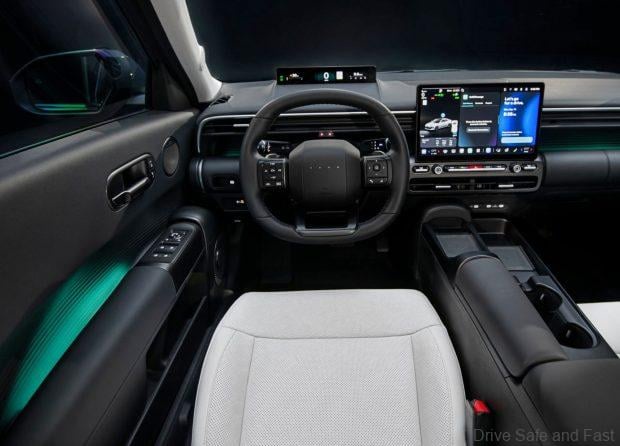
Pleos Connect Android Automotive Cockpit and SmartSense Safety
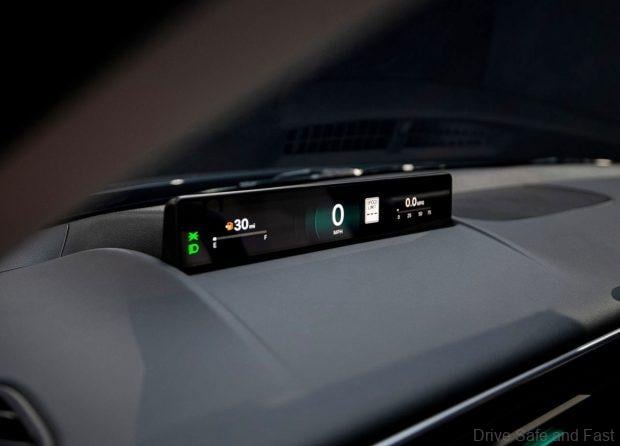
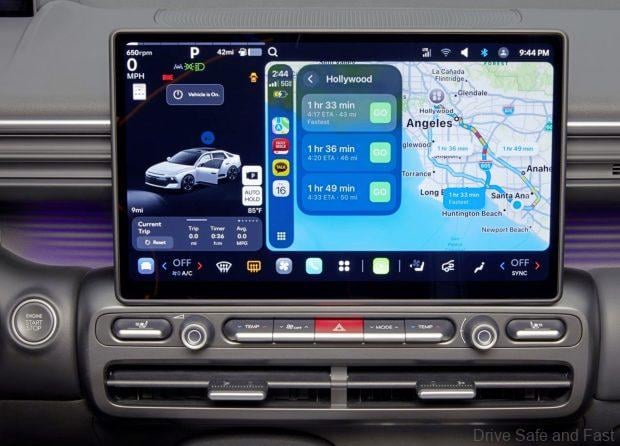
Inside, the cabin debuts Pleos Connect, Hyundai’s new Android Automotive OS-based software platform anchored by a 12.9-inch Full HD central touchscreen and a 9.9-inch slim digital instrument display:
- Gleo AI & Physical Controls: Features Gleo AI, a large language model (LLM) conversational voice assistant with multi-command and zone-specific recognition, wireless Apple CarPlay and Android Auto, Over-the-Air (OTA) updates, Digital Key 2 Premium, and an available 12-speaker Bang & Olufsen® sound system—all while preserving dedicated physical buttons and knobs for climate and audio controls.
- Refined NVH & Safety: Built on a stiffer ultra-high-strength steel shell with acoustic windshield glass and revised suspension bushings, the sedan packs a full Hyundai SmartSense suite including Forward Collision-Avoidance Assist (with Junction-Turning and Direct Oncoming detection), Smart Cruise Control with Stop & Go, Blind-Spot Collision Warning, Rear Cross-Traffic Collision-Avoidance Assist, Safe Exit Warning, and a Driver Monitoring System.
Is the All-New Elantra Viable in Malaysia Once RHD Models Are Ready?
Looking at the history and current reality of Korean sedans in Malaysia, bringing the eighth-generation Elantra back to local showrooms would be an uphill commercial battle—unless Hyundai Motor Malaysia fundamentally rethinks its pricing and assembly strategy.
Over a decade ago, the fifth-generation MD Elantra (2012–2016) was a genuine success story for Hyundai-Sime Darby Motors, locally assembled at Inokom in Kulim and priced under RM90,000 to RM115,000—offering sleek styling and generous equipment that undercuts the Honda Civic.
However, that momentum collapsed with the seventh-generation CN7 Elantra launched in late 2020. Imported fully built-up (CBU) from South Korea with a modest 123 PS 1.6-litre naturally aspirated engine at RM158,888 (and later climbing to RM168,888), it priced itself straight into Civic Turbo territory without the badge equity or turbo performance Malaysians demanded at that bracket. According to JPJ registration data, CN7 sales dwindled to just dozens of units annually before Hyundai quietly discontinued the Elantra in Malaysia at the end of 2023—mirroring the quiet exits of the Hyundai Sonata and Kia Cerato/K3, leaving zero mainstream Korean sedans officially on sale in Malaysia today.
Since then, Hyundai Motor Company has taken direct principal control of its Malaysian operations as Hyundai Motor Malaysia, focusing heavily on higher-margin SUVs and MPVs like the Tucson, Santa Fe Hybrid, Staria, and Ioniq EVs. For the eighth-generation Elantra to stand any realistic chance in Malaysia once RHD production begins:
- CBU Importation Is a Non-Starter: Bringing the 2.0-litre ICE or 1.6-litre Hybrid in as a fully imported CBU would subject it to steep import and excise duties, likely pushing retail prices past RM155,000–RM175,000—where traditional C-segment sedan buyers overwhelmingly default to the Honda Civic e:HEV / RS or Toyota Corolla, while value-conscious buyers now flock to sub-RM120,000 Chinese sedans and crossovers like the Proton S70, BYD Seal 6, or GWM ORA 5 HEV.
- CKD Assembly in Kulim Is Essential: With Hyundai Motor expanding its local assembly footprint at Inokom in Kulim, CKD assembly—particularly of the 155 hp Elantra Hybrid—would be mandatory to keep pricing competitive in the RM125,000 to RM140,000 bracket.
- Hybrid Differentiation: Features like Stay Mode (a massive real-world perk in Malaysia’s tropical heat while waiting in school or airport queues), class-leading rear legroom, and the Pleos Connect cockpit give the Elantra Hybrid genuine product differentiation that the underpowered CN7 1.6 lacked.
Ultimately, while the eighth-generation Elantra is arguably Hyundai’s most complete compact sedan yet, Malaysian consumer preference has swung decisively toward SUVs and electrified Chinese value leaders. Without local CKD assembly and sharp sub-RM140,000 pricing, Hyundai Motor Malaysia may find its resources far better spent defending its SUV and MPV turf rather than reviving a dormant sedan war.
The post All-New 8th Gen Hyundai Elantra Unveiled: Larger Dimensions, Android Automotive Cockpit, 155 hp Hybrid first appeared on DSF.my.