
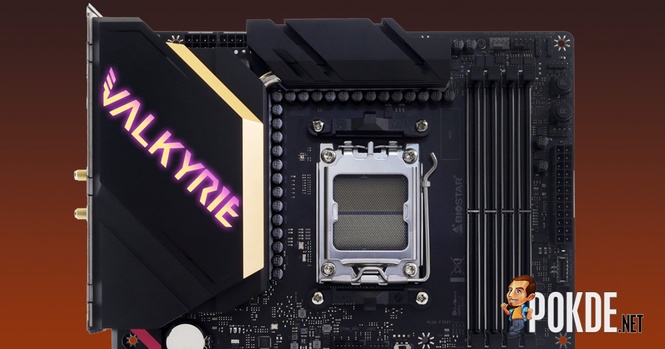
Amidst the ongoing AI chipmaking craze, AMD has been relatively quiet on the consumer front as of late with not much to show for in its previous keynote at CES 2026, though come Computex 2026 there may be a small surprise. Reportedly, Taiwanese motherboard maker BIOSTAR has seemingly hinted a next-generation motherboard chipset from Team Red, further corroborated by leaker MEGAsizeGPU.
BIOSTAR Hinted AMD X970E’s Imminent Launch?
Worth noting that as of this writing, BIOSTAR has removed references of “next-generation” AMD motherboard in its Computex 2026 announcement, presumably as AMD has yet to made any mentions of the 900 series even if the new chipset is indeed in the plans. That said, somebody has already made a snapshot of the press release and you can see the evidence over at Wayback Machine for yourself. The original announcement reads:
On the consumer and gaming side, BIOSTAR will present its next-generation AMD and Intel 800 series motherboards, the flagship VALKYRIE gaming series, and mainstream AI PC platforms, complemented by graphics cards based on the AMD Radeon RX series. The showcase also reflects strong demand in one of the year’s most active memory segments, with a full lineup spanning both DDR5 and DDR4, along with PCIe M.2 and SATA SSDs—a dual-track approach that mirrors continued demand across both current-generation and established platforms.
It could be another PROM 21 refresh, but with full CUDIMM/CAMM support. Chipset-wise, it's the same as 600/800, but the BIOS and RAM support have undergone fundamental changes. https://t.co/uD7PA0p3aA
Leaker MEGAsizeGPU has more information on this new chipset. The leaker says 900 series “could” continue to use existing Promontory 21 chipsets (likely two of them in the case of X970E, as it has been the case for X870E), with the addition of CUDIMM and CAMM memory support. Intel has already supported both emerging memory standards with its latest platforms, with the former featuring a clock driver to further boost memory clock speeds, while the latter is a new form factor that uses LGA form factor instead of slotted ones like standard DIMMs.
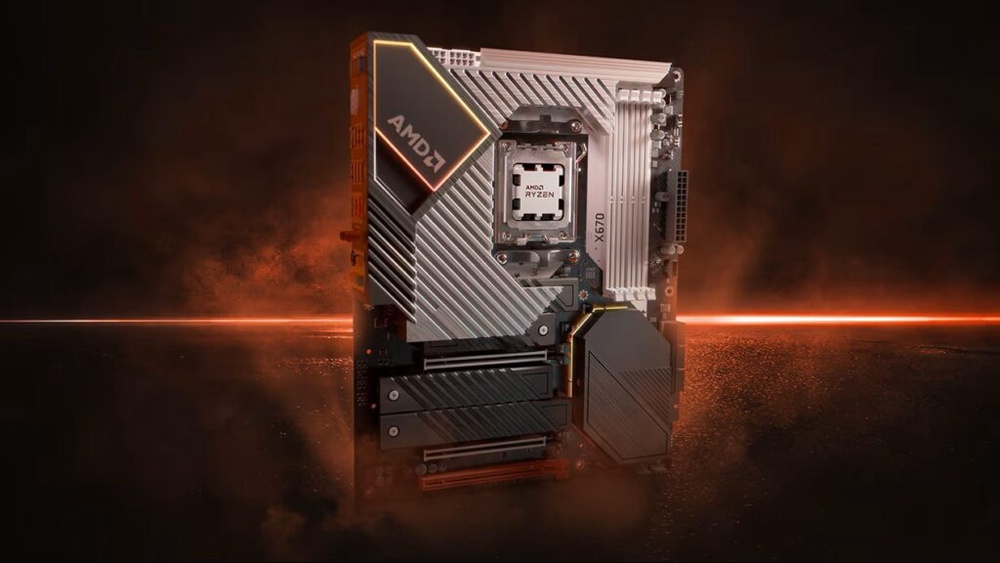
That said, CUDIMM on Ryzen is not quite as useful for a specific reason: current Ryzen processors have a unique memory controller architecture that more or less locks memory speed down to 6000MT/s, or 6400MT/s in rare occasions; the speeds offered by CUDIMMs often exceed 8000MT/s and beyond, which will require the memory controller to engage in “gear down” mode (1:2 FCLK ratio instead of native 1:1) that hurts overall latency.
That is to say, unless AMD redesigns its CPU from the ground-up, the benefits of CUDIMMs are highly limited for the foreseeable future – we’ll have to see if Zen 6 will take this into account and optimize the processor around this kind of memory speeds. It has been known that the chipmaker will rework the I/O die at the very least, so there’s a chance this might happen.
Source: Videocardz (1,2) | Internet Archive
Pokdepinion: Not much news on Zen 6, I do wonder if we may get some on Computex (not holding my breath as companies are too busy making AI-related announcements left and right, while consumer market are pretty much second-class citizens).